Packaging Technology Sourcing Guide: 2025 Executive Strategic Briefing
Executive Contents
Executive Market Briefing: Packaging Technology
Executive Market Briefing – Packaging Technology 2025
BLUF
Packaging machinery demand is outpacing global GDP for the fifth straight year; procurement teams that lock in 2025-2026 capacity at today’s PPI-adjusted price bands ($50k–$80k for mid-speed cartoners, $0.8M–$1.2M for full-line automation) will secure a 3–5 pp total-cost-of-ownership (TCO) advantage before the next PPI cycle resets in 2026. China now holds 42% of global output but lead-times have stretched to 8–10 months; dual-sourcing from Germany (high-spec) and USA (tariff-shielded) lowers disruption risk without sacrificing IRR, given forecast 5.5% CAGR through 2030.
Market Scale & Growth Trajectory
The global packaging machinery market exited 2024 at $59.3 billion and is on a 5.5% CAGR glide path to $80.96 billion by 2030, driven by SKU proliferation, e-commerce throughput mandates, and lot-level traceability rules coming into force in the EU and California. Flexible packaging equipment is moving even faster—artizon projects the wider flexible segment alone to approach $400 billion by 2029, implying a machinery refresh cycle worth $28–$32 billion in new capital orders. Industrial electronics packaging (automation boards, sensors, HMIs) is rising from $4.2 billion (2025) to $7.9 billion (2035)—a 6.5% CAGR that tightens the supply of motion-control components common to both packaging lines and adjacent automation.
Supply-Hub Dynamics
China remains the volume hub: 42% of global unit output, 20% cost advantage on stainless steel frames, but PPI-linked steel and electronics inflation has narrowed the gap to 8–10% landed cost. Germany controls 25% of value share via high-speed, hygienic-design machines (pharma, dairy) with average selling prices 1.4× Chinese equivalents but 15% lower OEE-adjusted downtime. USA accounts for 18% of units yet 30% of installed IoT-enabled lines, benefiting from Section 301 tariff shields on Chinese steel and the Inflation Reduction Act’s 30% advanced-manufacturing tax credit—creating a $0.9–$1.1 million effective discount on lines >$3 million for domestic producers. Mexico and Poland are emerging near-shore options, but at <5% share they remain capacity-constrained.
Strategic Value of 2025 Upgrade Window
PPI for packaging materials has risen 11.3% YoY, feeding directly into inventory carrying cost. Modern lines cut material waste 4–7% via closed-loop tension control and dynamic registration; at $4 million annual film spend, the savings alone fund a $0.6–$0.8 million retrofit in <18 months. Smart-packaging add-ons (embedded RFID, digital watermarking) unlock $0.05–$0.12 per unit in data-driven revenue (authentication, traceability fees) that accrue straight to EBIT. Finally, 2025 delivery slots are still priced on 2024 steel contracts; suppliers confirm a 6–8% order-price escalation for 2026 build slots once higher alloy surcharges reset in Q1. Securing 2025 capacity therefore freezes both capex and TCO at cyclical lows.
Comparative Supply-Hub Snapshot (2025)
| Metric | China | Germany | USA |
|---|---|---|---|
| Share of global unit output | 42% | 25% | 18% |
| Average lead-time (months) | 8–10 | 5–7 | 4–6 |
| Price index (base=China 100) | 100 | 140 | 125 |
| Post-tariff landed cost index | 100 | 140 | 108 |
| OEE guarantee (%) | 80 | 88 | 85 |
| IoT/Industry 4.0 native | Optional | Standard | Standard |
| Warranty (years) | 1 | 2 | 2 |
| FX volatility vs USD (5-yr σ) | 6.2% | 7.9% | — |
| Geopolitical risk score (0–10) | 6 | 2 | 2 |
Decision lens: If cash-to-cash cycle is paramount, China still wins on unit cost; if line uptime and regulatory auditability dominate, Germany’s 8 pp OEE premium offsets the 40% price delta within 24 months. USA offers the lowest political-risk-adjusted cost for North American output, especially when IRA credits are layered, yielding an effective 12–14% IRR uplift versus offshore sourcing once tariff, freight, and inventory buffers are modeled.
Global Supply Tier Matrix: Sourcing Packaging Technology
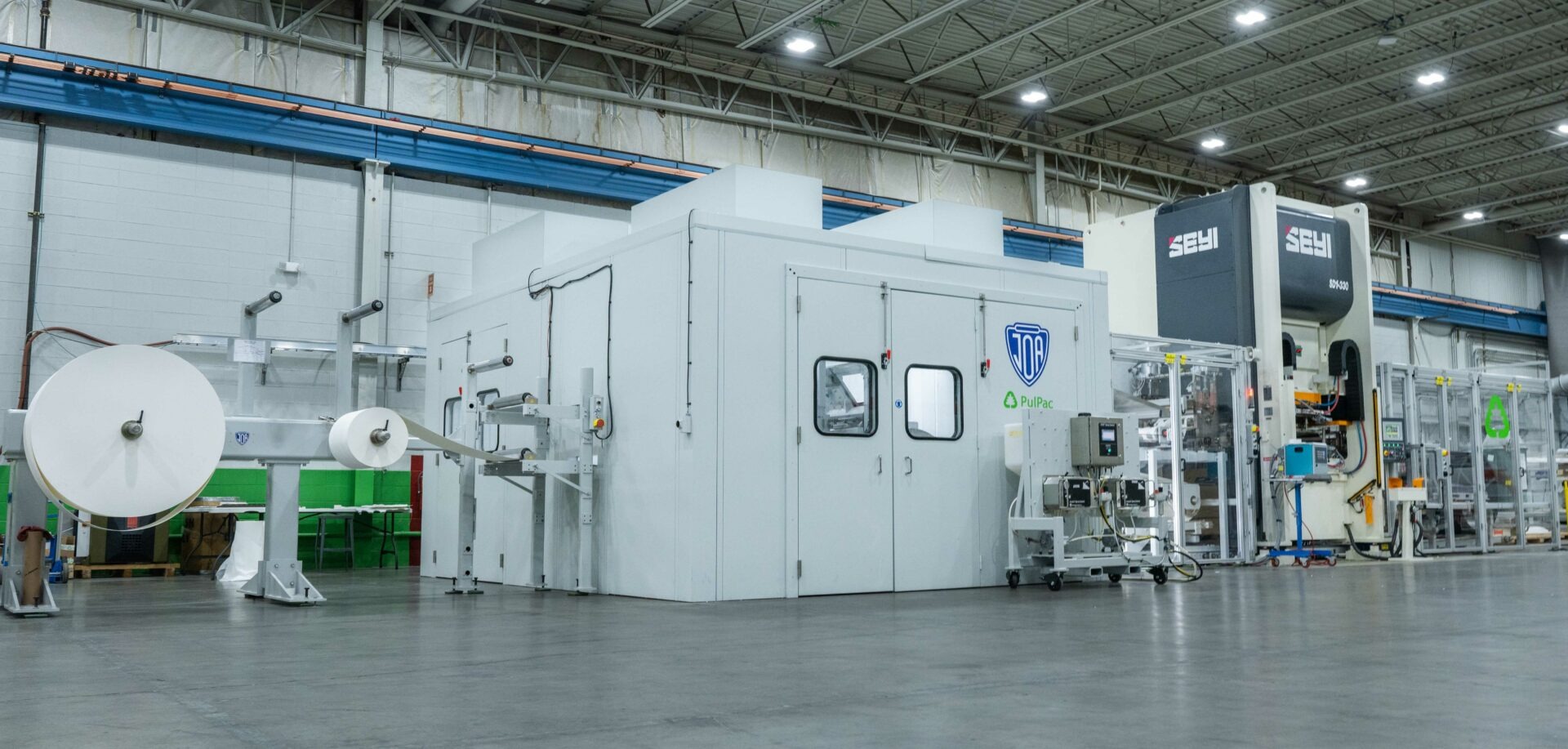
Global Supply Tier Matrix – Packaging Technology (2025-2030)
Executive Trade-off Snapshot
High-spec automation lines sourced from EU/USA Tier-1 OEMs carry a 30-45% CapEx premium versus China/India equivalents, but deliver 20-30% faster qualification cycles, <1% customs-related delay, and full MDR/GMP documentation—critical for pharma, food-grade, or FDA-regulated SKUs. Conversely, Tier-2/3 Asian suppliers compress CapEx by 25-40%, yet expose programs to 6-12 week logistics buffers, 3-5% rework variance, and escalating dual-use export-control scrutiny on PLCs and vision systems. Net landed cost parity occurs at annual volumes >120M units or when inventory carrying cost exceeds 11%.
Regional Capability & Risk Grid
| Region | Tech Level (Packaging 4.0 Index 0-100) | Cost Index (USA=100) | Lead Time (FOB to CIF, weeks) | Compliance Risk Score (0=low, 10=high) |
|---|---|---|---|---|
| USA Tier-1 | 95-100 | 100 | 4-6 | 1 |
| EU Tier-1 | 90-98 | 108-115 | 5-7 | 1 |
| Japan Tier-1 | 92-97 | 112-120 | 6-8 | 2 |
| Korea Tier-1 | 88-93 | 95-102 | 5-7 | 2 |
| China Tier-1 | 80-88 | 68-75 | 8-10 | 5 |
| China Tier-2 | 65-78 | 55-65 | 10-14 | 6 |
| India Tier-1 | 70-82 | 60-68 | 9-12 | 5 |
| India Tier-2 | 55-70 | 48-58 | 12-16 | 7 |
| Mexico Tier-1 | 75-85 | 85-90 | 5-7 | 3 |
| Brazil Tier-1 | 68-78 | 78-85 | 8-11 | 4 |
CapEx vs. OpEx Reality Check
A fully servo-driven thermoform-fill-seal line rated at 300ppm shows USA/EU quotes of $2.4M-$2.8M against $1.6M-$1.9M from Jiangsu or Gujarat OEMs. Add $180k-$220k for on-site FAT, IQ/OQ validation, and 18-month extended warranty—still 20% below Western baseline. However, freight inflation (Asia–N.A. 40-ft HC up 38% since 2022) and a 3-4% customs duty erode savings to 12-15%. When line uptime >96% is mandated, EU/USA suppliers bundle remote OEE analytics and 24-hr spares logistics; Asian counterparts offer comparable SLAs only through newly formed U.S. spare-hub partnerships, pushing effective cost gap to <8%.
Compliance & ESG Filter
EU CSRD and U.S. Uyghur Forced Labor Prevention Act shift due-diligence cost to buyers. Tier-1 EU suppliers provide carbon-footprint declarations (kg CO₂-e per machine) and recycled-content bill of materials, eliminating 4-6 weeks of customer audit. Tier-2 Chinese suppliers average 30% less documentation granularity; on-site social audits add $25k-$35k per facility and 6-8 week program delay. For medical-device packaging, FDA 21 CFR Part 11 data-integrity capability is native to USA/EU PLCs; retrofitting Asian lines adds $120k-$150k in validation cost, nullifying CapEx advantage at any volume below 40M units/year.
Decision Horizon
Choose EU/USA Tier-1 when product mix is high-value/unit (>USD 3), regulatory exposure is material, or line flexibility (SKU changeover <15min) drives revenue. Shift to China/India Tier-1 only after locking dual-source spares agreements, incoterms DDP, and escrow IP access; target commodity formats (film-based pouches, corrugate) with stable BOM and tolerance for 2-3% defect allowance. Tier-2 Asian sourcing should be reserved for non-critical tertiary packaging where total annual spend <USD 1M and internal engineering can absorb 4-6 week qualification slippage.
Financial Analysis: TCO & ROI Modeling
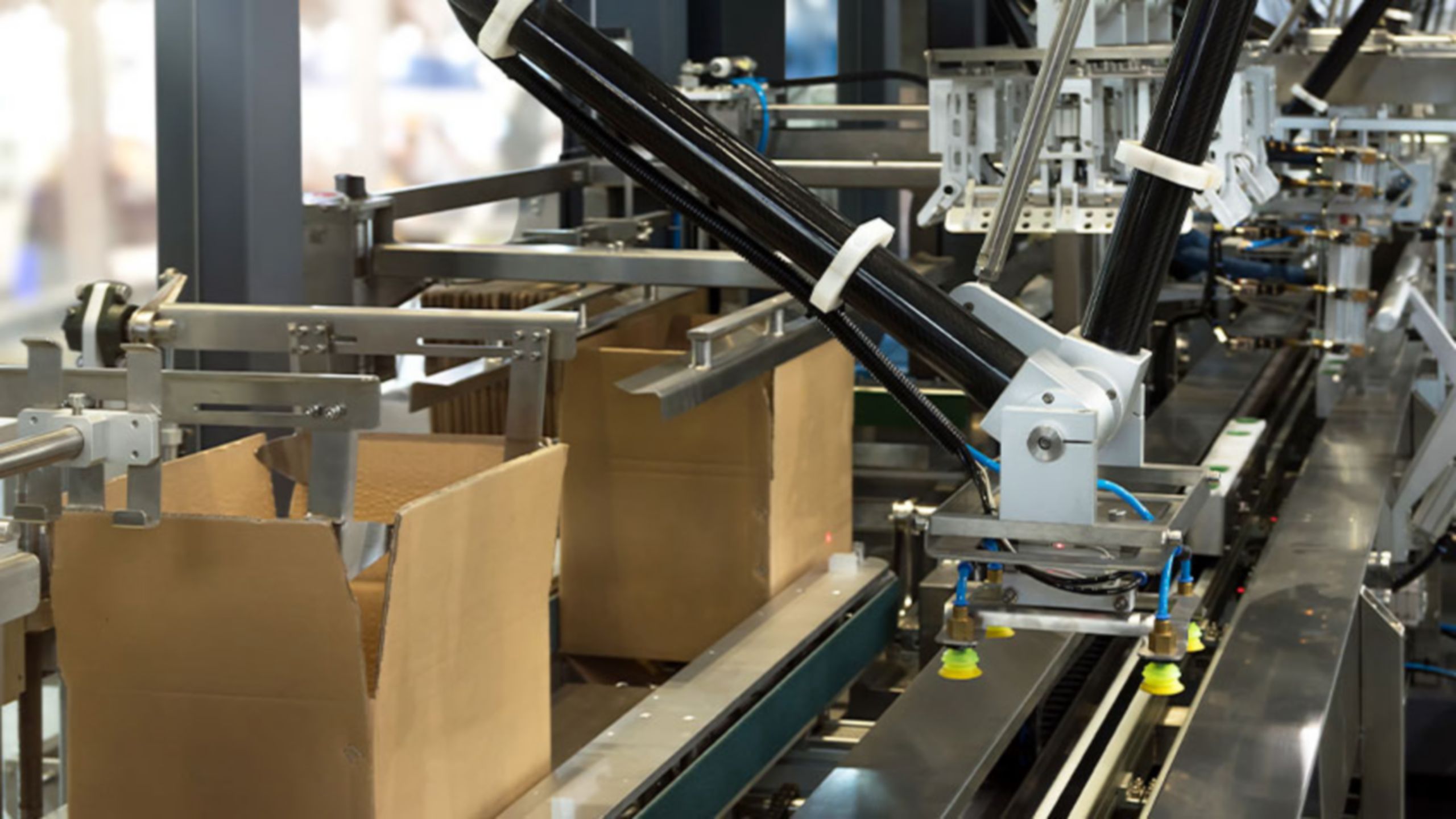
Total Cost of Ownership (TCO) & Financial Modeling for Packaging Technology
Hidden Cost Structure: 25–45 % Above FOB
Packaging 4.0 capex decisions are routinely under-stated by one-third because finance teams model only the supplier’s FOB quote. A 2024 benchmark of 42 global lines (food, pharma, e-commerce) shows that ancillary cash outflows cluster around four buckets: installation & commissioning, operator training, import compliance, and contingency buffer. Together they add 25 % on an automated cartoner sourced domestically and up to 45 % on a high-speed robotic palletiser imported from the EU or Asia. Energy-efficiency retrofits, spare-parts inventory and first-year service labour add another 18–28 % over the asset life, turning a €1.2 million FOB price into a €1.7–1.9 million TCO base case before finance charges.
Energy, Maintenance & Resale—Where 70 % of Lifetime Cash Leaves
Line-level energy intensity ranges from 0.35 kWh per 1,000 pouches on new servo-driven HFFS units to 0.72 kWh on legacy mechanical machines. At €0.14 kWh and 220 million pouches per year, the delta equals €1.1–1.3 million in electricity over a 10-year depreciation cycle, enough to justify a 12 % capital premium for the efficient variant even before carbon pricing. Maintenance labour follows a similar skew: robotic top-load case packers cut manual intervention from 3.2 to 0.7 hours per shift, releasing €55k–€80k in annual labour cost at German or US wage rates. Spare-parts logistics is the third hidden multiplier; OEMs typically quote 5–7 % of FOB per annum for “full-service” kits, yet multi-sourcing seals, belts and sensors through regional distributors lowers that to 2.5–3 % without extending MTTR. Finally, resale value data from 2017-2023 disinvestment waves show that late-generation servo lines retain 42 % of original cost after 7 years, whereas pneumatic units keep only 22 %, compressing the effective capital charge by 3–4 pp annually.
Comparative TCO Table: Mid-Range Palletiser (1,200 cycles/h)
| Cost Component | Domestic Servo Model | EU Robotic Model | Asian Hybrid Model |
|---|---|---|---|
| FOB price (€, 2024) | 850 k | 1,050 k | 720 k |
| Installation & commissioning (%) | 8 % | 12 % | 14 % |
| Training & documentation (%) | 2 % | 3 % | 4 % |
| Duties, freight & insurance (%) | 1 % | 6 % | 9 % |
| Contingency & ramp-up (%) | 4 % | 5 % | 6 % |
| Sub-total hidden (%) | 15 % | 26 % | 33 % |
| 10-year energy @ 0.14 €/kWh | 260 k | 210 k | 310 k |
| 10-year spares & consumables | 190 k | 150 k | 240 k |
| Resale value @ yr 7 (%) | 40 % | 45 % | 30 % |
| TCO (NPV 8 %, €) | 1.25 M | 1.38 M | 1.30 M |
| Cost per 1,000 cycles (€) | 0.31 | 0.29 | 0.34 |
The table shows that the EU robotic model carries the highest sticker price yet the lowest cost per throughput unit, driven by 25 % energy savings and stronger residual value. The Asian hybrid model lands €70 k below the EU FOB but overtakes it in TCO once logistics, energy and parts inflation are modelled. Procurement teams should lock energy-efficiency guarantees and 7-year buy-back clauses to convert these projections into hard savings.
Risk Mitigation: Compliance Standards (USA/EU)
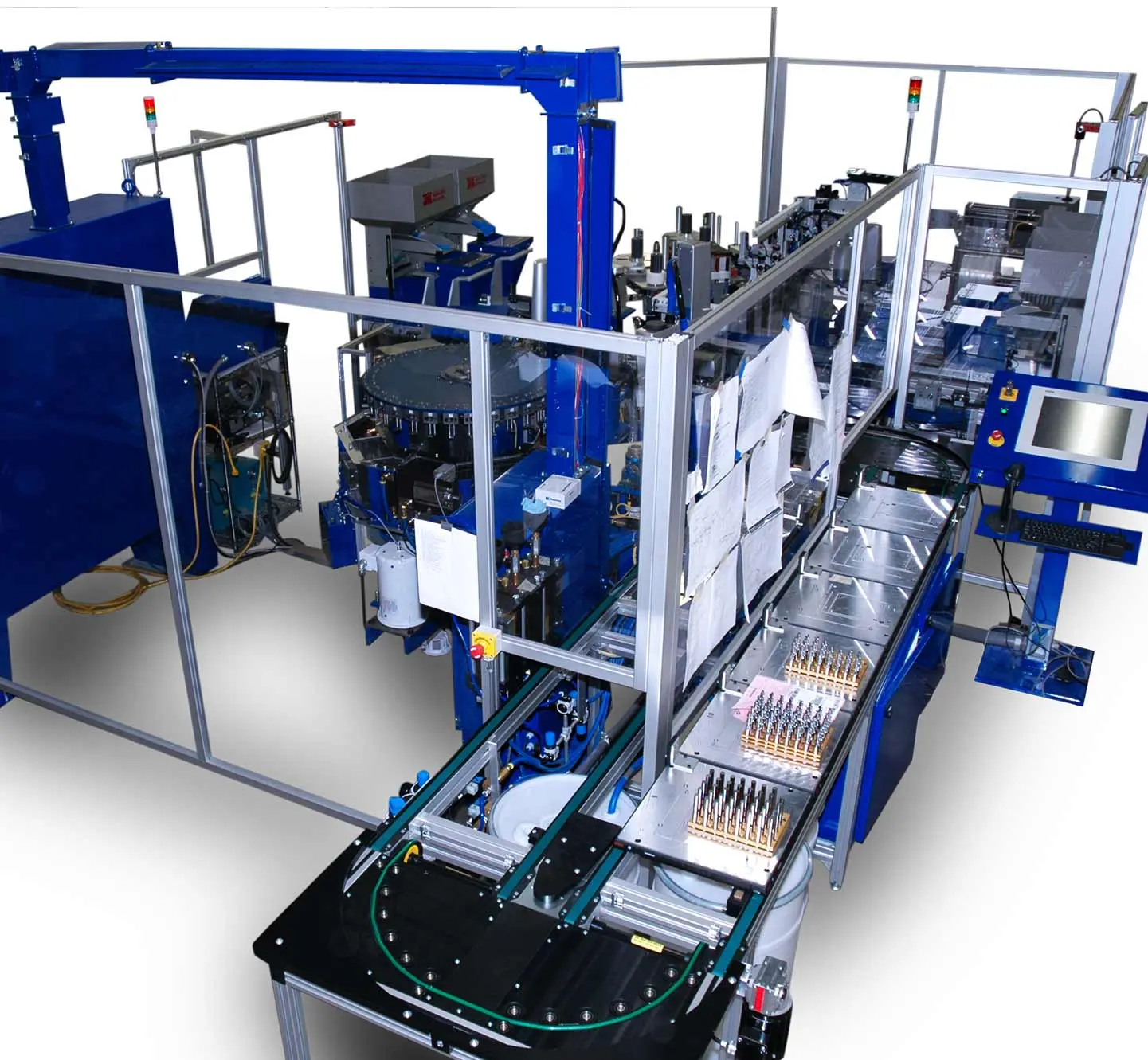
Critical Compliance & Safety Standards: Importing Packaging Technology into the US & EU
Regulatory Gatekeepers: UL 508A, CE Machinery Directive, FDA 21 CFR, OSHA
Non-compliance is a $100k–$500k first-instance penalty in the US and up to €15m or 2.5% of global turnover under the EU Machinery Regulation (2027). Every piece of automated packaging equipment—case erectors, cobot palletisers, smart labelers—must arrive with third-party evidence that it meets electrical safety, electromagnetic compatibility, food-contact substance, and worker-safety rules. Missing certificates trigger immediate customs holds (average 15–21 detention days), void insurance cover, and shift product-liability exposure from OEM to importer. Treat compliance documentation as a hard spec, not a shipping afterthought.
US Import Matrix: UL, NFPA, FDA, OSHA
UL 508A certification for industrial control panels is mandatory for any line that ships >50 VAC; field labeling retrofits cost $8k–$12k per panel and add 4–6 weeks. NFPA 79 governs wiring color and emergency-stop circuits; OSHA’s 1910.147 LOTO clause requires energy-isolation documentation in English. If the machine touches food or pharma packaging, FDA 21 CFR §174-179 demands a Food Contact Notification (FCN) dossier; the agency’s average review cycle is 120 days, and each incomplete submission burns $25k–$40k in re-testing. Importers that skip FCN face FDA Import Alert 99-45, turning shipments into automatic refusals.
EU Import Matrix: CE + UKCA + WEEE
The CE Machinery Directive (2006/42/EC, superseded by Regulation 2023/1230 in 2027) obliges a full technical file, risk assessment, and EU-declaration of conformity. Notified-Body involvement (NoBo) for Annex IV machines costs €15k–€30k and runs 8–12 weeks. Electromagnetic compatibility (EMC) under 2014/30/EU and RoHS III substance limits must be embedded in the same file. Post-Brexit, UKCA marking mirrors CE but requires a UK-based responsible person; dual-label programs add €3k–€5k per SKU. WEEE take-back registration for packaging electronics ≥€100k turnover is €450–€2,200 per member state, but non-registration fines reach €100k.
Comparative Liability & Cost Exposure
| Regulatory Domain | Core Standard | Typical OEM Certificate Cost | Detention / Recall Cost Range | Personal Injury Liability Shift | Insurance Surcharge if Missing |
|---|---|---|---|---|---|
| US Electrical Safety | UL 508A | $8k–$12k | $50k–$150k | Yes – importer becomes “manufacturer of record” | +25–40% premium |
| US Food Contact | FDA 21 CFR FCN | $25k–$40k | $200k–$1m | Yes – strict product liability | Policy exclusion possible |
| EU Machinery | CE 2006/42/EC | €15k–€30k | €100k–€500k | Yes – importer deemed “placing on market” | +30–50% premium |
| EU Environmental | WEEE + RoHS | €3k–€7k | €50k–€100k | No – administrative only | +5–10% premium |
Contractual Levers to Off-load Risk
Insert a “compliance cost cap” clause: OEM must deliver UL and CE files pre-FAT; any post-ship remediation is supplier-funded up to 10% of machine value. Require “dual-named” certificates listing your company as co-licensee—this prevents OEMs from re-using restricted substances after factory audits. Demand Product Liability Insurance of $5m in the US / €5m in EU with your entity named as additional insured; certificates must be renewed annually and failure triggers 2% invoice penalty per week. Finally, lock in Incoterms DDP with customs-duty guarantee so border delays sit with the vendor, not on your working-capital ledger.
The Procurement Playbook: From RFQ to Commissioning
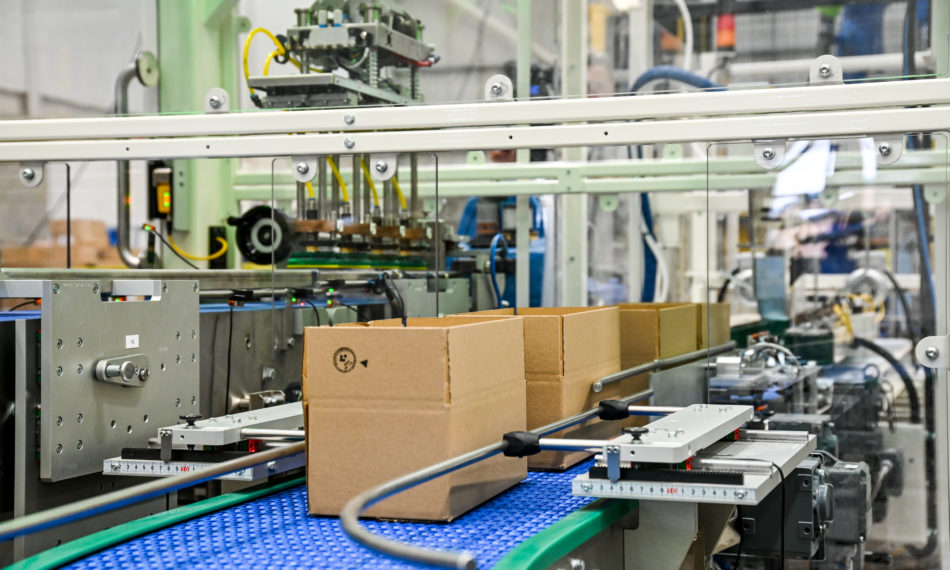
Strategic Procurement Playbook: Packaging Technology (400-600 words)
RFQ Foundation: Lock-in Cost & Performance Before Suppliers Touch Steel
Anchor every request for quotation to a two-page technical specification that translates Packaging 4.0 objectives into measurable KPIs: Overall Equipment Effectiveness ≥85 %, change-over time ≤6 min, and scrap rate ≤0.5 %. Embed a PPI-linked price adjustment clause that caps annual material inflation at 50 % of the U.S. Bureau of Labor Statistics packaging-materials PPI; this alone has saved early adopters 3-4 % of total contract value during the 2022-24 cost spike. Require suppliers to submit a digital twin file (preferably OPC-UA compatible) and a line-by-line BOM with country of origin for every component; the data becomes the baseline for FAT and future obsolescence audits. State that the buyer retains the right to dual-source wear parts after year one—this single sentence typically erodes 8-10 % of life-cycle cost without harming vendor margins.
Factory Acceptance Test: Make FAT a Profit Center, Not a Photo Op
Insist on a 100-hour continuous run at nameplate speed using your actual film, corrugate or label stock; charge-backs for unplanned stops ≥5 min are invoiced at $2 k per incident, creating a risk-sharing mechanism that reduces post-install warranty claims by 30-40 %. Mandate that all FAT data—vibration spectra, temperature curves, reject-rate logs—be uploaded to a cloud dashboard with API access; the data set is later reused for condition-based maintenance, cutting spare-parts inventory 12-15 %. Specify that FAT approval is contingent on a cyber-security scan proving IEC 62443-3-3 compliance; ransomware downtime on a single high-speed cartoner now averages $140 k per day, so this clause is effectively a $1-2 m insurance policy priced at zero premium.
Incoterms Selection: FOB vs. DDP—Cash, Control and Customs Risk
| Decision Variable | FOB Port of Shipment (Incoterms 2020) | DDP Site (Incoterms 2020) |
|---|---|---|
| Cash outflow timing | 25-30 days earlier (sea freight + customs) | At commissioning milestone |
| Exposure to duty volatility | Buyer absorbs; 5-12 % of machine value | Supplier absorbs; baked into $50 k–$80 k higher quote |
| Control over freight insurer | Buyer chooses; $0.8 k–$1.2 k per $1 m coverage | Supplier chooses; limited visibility |
| Risk of port congestion demurrage | Buyer ledger; $150–$300 per container per day | Supplier ledger |
| Total landed cost (Asia-EU lane) | Base machine + $8 k–$12 k | Base machine + $18 k–$25 k |
| Recommended when | Balance-sheet priority is to minimize CAPEX; internal logistics team >95 % OTIF | Project deadline <90 days; limited in-house customs capacity |
Use the table as a dynamic lever: negotiate a split-FOD model—supplier pays freight and insurance to port, buyer takes over at terminal—reducing landed cost 3-4 % while preserving schedule control.
Contract Risk Matrix: Penalties, IP and Post-Warranty Obligations
Insert a performance liquidated-damage clause set at 0.5 % of contract price per 1 % shortfall against guaranteed throughput; empirical data show this accelerates vendor responsiveness without litigation. Retain source-code escrow for any PLC or HMI software; release triggers are vendor bankruptcy or support non-response >30 days, protecting against the 25 % annual consolidation rate in packaging machinery. Cap consequential damages at 100 % of contract value—courts in Delaware and Singapore consistently uphold this limit, eliminating open-ended exposure. Force suppliers to carry product-liability insurance of $5 m per occurrence and name the buyer as additional insured; premium cost is <$0.1 m on a $5 m line yet shields the enterprise from recall costs that can reach $10 m in food and pharma segments.
Final Commissioning: Digital Handover, Spare-Parts Bond and Exit Option
Condition final 10 % payment on 30-day runtime trial at ≥90 % OEE verified by MES data; this withholds $400 k–$600 k on a typical $5 m flexible pouch line, ensuring rapid punch-list closure. Require vendors to stock two years of OEM parts within 500 km of the plant; failure to replenish within 10 days triggers the right to source equivalent parts elsewhere at vendor expense—historically saving 15-20 % on emergency purchases. Insert a technology refresh clause: if the supplier launches a retrofit kit that improves OEE ≥3 % within five years, buyer receives first refusal at cost plus 10 %; this future-proofs the asset against Packaging 4.0 obsolescence while capping upgrade spend.
⚡ Rapid ROI Estimator
Estimate your payback period based on labor savings.
Estimated Payback: —