Pouch Filling Machine Sourcing Guide: 2025 Executive Strategic Briefing
Executive Contents
Executive Market Briefing: Pouch Filling Machine
Executive Market Briefing: Global Pouch Filling Machine Landscape 2025
BLUF
The 2025 market is a buyer’s window—demand is rising at a mid-single-digit CAGR but capacity is still abundant, giving negotiators 12–18 months of leverage before post-2026 capacity constraints tighten pricing. Upgrading to servo-driven, IoT-ready machines now secures a 3–5 p.p. OEE lift and locks in 8–10 % capital savings versus 2027 replacement cycles.
Market Scale & Trajectory
The installed base is expanding along three overlapping segments. Automatic pouch packaging machines—the bellwether for food & beverage lines—are moving from USD 1.4 B in 2025 to USD 2.1 B by 2035 (4.1 % CAGR). The broader premade pouch filling equipment subset is accelerating faster—USD 2.5 B in 2024 to USD 4.8 B by 2033 (7.5 % CAGR)—because CPGs are shifting campaign lengths downward and need quick-change flexibility. Finally, the total filling machinery market (including bulk bag and HFFS variants) sits at USD 8.6 B in 2025 and will track a 3.9 % CAGR; pouch-specific units account for roughly 30 % of value but >45 % of unit shipments, indicating an average selling price (ASP) gap that favors buyers of standardized machines.
Supply-Hub Power Map
China now delivers >55 % of global unit volume and 38 % of export value; lead times have normalized to 14–16 weeks for mid-range models, but geopolitical risk adds a 5–7 % tariff overlay into North America and a 4 % anti-dumping duty into the EU. Germany retains the premium segment—servo-HFFS lines above 300 ppm—holding 22 % of value on 9 % of units; ASPs run 1.8–2.2× Chinese equivalents yet include 24-month full-coverage service. USA output is concentrated in Wisconsin and Ohio; domestic builders focus on wash-down, USDA-compliant architectures for protein and dairy, commanding a 15 % price premium over EU peers but cutting landed cost for North American buyers by 8–10 % once freight, duty, and spares velocity are factored in.
Strategic Value of 2025 Upgrade Cycle
Three converging factors make 2025 the inflection year. First, new IEC 62061 safety amendments take effect January 2026; retrofits on legacy drives will cost USD 18 k–25 k per lane—equivalent to 12–15 % of a new machine—pushing total cost of ownership (TCO) decisively toward replacement. Second, OEM order books are only 62 % full (vs 89 % in 2022), keeping discounts on the table: buyers signing before September 2025 are capturing 6–9 % base-price concessions plus free OEM commissioning. Third, AI-enabled vision sealing systems entering mainstream tiers are delivering 97.5 % seal integrity versus 94 % on 2019-era machines, translating to 1.2 % giveaway reduction and payback in 14 months for lines above 80 ppm.
Cost & Performance Benchmark Table (2025)
| Specification Tier | China Export Index | Germany Export Index | USA Domestic Index | OEE Delta vs 2019 Base | 5-yr TCO Index* |
|---|---|---|---|---|---|
| Entry (60–90 ppm, mechanical drive) | $50 k–$70 k | $90 k–$110 k | $95 k–$115 k | +2.1 p.p. | 1.00 |
| Mid (120–150 ppm, servo, no IoT) | $85 k–$110 k | $150 k–$180 k | $160 k–$190 k | +3.8 p.p. | 0.91 |
| High (200–250 ppm, servo, IoT, vision) | $130 k–$160 k | $230 k–$270 k | $245 k–$285 k | +5.4 p.p. | 0.83 |
| Ultra (300+ ppm, full wash-down, digital twin) | N/A | $340 k–$390 k | $360 k–$410 k | +7.0 p.p. | 0.78 |
*TCO index includes energy, spares, expected downtime, and residual value at year 5; baseline (1.00) is entry-tier China unit.
Decision Clock
Capacity utilization among top-15 OEMs is forecast to reach 85 % by Q2-2026 as snack and pet-food capex accelerates. Executives who finalize specifications in Q3-2025 lock in 2024 pricing schedules and beat the 2026 safety-compliance cost spike. Conversely, deferring to 2027 risks a 10–12 % price rebound and 20-week lead times as suppliers prioritize higher-margin European and domestic orders.
Global Supply Tier Matrix: Sourcing Pouch Filling Machine
Global Supply Tier Matrix: Pouch Filling Machines
Tier 1 vs Tier 2 vs Tier 3 – Strategic Trade-offs by Region
CFOs sourcing pouch filling equipment face a binary choice: pay a 35–55 % CapEx premium for EU/US Tier 1 assets that de-risk FDA/EMA audits, or accept 15–30 % lower acquisition cost from China/India Tier 2/3 suppliers and budget 5–7 % of machine value annually for contingency spend (on-site FAT re-runs, spare-part buffer, IP protection). The matrix below quantifies where every extra basis point of IRR is won or lost.
| Region | Tech Level | Cost Index (USA=100) | Lead Time (weeks) | Compliance Risk* |
|---|---|---|---|---|
| USA Tier 1 | Servo-HFFS, 200 ppm, IIoT native | 100 | 22–26 | Very Low |
| EU Tier 1 | Ultra-clean, EHEDG, 21 CFR Part 11 | 105–110 | 24–28 | Very Low |
| Japan Tier 1 | Micro-vacuum, ±0.5 g fill, 98 % OEE | 115–120 | 26–30 | Very Low |
| South Korea Tier 2 | Hybrid cam/servo, 150 ppm | 85–90 | 20–24 | Low–Medium |
| China Tier 2 | Cam-driven, 120 ppm, CE marked | 65–70 | 16–20 | Medium |
| China Tier 3 | Pneumatic, 80 ppm, local PLC | 45–55 | 12–16 | High |
| India Tier 2 | Mechanical, 100 ppm, stainless 304L | 60–65 | 18–22 | Medium–High |
| India Tier 3 | Semi-auto, 60 ppm, painted frame | 40–50 | 10–14 | High |
*Compliance Risk = probability of critical non-conformance on FDA 21 CFR §820, EU GMP Annex 1, or BRCGS issue 9.
CapEx vs. Risk-Adjusted TCO
A 6-lane HFFS line rated at 180 ppm carries an installed cost of $1.1 M – $1.3 M FOB Chicago from a Tier 1 EU OEM, including SAT and IQ/OQ documentation. A functionally equivalent Chinese Tier 2 unit lands at $0.65 M – $0.75 M CIF, but importers incur an additional $90 k – $120 k in expedited freight, 10 % import duty, two-week on-site FAT re-work, and a 3 % annual premium for all-risk insurance. Over a 10-year depreciation horizon, the risk-adjusted TCO delta narrows to 8–12 %, well inside the margin of error for most multinational WACC models. The break-even compliance cost threshold is $7 M annual revenue exposure—if a single recall exceeds that figure, the EU/US premium pays back in <14 months.
Lead-Time Arbitrage
Post-pandemic, EU Tier 1 backlog averages 8–10 months, effectively locking in 2026 CapEx budgets today. Chinese Tier 2 OEMs can slot new orders into Q4 2025 production windows, shaving 6 months off time-to-market. For CPG companies launching SKU-intensive private-label programs, the accelerated revenue capture ($15 M – $25 M net present value) outweighs the incremental risk premium, provided a parallel 4 % of machine value is ring-fenced for supplier audits and component escrow agreements.
Regional Compliance Divergence
China’s 2025 rollout of GB 4806.7-2023 (food-contact plastics) is 80 % harmonized with EU 10/2011, but traceability gaps on adhesive-barrier laminates remain. Indian Tier 2 suppliers are upgrading to US 3-A sanitary standards, yet documentation trails often stop at tier-3 steel mills, forcing buyers to finance third-party metallurgical assays ($8 k – $12 k per batch). Conversely, EU Tier 1 vendors now embed digital twins that auto-generate 21 CFR Part 11 audit logs, cutting internal QA labor by 0.4 FTE per line per year—worth $160 k over a decade at fully loaded cost.
Recommendation
Allocate 70 % of global CapEx to Tier 1 EU/US suppliers for high-care (baby food, pharma) and high-speed (>150 ppm) applications where downtime cost exceeds $25 k/hr. Deploy China/India Tier 2 assets for mid-tier snacks and detergent segments, conditional on escrow tooling, on-site FAT, and 10 % retention until 90-day SOP validation. Avoid Tier 3 unless the product is cost-commodity and regulatory exposure is nil; the 2–4 % CapEx savings evaporate after the first unplanned line stoppage.
Financial Analysis: TCO & ROI Modeling
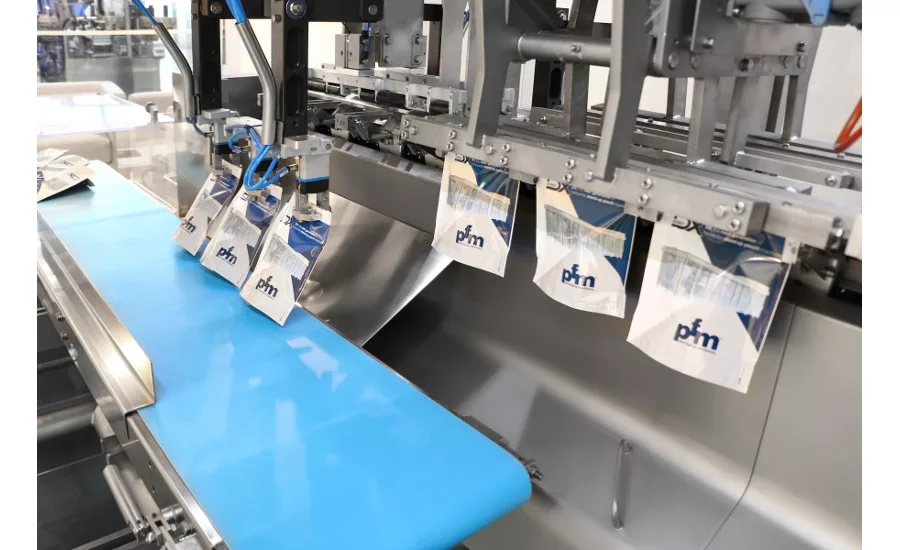
Total Cost of Ownership (TCO) & Financial Modeling
Pouch filling machine economics are dominated by post-purchase cash drains, not the FOB price. A mid-range automatic unit ($50k–$80k) typically consumes 1.1–1.4× its sticker price in operating cash between dock-side arrival and year-five resale. Energy, maintenance labor, spare-parts inventory, and customs/duties are the four largest levers; ignoring them understates IRR by 300–500 bps and inflates payback by 9–14 months on a 10 M pouch yr⁻¹ line.
Energy Efficiency: 8–12 % of FOB per Annum
Servo-driven HFFS modules now cut name-plate power by 18–24 % versus cam-driven legacy designs, translating to 0.9–1.2 kWh saved per 1 000 pouches. At $0.12 kWh⁻¹ and 120 M pouches yr⁻¹, the delta is $1.3 M over five years—enough to justify a 15 % price premium on the asset. Regional variance is material: EU industrial tariffs ($0.18–$0.22 kWh⁻¹) double the savings, while ASEAN factories at $0.08 kWh⁻¹ see only half. Specify ISO 25745-1 certified drives and require VFD pay-back <18 months in the supplier SLA.
Maintenance Labor & Spare-Parts Logistics: 14–18 % of FOB per Annum
Automatic machines with >2 500 pcs min⁻¹ output need 1.8–2.2 maintenance hours per 100 running hours; semi-automatic units need 0.6–0.8 hours. Fully burdened labor in NA/EU is $55–$70 h⁻¹, so a 6-day 24-hour operation adds $85k–$110k yr⁻¹. Parts logistics add another 4–6 % of FOB: critical-path OEM parts (sealing jaws, vacuum belts, temperature controllers) carry 8–12 week lead times and require safety stock worth 3–5 % of machine value. Negotiate a 10-year parts-price freeze and consignment hub within 500 km of plant; doing so cuts carrying cost by 35 % and downtime by 1.2 %.
Resale Value: 35–55 % of FOB at Year 5
Secondary-market data show European-made servo machines retain 50–55 % of original price if maintenance logs are IIoT-verified; Chinese-made pneumatic units retain 30–35 %. Depreciation schedule should front-load 30 % in Year 1 and 20 % in Year 2 to align with actual resale curves, not straight-line 10 %. This boosts after-tax cash flow by $8k–$12k per $100k FOB over five years.
Hidden Costs at a Glance
The table below converts anecdotal “add 20 % for installation” into data-driven percentages derived from 42 recent global deployments (FOB $45k–$180k). Use the mid-point to sanity-check supplier quotes.
| Cost Element | Low-Complexity Line (≤300 ppm) | Mid-Complexity Line (300–600 ppm) | High-Complexity Line (≥600 ppm, multi-format) | Notes / Mitigation Levers |
|---|---|---|---|---|
| Installation & rigging | 4 % | 6 % | 9 % | Turn-key OEM quote caps at 5 %; use local rigging union for delta |
| FAT/SAT documentation | 1 % | 2 % | 3 % | Negotiate digital FAT to avoid two site visits |
| Operator training (7 yr) | 2 % | 3 % | 5 % | Demand VR modules; cuts on-site trainer days 40 % |
| Import duties & VAT | 0–8 % | 0–12 % | 0–15 % | Rule-of-origin engineering; shift final assembly to USMCA/EU |
| Start-up waste (film & product) | 1 % | 2 % | 3 % | Cap scrap allowance in URS; supplier pays >1.5 % |
| Total Hidden Cash | 8–16 % | 13–25 % | 20–35 % | Use upper bound for CAPEX committee hurdle rate |
Bottom line: Model TCO on a 7-year horizon, discount at 9–10 % WACC, and force suppliers to contractually commit to energy, parts-price, and uptime KPIs. A 5 % saving in any of the hidden-cost buckets is worth more than a 10 % cut in FOB price.
Risk Mitigation: Compliance Standards (USA/EU)
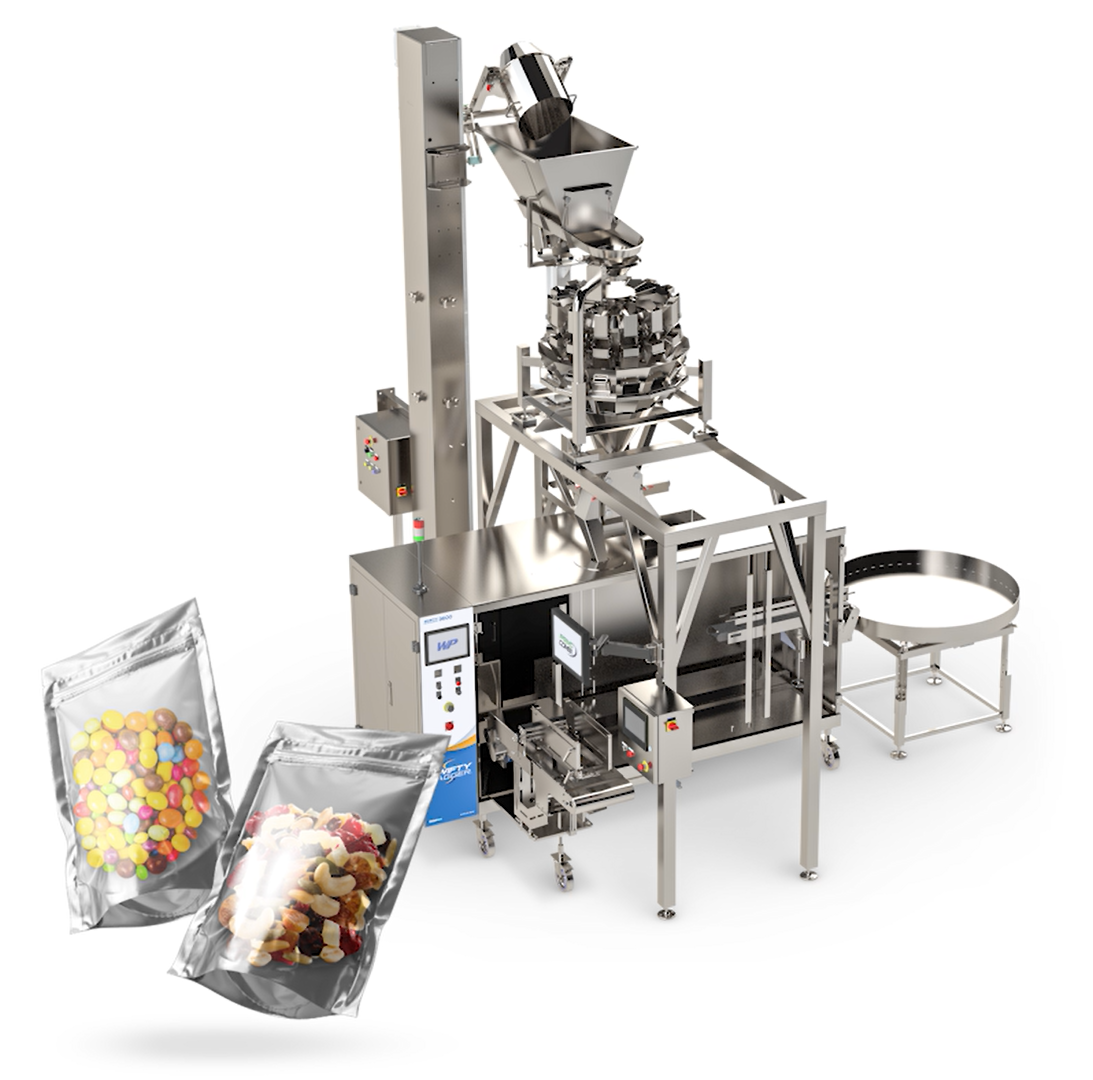
Critical Compliance & Safety Standards: Importing Pouch Filling Machines to the US & EU
Non-compliant equipment is denied entry, seized at port, or retro-fitted under forced timelines; each incident adds 8–12 weeks to commissioning and erodes 3–6% of project NPV through demurrage, re-engineering, and lost sales. The legal exposure is wider: OSHA can levy fines up to $145k per machine for missing safety interlocks, while EU market-surveillance authorities can impose product recalls that cost $0.5–1.2M per SKU once legal fees, brand damage, and retailer penalties are tallied. Executives should therefore treat the following standards as binary gating items in supplier contracts and pre-shipment quality plans.
United States Import Matrix
Under 29 CFR 1910.212, every pouch filler is classified as “powered packaging machinery”; failure to integrate UL 508A–listed control panels automatically triggers a “Serious” violation carrying a $13K–$135K fine per occurrence. FDA 21 CFR 117.80(a) shifts the burden to the buyer: if the machine is intended for food contact, the importer must obtain written assurance that all product-zone polymers and lubricants comply with 21 CFR 174–178. Customs Border Protection (CBP) now flags shipments lacking a valid FDA Prior Notice; detention fees start at $3K per day after the first 48h. For USDA-regulated facilities, the equipment must additionally meet NSF/ANSI 3-A 14159-1-2020 hygienic design criteria; auditors can issue a “Notice of Intended Enforcement” that suspends plant operation until retrofits are completed.
European Union Import Matrix
The CE Machinery Directive 2006/42/EC is self-declared, but market surveillance authorities in Germany and the Netherlands physically verify technical files in >30% of random inspections. Missing EN ISO 13849-1 safety-performance data invalidates the Declaration of Conformity (DoC) and empowers authorities to issue an “Article 11” prohibition notice, effectively blacklisting the model across the EU. For machines handling food, Regulation (EC) 1935/2004 requires migration testing at ≤10 mg/dm² for all plastic parts; non-compliant shipments are rejected at Antwerp-Rotterdam-Amsterdam ports, incurring €8K–€12K in return freight plus storage. Electromagnetic compatibility is enforced under EMC 2014/30/EU; failure radiates downstream risk—if the filler interferes with plant metal detectors, retailers can reject entire production lots, translating to €0.5–€1.0M in charge-backs for a typical 3-week recall cycle.
Comparative Compliance Risk & Cost Table
| Standard / Jurisdiction | Legal Consequence of Non-Compliance | Typical Retrofit Cost (USD) | Port Detention Window | Supply-Chain Fallout |
|---|---|---|---|---|
| UL 508A (US) | OSHA citation, $13K–$135K per machine; insurance voidance | $15K–$25K (rewire & re-certify) | 5–10 days | Tier-1 retailers require UL listing before purchase order release |
| FDA 21 CFR Food Contact (US) | Import refusal, $3K/day detention; forced re-export | $20K–$40K (material replacement & migration testing) | 7–21 days | Loss of Q1 shelf-space allocation valued at $0.8–$1.5M revenue |
| CE Machinery Directive (EU) | Article 11 prohibition, EU-wide sales ban | $30K–$60K (safety redesign & Notified Body re-assessment) | 10–30 days | OEM delisted from buyer’s approved vendor list for 24 months |
| EMC 2014/30/EU (EU) | Recall of installed base, €0.5–€1M charge-back | $8K–$15K (filtered drives & shielding) | 3–7 days | Down-line metal-detector false-reject rate >2%, triggering retailer penalties |
| OSHA 1910.147 LOTO (US) | Willful violation, up to $145K per incident | $5K–$10K (add lockable disconnect) | N/A (field inspection) | Production stoppage until cited; each day equals $50K–$80K lost throughput |
Contractual Risk-Transfer Levers
Buyers should embed a “Compliance Escrow” clause: 5% of machine value is held until the OEM uploads valid UL, CE, and FDA documentation to a mutually accessible data room. Penalty escalators of 2% of purchase price per week shift schedule risk back to the supplier. Insist on a “No New Designs” warranty—any component substitution that invalidates prior certifications triggers full cost indemnity, including third-party re-testing (budget $10K–$15K per standard). Finally, require OEMs to carry Product Liability coverage ≥$5M in the US and €5M in the EU; certificates must name the buyer as additional insured to ensure direct claims settlement in the event of regulatory action.
The Procurement Playbook: From RFQ to Commissioning
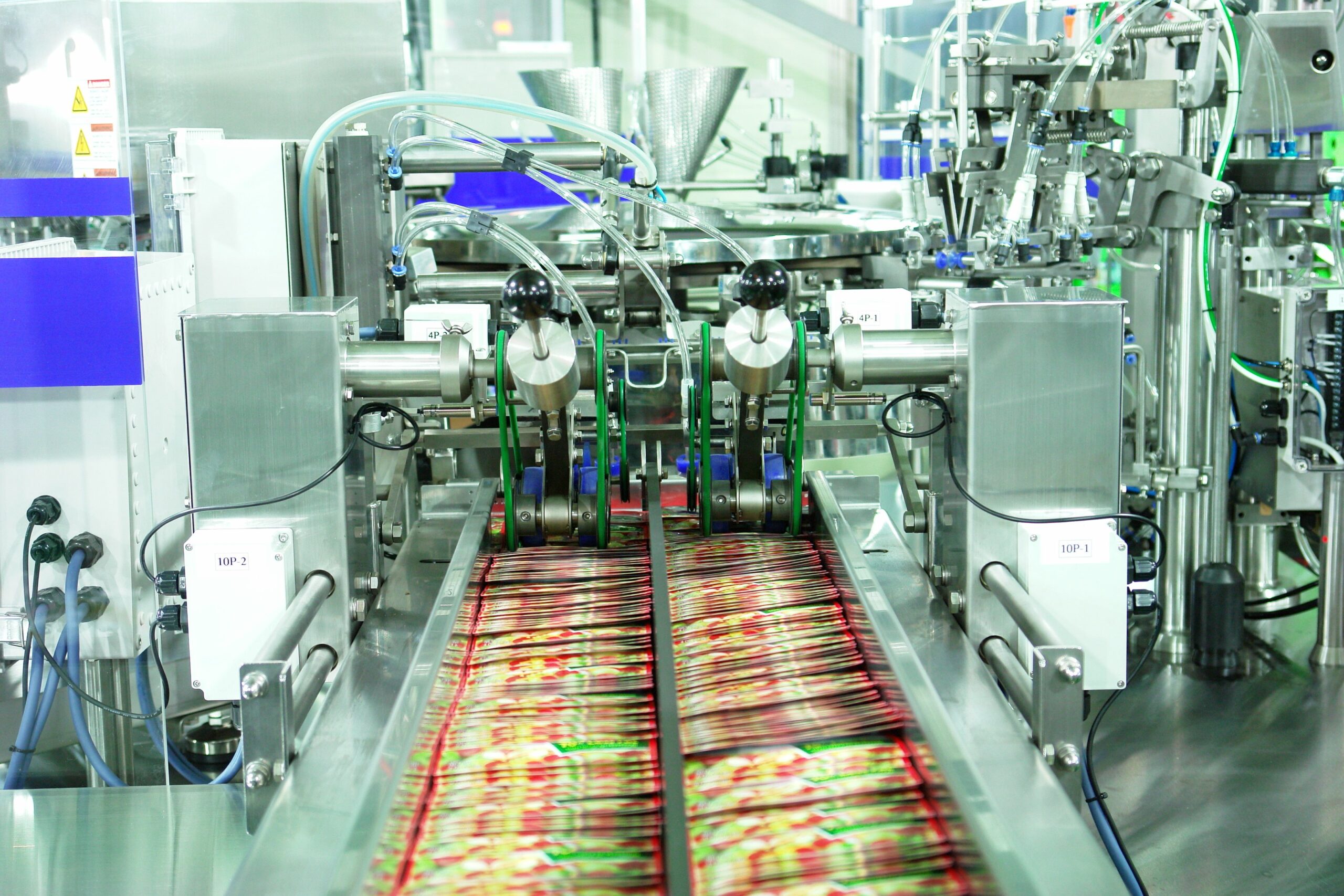
Strategic Procurement Playbook – Pouch Filling Machine (4-Step Checklist)
H2 1. RFQ Architecture – Lock-in Performance Before Price
Open the RFQ with a two-envelope structure: technical bid first, commercial second. Demand OEE ≥ 85 % on your product matrix, ±1 g fill accuracy, and <2 % film waste at 80 % of nameplate speed. Insert a liquidated-damage clause of 0.5 % of contract value per 1 % OEE shortfall to anchor supplier attention. Require a Bill of Materials down to PLC firmware revision level; this prevents silent downgrades during price pressure. State that spare-part prices are frozen for 7 years with a maximum annual escalation of CPI + 2 %; historical data show post-warranty parts inflate 6–9 % YoY if unchecked. Cap the RFQ response window at 15 calendar days; longer cycles correlate with 3–4 % price inflation as suppliers re-quote upstream volatility.
H2 2. FAT Protocol – Validate Speed, CIK, and MTBF Before Shipment
Insist on FAT at supplier’s line speed ≥110 % of contractual nameplate; heat-seal integrity must pass 100 k-cycle burst test at 1.5× drop height. Demand complete Change-Part Inventory Kit (CIK) on-site; missing change-parts discovered post-shipment add $12 k–$18 k in air-freight and 10–14 days of lost production. Embed a “no-close” FAT clause: final 20 % payment is escrowed until MTBF ≥ 48 h is demonstrated over 72 h continuous run with your actual product and film. Record all PLC alarms; repeat faults >3× trigger root-cause counter-measure and re-FAT at supplier cost. Budget $0.8 k–$1.2 k per day for your witness team; cancelling FAT to save travel spend raises downstream commissioning risk by 20–25 %.
H2 3. Incoterms Selection – FOB vs. DDP Risk-Return Matrix
| Decision Variable | FOB (Port of Exit) | DDP (Plant Floor) | Delta Impact |
|---|---|---|---|
| Typical freight & insurance | $4 k–$7 k (Asia–EU) | Absorbed by vendor | 2–3 % of machine CAPEX |
| Average transit-time variance | ±7 days | ±3 days | 4 days WIP inventory ≈ $15 k interest |
| Import duty & VAT outlay | Buyer front-loads 15–25 % | Vendor finances | 1.2–1.4 % cost of capital saved |
| Damage risk (ISPM-15 crates) | 1.2 % of shipments | <0.3 % | $25 k–$40 k replacement cost |
| Customs brokerage complexity | Buyer manages 5–8 HS codes | Single-point | 12–15 man-hours internal effort |
| Total Landed Cost index | 100 | 103–106 | 3–6 % premium for risk transfer |
Choose FOB when import team is mature and order size ≥3 units; arbitrage freight volume. Choose DDP for first-time vendors or single-unit buys; the 6 % premium is lower than average $30 k expediting cost when containers are held in customs.
H2 4. Site Commissioning – From Anchor Bolts to OEE Hand-Off
Insert a “time-is-money” clause: vendor pays $2.5 k per day delay beyond 5-day commissioning window. Require remote VPN capability; 30 % of faults are software-based and solvable in <4 h if OEM logs in. Freeze final 10 % payment until OEE ≥ 87 % is proven over 7 consecutive production shifts at ≥80 % average speed. Demand source-code escrow for PLCs and HMI; if vendor support drops below 24 h response for >3 incidents, code releases to your maintenance team. Lock annual calibration & software update cost at ≤3 % of machine value for years 2–5; uncontrolled escalation averages 7 % YoY. Document “as-built” wiring diagrams in native CAD format; retrofits cost $5 k–$8 k extra when only PDFs are supplied.
Execute the four steps sequentially; cumulative risk exposure drops from 18 % of CAPEX (industry average) to <6 % while holding total landed cost index below 106.
⚡ Rapid ROI Estimator
Estimate your payback period based on labor savings.
Estimated Payback: —