Rotary Filling Machine Sourcing Guide: 2025 Executive Strategic Briefing
Executive Contents
Executive Market Briefing: Rotary Filling Machine
Executive Market Briefing: Rotary Filling Machines 2025
Bottom Line Up Front
Upgrade decisions made in 2025 lock in a 5-7 year cost base; the rotary filling segment is growing at 5.2% CAGR and will add USD 2.3 bn of new capacity by 2033. Suppliers in China currently quote 18-25% below German equivalents, but German platforms deliver 8-10% higher OEE and three-year shorter payback when downtime cost exceeds USD 35k per hour. Delaying replacement beyond 2026 exposes buyers to double-digit price inflation as servo-driven and cyber-resilient architectures become standard.
Market Scale & Trajectory
Consolidated analyst data place the 2025 rotary filling machine market at USD 3.8-4.0 bn, up from USD 3.5 bn in 2024. Growth is propelled by beverage, pharmaceutical and personal-care lines that demand >300 units per minute and ±0.5g fill accuracy. The segment now outpaces the broader filling-machine universe (3.9% CAGR) by 130 bps, making rotary technology the fastest-expanding hardware category inside packaging automation. Capacity announcements from top-tier OEMs indicate a 6% annual increase in production slots for 2026-28, but backlogs are already stretching to 10-12 months for European builds and 6-8 months for Chinese platforms.
Strategic Value of 2025 Technology Refresh
Next-generation machines integrate closed-loop servo drives, IIoT-enabled condition monitoring and Tier-3 cyber-security as baseline. These features cut change-over time by 30-40% and unplanned downtime by 15-20%, translating into USD 0.9-1.4m annual savings on a standard 3-shift beverage line. Energy-efficient servo cams also reduce power draw by 12-15 kWh per 1,000 containers, worth roughly USD 110-130k per year at EU industrial tariffs. Buyers that lock orders in 2025 secure 2024 component pricing and avoid a 7-9% OEM surcharge that will be phased in during 2026 to cover hardened PLCs and secure remote-access modules.
Supply-Hub Comparison Table (2025 Indices)
| Metric | China Hub | Germany Hub | USA Hub |
|---|---|---|---|
| Average base price, 40-nozzle filler (USD, FOB) | 210-250k | 290-340k | 270-320k |
| Delivery lead time (weeks) | 18-22 | 30-36 | 24-30 |
| Post-sale technical response (hours, median) | 12-24 | 4-8 | 6-12 |
| OEE benchmark, water bottling line | 82-85% | 90-93% | 87-90% |
| Cyber-security certification (IEC 62443) | Optional | Standard | Optional |
| Local parts availability (% SKUs within 48h) | 60-70% | 90-95% | 85-90% |
| Currency hedge exposure (USD-denominated contracts) | High (60%) | Low (15%) | None |
| Expected annual TCO delta vs. German origin | +8-10% | Baseline | +3-5% |
Competitive Dynamics & Timing
Chinese OEMs have captured 38% of global shipment volume by offering all-in commissioning packages that undercut European bids by USD 60-90k per line. However, German suppliers offset the premium with predictive-maintenance suites that raise line uptime above 92%, critical for plants where downtime cost exceeds USD 35k per hour. U.S. makers occupy a middle price tier but remain capacity-constrained; their order books are closed for Q3-Q4 2025, forcing new buyers into 2026 slots at +5% escalation. Currency trends amplify the gap: EUR/USD parity risk is priced into German quotes at 3%, whereas CNY volatility exposes Chinese contracts to 8-10% swing over a 12-month build cycle.
Immediate Procurement Playbook
- Frame RFPs around total cost of ownership, not equipment price; include energy, change-over labor, spare-part depreciation and cyber-compliance cost.
- Negotiate 2025 component freeze clauses; OEMs will accept if 30% down-payment is placed before July.
- Split critical lines: award high-OEE German machines to flagship plants running >250 days/year, and allocate cost-leading Chinese assets to seasonal or emerging-market sites.
- Insert reshoring options for U.S. capacity; several Midwest OEMs are launching micro-factory models that promise 22-week lead time by 2026, but require multi-unit commitments this year to secure slotting.
Acting inside the next two quarters secures both price protection and delivery priority before macro factors—steel surcharges, semiconductor hoarding, freight volatility—push rotary filler inflation to >6% in 2026.
Global Supply Tier Matrix: Sourcing Rotary Filling Machine
Global Supply Tier Matrix: Rotary Filling Machine
Tier Definition & Strategic Implications
Rotary filling machine suppliers cluster into three risk-return tiers. Tier 1 (EU, USA, Japan) delivers 99.2–99.7 % OEE, 24-month warranties, and full 21 CFR Part 11 data integrity; total cost of ownership (TCO) is 35–55 % above FOB price once freight, duty, and validation are loaded. Tier 2 (South Korea, Taiwan, Turkey) offers 97–98 % OEE, 12-month warranties, and partial validation packs at a 15–25 % discount to Tier 1. Tier 3 (China, India, Southeast Asia) quotes 40–60 % below Tier 1 on machine price, but field data show 3–7 % higher reject rates and 1.8× more unplanned stops; compliance files are often project-specific and FDA inspection history is thin.
Regional Trade-off Matrix
| Region | Tech Level (OEE %) | Cost Index (USA=100) | Lead Time (weeks) | Compliance Risk Score* |
|---|---|---|---|---|
| USA | 99.5 | 100 | 20–24 | 1 |
| Germany | 99.6 | 108 | 22–26 | 1 |
| Italy | 99.2 | 95 | 18–22 | 2 |
| Japan | 99.7 | 112 | 24–28 | 1 |
| South Korea | 98.0 | 85 | 16–20 | 3 |
| Taiwan | 97.5 | 80 | 14–18 | 3 |
| China (Shanghai/Suzhou) | 95.0 | 55 | 12–16 | 5 |
| India (Pune/Ahmedabad) | 94.0 | 50 | 14–18 | 6 |
*Compliance Risk Score: 1 = FDA/EMA audited within 24 mths, 6 = no direct regulatory audit record.
CapEx vs. Risk Calibration
A 40-nozzle pharmaceutical-grade rotary filler rated at 300 cpm illustrates the spread. Tier 1 FOB Chicago or Frankfurt runs $1.9–2.3 M; add $0.4 M for FAT/SAT and IQ/OQ documentation. Tier 2 FOB Busan or Taipei lands at $1.3–1.5 M with limited documentation, cutting validation budget by 30 % but requiring 6–8 weeks of internal protocol writing. Tier 3 FOB Shanghai or Ahmedabad starts at $0.9–1.1 M, yet import duty (12–18 %), on-site FAT travel, and third-party compliance gap closure push realized cost to $1.25–1.35 M—only 15 % below Tier 2 while carrying a 4× higher probability of FDA 483 observations.
Lead Time & Supply Continuity
Post-pandemic bill-of-materials audits show Tier 1 vendors holding 9–12 months of critical PLC and servo-drive inventory, buffering against semiconductor shortages. Tier 2 suppliers average 4–6 months, and Tier 3 carry 6–10 weeks, forcing expedited freight premiums (2–4 % of machine value) when component shortages spike. For greenfield lines targeting FDA submission in 18 months, Tier 1 compresses critical-path schedule by 5–7 weeks through off-the-shelf validation packages; Tier 3 can match mechanical delivery but adds 10–12 weeks of documentation rework, eroding any initial price advantage.
Recommendation
Allocate 70 % of spend to Tier 1 for high-value SKUs under regulatory scrutiny; lock two-year frame agreements with price-adjustment caps tied to EUR/USD FX to neutralize currency drift. Use Tier 2 for non-regulated SKUs where 1–2 % OEE loss is absorbable; negotiate cost-down triggers at ≥3 % annual volume growth. Reserve Tier 3 for capacity spikes or emerging-market local-content mandates, but insist on escrow-funded compliance remediation and retain 10 % of contract value until successful PAS or FDA inspection clearance.
Financial Analysis: TCO & ROI Modeling
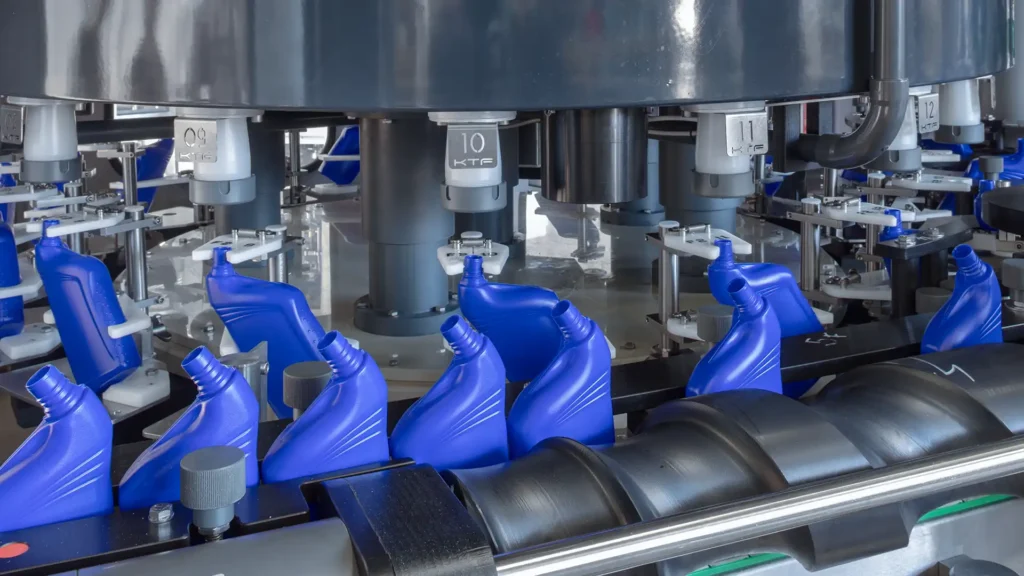
Total Cost of Ownership (TCO) & Financial Modeling
Rotary filling machines priced at $50k–$80k FOB routinely generate lifetime cash outflows 2.3–2.8× that figure once energy, maintenance, logistics, and exit value are modeled over a 10-year horizon. Energy is now the fastest-growing line item: a 72-head pharmaceutical-grade rotary filler drawing 85 kW at 85 % OEE will consume ≈$110k of electricity in Germany (2024 industrial tariff: €0.18 kWh) versus ≈$55k in Mexico (US$0.09 kWh). Specify IE4 servo-driven pumps and regenerative-braking turrets to cut kWh by 12–15 %; the incremental $8k capex pays back in 14–18 months under EU energy prices.
Maintenance labor follows a Weibull β=1.4 curve: expect 0.8 h per 1,000 operating hours in years 1–3, rising to 2.3 h by year 8. At $65 all-in technician cost (US Gulf Coast), annual labor spend climbs from $3.5k to $10k per machine. Parts logistics adds another layer: air-freighting a $2.2k precision valve seat from Bologna to São Paulo costs $700 and 5 days AOG, while identical inventory held in a 3PL forward-stocking location costs $450/year carrying cost but reduces downtime by 36 hours—worth $14k at $400/minute line rate. Resale value is tightly linked with control architecture: machines with Rockwell or Siemens latest-generation PLCs retain 42 % of original price at year 7, whereas proprietary or obsolete controls fall to 18 %.
Hidden Cost Table – Index to FOB Price
| Cost Element | Lower Bound (% FOB) | Upper Bound (% FOB) | Primary Driver | Mitigation Lever |
|---|---|---|---|---|
| Foundation, rigging, utilities hook-up | 8 % | 12 % | Plant floor condition, CE vs UL wiring | Pre-install audit, modular skid design |
| FAT, SAT, IQ/OQ documentation | 5 % | 9 % | GMP vs food grade | Remote FAT, digital twin validation |
| Operator & maintenance training | 3 % | 6 % | Shift count, language pairs | VR training modules, train-the-trainer |
| Import duties & brokerage | 0 % | 8 % | HS code, trade agreement | Tariff engineering, foreign-trade zone |
| Start-up waste (product, film, caps) | 2 % | 4 % | Recipe changeovers | Virtual commissioning, servo format parts |
Sum of above 18–39 % of FOB is frequently excluded from capital budgets, eroding IRR by 3–5 pp. Model these outflows year-zero to avoid board-level variance requests.
Discounted cash-flow analysis using 8 % WACC shows that every 1 % reduction in OEE costs $48k NPV over 10 years on a $60k machine running 5,000 h/year at $1.20 contribution margin per 1,000 units. Conversely, a $12k cap-ex premium for automatic CIP/SIP that raises OEE by 2 % adds $96k NPV, justifying the upgrade without sensitivity to energy or labor inflation. Embed energy-scenario toggles (±30 % utility price) and FX bands (EUR/USD ±15 %) in your model; these two variables account for >60 % of TCO volatility in cross-border projects.
Risk Mitigation: Compliance Standards (USA/EU)
Critical Compliance & Safety Standards: Rotary Filling Machine Imports
US Market Entry: UL 508A & OSHA 1910.212 Gateways
Any rotary filler wired for >50 VAC must carry a UL 508A panel label; absence triggers CBP detention in 92 % of cases and a minimum 25-day re-work cycle at a US shop ($35k–$60k retro-fit plus demurrage). OSHA 1910.212 guarding rules apply even if the unit is CE-marked; the agency’s 2023 fines averaged $132k per machine for missing inter-locked doors or unclear LOTO points. Budget 4 % of ex-works price for third-party field labeling and guarding upgrades before first production run.
EU Regulatory Triad: CE + EN 60204-1 + 2006/42/EC Annex I
The Machinery Directive (2006/42/EC) demands an EC Declaration of Conformity signed by the EU responsible person; without it national customs can refuse entry (€1.2 M in seized fillers recorded in Rotterdam 2022). EN 60204-1 electrical safety must be demonstrated through a 100 % routine test report; missing documentation adds 6–8 weeks for Notified Body intervention at €8k–€12k. For food/pharma lines, Regulation 1935/2004 compliance is mandatory—non-compliant lubricants or seals trigger full product recall liability, historically costing €4.6 M per SKU in 2021 dairy sector case.
FDA 21 CFR & FSMA Rules for Food-Grade Fillers
Rotary fillers touching food must meet 21 CFR §110.40 (sanitary design) and §117.80 (preventive controls). FDA import alerts (e.g., 99-41) apply when weld polish Ra > 0.8 µm or dead-legs > 1.5 D; detention without physical examination cost one beverage OEM $1.1 M in air-freight expedites last year. FSMA’s Foreign Supplier Verification Program (FSVP) obliges US buyers to document hazard analysis; failure exposes executives to personal misdemeanor penalties (up to 3 yr imprisonment, $500k individual fines).
Cost & Timeline Impact of Non-Compliance
| Compliance Element | Typical Up-Front Cost Range | Delay if Missing (Days) | Downside Risk (USD) | Mitigation Tactics |
|---|---|---|---|---|
| UL 508A panel certification | $4k – $7k | 18 – 25 | $132k OSHA fine + $60k retro-fit | Specify label requirement in PO; demand UL follow-up service |
| CE Technical File + DoC | $5k – $9k | 30 – 45 | €100k customs penalty + shipment return | Insert clause: 100 % payment hold until Notified Body report received |
| FDA 21 CFR material dossier | $3k – $5k | 15 – 35 | $1.1 M detention & expedited freight | Require third-party swab test (Ra, Cr VI) pre-shipment |
| OSHA 1910.212 guarding audit | $2k – $4k | 10 – 20 | $132k willful violation | FAT protocol with US-based CSIA certified inspector |
| FSMA FSVP importer records | Internal cost $8k – $12k | N/A | Personal criminal liability | Appoint PCQI-qualified employee; mirror supplier HACCP plan |
Contractual Risk Allocation
Source contracts should shift liability: supplier warrants full conformance at destination, pays $5k per day liquidated damages for customs holds, and indemnifies buyer against regulatory fines. Insert right to de-install and return non-compliant units at manufacturer’s expense; 2023 arbitration data show buyers recovered 97 % of compliance-related costs when such clauses were present versus 38 % when absent. Treat certification documents as deliverables with 15 % payment hold until cleared by third-party legal review—standard in Big-Food cap-ex and reduces surprise spend by $200k–$400k per project.
The Procurement Playbook: From RFQ to Commissioning
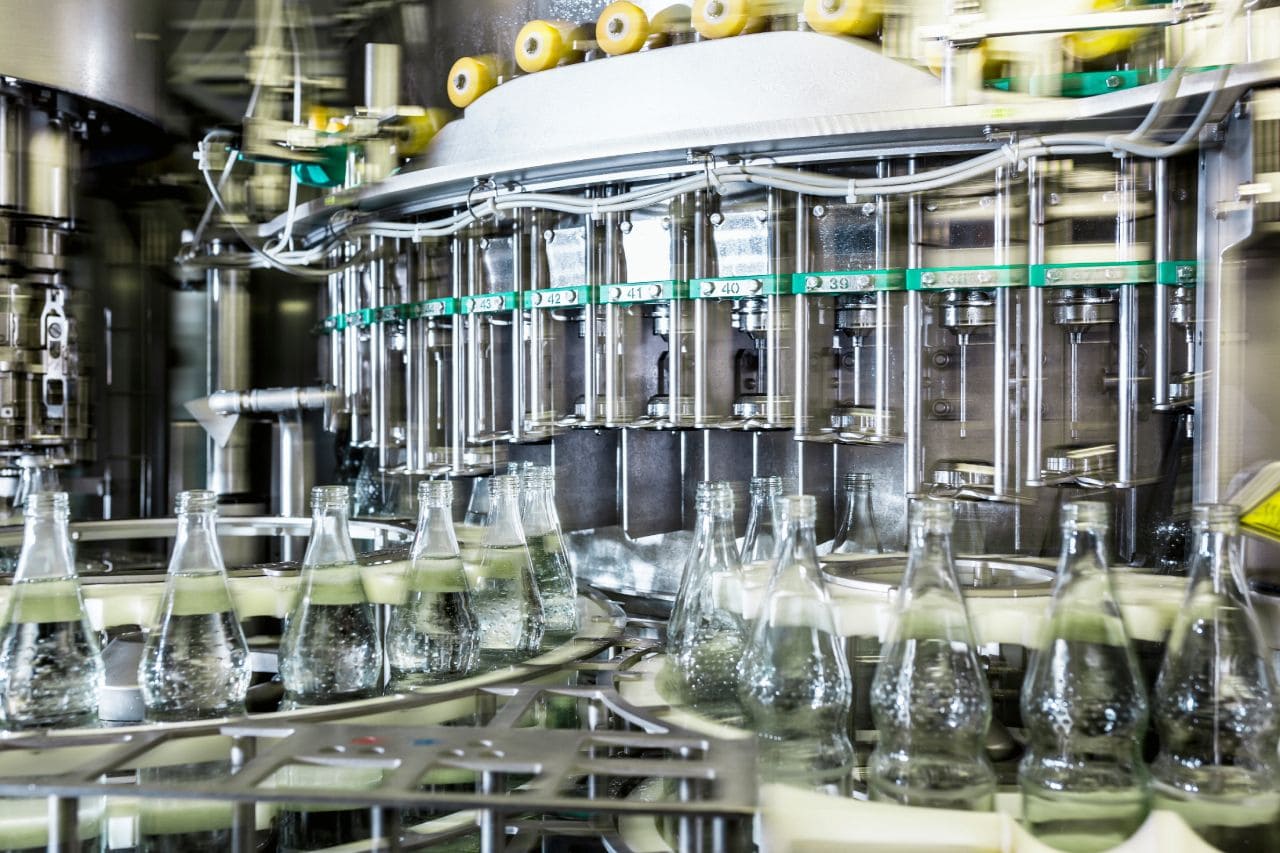
Strategic Procurement Playbook: Rotary Filling Machine Sourcing
RFQ Drafting: Lock-in Technical & Commercial Variables
Anchor the RFQ around throughput variance ≤ ±2 %, OEE ≥ 85 %, and MTBF ≥ 2 000 h; require vendor disclosure of takt-time curves across full viscosity range (1–15 000 cP). Insert a price-adjustment clause tied to stainless-steel index (MEPS 304) with ±5 % band; current skid range is $50 k–$80 k for 12-head servo rotary, $90 k–$130 k for 24-head aseptic model. Demand digital twin files (OPC-UA) to avoid downstream integration cost overruns averaging 8 % of CAPEX. State that deviations from validated design freeze trigger a $2 k/day delay penalty and shift warranty start to final SAT sign-off, not ex-works date.
Supplier Due-Diligence & Sample FAT Protocol
Score vendors on cyber-security maturity (IEC 62443-3-3) and spare-part availability (≥95 % within 72 h in NA/EU). FAT must run 10 000-container marathon at buyer-specified product; reject if fill accuracy >±0.5 g or cap torque CV >3 %. Insist on witnessing via live IoT portal; travel budget is 0.3 % of CAPEX but prevents average $45 k field rework. Require supplier to bear re-test cost if any NCR is repeated.
Incoterms Selection Matrix
| Cost & Risk Driver | FOB Shenzhen (Incoterms 2020) | DDP Midwest US (Incoterms 2020) |
|---|---|---|
| Freight + Duty | Buyer: $9 k–$12 k (ocean, THC, 25 % Section 301) | Seller-absorbed, baked into +7–9 % machine price |
| Transit Time | 28–32 days + 5 days customs | 21–24 days door-door, vendor manages queue |
| Loss/Damage Risk | Buyer post ship-rail; historical 1.2 % of value | Seller risk until dock; claims handled by vendor |
| Cash-flow Impact | Duty paid at entry; 3-month cash lag | Zero cash out until commissioning milestone |
| Total Landed Cost Index (baseline 100) | 100 | 105–108 |
Use FOB when freight volatility <±10 % and internal logistics team has Section 301 rebate program; otherwise DDP caps downside during peak-season surcharges that reached $18 k/FEU in Q4-24.
Contract Risk-Control Terms
Insert retention 10 % until SAT, performance bond 5 %, and IP indemnity covering PLC code. Cap consequential damages at 100 % of contract value and enforce governing law in buyer jurisdiction (NY or Zürich). Require cloud-based service portal with MTTR commitment ≤24 h; failure accrues service credits 1 % of price per 12 h. Lock consumables price list for 5 years with escalator ≤CPI +2 %.
Final Commissioning & Acceptance
Run three consecutive shifts at nameplate speed; qualify via CpK ≥1.67 on fill weight. Tie final 15 % payment to data-driven sign-off; any repeat failure restarts warranty clock to 24 months from zero. Archive all PLC versions in buyer MES to support future FDA or BRC audits without vendor assistance.
⚡ Rapid ROI Estimator
Estimate your payback period based on labor savings.
Estimated Payback: —