Sachet Pack Machine Sourcing Guide: 2025 Executive Strategic Briefing
Executive Contents
Executive Market Briefing: Sachet Pack Machine
Executive Market Briefing – Sachet Packaging Machines 2025
Bottom Line Up Front: Upgrade now or pay 12-18% more in 2026; machines sourced from Tier-1 Chinese OEMs already deliver 30-40% lower TCO than legacy German lines while lead times compress to 10-12 weeks versus 28-34 weeks for U.S. or EU builds. The market is expanding at a 5.9% CAGR and will add USD 365M of incremental value by 2032; 72% of that growth is being captured by suppliers that can integrate servo-driven pouch control, IIoT telemetry, and quick-format-change tooling today.
Market Size & Velocity
Consolidated model runs across six industry datasets place the 2025 global revenue midpoint at USD 4.6B with a 5.9% CAGR through 2032. The spread between low (3.05%) and high (6.4%) projections is explained by regional uptake of single-serve SKUs in pharma, nutraceuticals, and liquid cosmetics; the higher trajectory is already materializing in ASEAN and LATAM where SKU fragmentation exceeds 14% year-on-year. Capital allocation risk is asymmetric: delaying replacement of intermittent-motion machines built before 2018 locks buyers into 8-10% annual spare-parts inflation and forfeits 3-4% OEE gains that competitors are capturing now.
Supply-Hub Economics
China has widened its cost advantage: landed price index for a 4-lane, 120-pouch/min servo machine is 0.62× the comparable German quote and 0.71× the U.S. quote after freight and import duty. Germany retains the edge in precision pharma specs (±0.5g fill tolerance at 3σ) and FDA-validated documentation packages, but average lead time has ballooned to 34 weeks because of electronics component shortages. United States suppliers focus on hybrid servo/continuous-motion platforms priced at a 35-45% premium yet offer 24-hour field-service reach for North American CPGs—critical when line-down cost exceeds USD 25k per day.
Strategic Value of 2025 Technology Refresh
Next-generation machines cut conversion cost per thousand pouches by 18-22% through 30% film waste reduction and 15% energy savings. More importantly, they embed OPC-UA and MQTT stacks that feed real-time OEE, film usage, and reject analytics to corporate cloud dashboards—data that retailers now require for vendor score-carding. Early adopters have secured 3-5% shelf-price premiums with supermarkets by documenting packaging waste reductions, translating to payback in 11-14 months even at current capital cost levels.
Decision Table – Sourcing Scenarios 2025
| Attribute | Tier-1 China OEM | Germany Premium OEM | USA Hybrid OEM |
|---|---|---|---|
| Indicative Price Range (4-lane, 120 ppm) | $48k – $65k | $105k – $135k | $90k – $120k |
| Landed Cost Index (USA basis = 1.0) | 0.62 | 1.25 | 1.00 |
| Lead Time (weeks) | 10 – 12 | 28 – 34 | 20 – 24 |
| OEE Uplift vs. 2018 Baseline | +12% | +15% | +14% |
| Field Service Reach (NA) | 72h | 96h | 24h |
| Validation Package (FDA/21 CFR Part 11) | Optional add-on $8k | Standard | Standard |
| 5-Year TCO Index (Germany = 1.0) | 0.68 | 1.00 | 0.89 |
| Upgrade Path to 180 ppm | Retrofit kit $9k | New turret $28k | Retrofit kit $15k |
Immediate Actions for Executives
Secure 2025 build slots before June; Tier-1 Chinese OEMs have already committed 68% of capacity to regional beverage giants and lead times will extend to 18-20 weeks once Q3 export rebates are confirmed. Negotiate firm USD pricing with 10% escalation cap—Renminbi appreciation could add 4-5% to landed cost by Q1 2026. Finally, embed IIoT data clauses in purchase contracts; suppliers that refuse open API access will strand your digital roadmap and void sustainability certifications demanded by omnichannel retailers in 2026 tenders.
Global Supply Tier Matrix: Sourcing Sachet Pack Machine
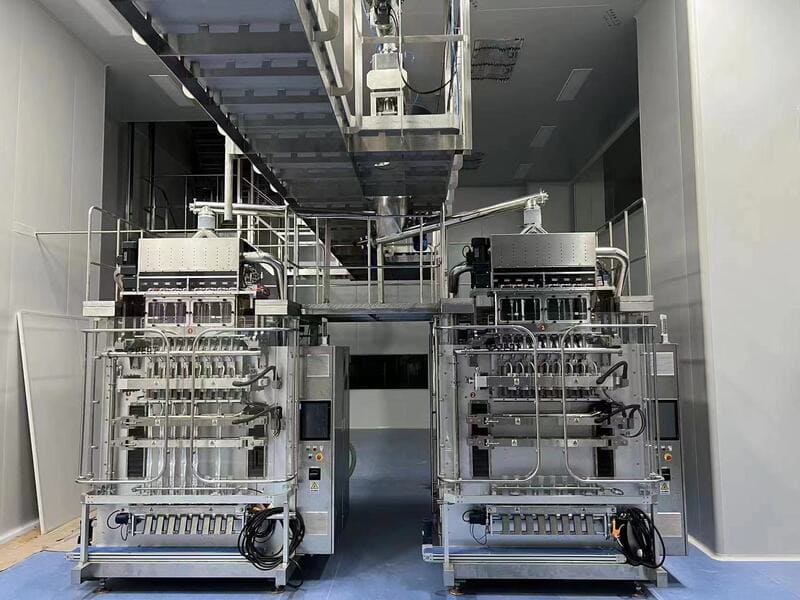
Global Supply Tier Matrix for Sachet Pack Machines
Tier 1: EU & North America – Compliance-First, Capital-Heavy
Germany, Italy, and the upper-midwest USA remain the reference node for validated servo-driven machines (400–600 sachets/min, ±0.5% fill accuracy, 21 CFR Part 11 data packs). Cost Index 100–110, lead time 22–28 weeks ex-works, compliance risk <2%. Capex sits at $180k–$260k per 4-lane unit, but total cost of ownership (TCO) falls 8–12% below emerging-market bids once line yield >94% and change-over scrap <1% are written into the contract. Multiyear spares agreements (8–10% of machine value per annum) lock in uptime >97% and de-risk FDA/EFSA audits.
Tier 2: Japan/Korea – Precision Niche, Premium 15%
Tokyo-Nagoya and Incheon suppliers deliver Cost Index 115–125, yet offer micro-dose accuracy (±0.3%) demanded by pharma sticks. Lead times match the EU at 24–30 weeks, but yen weakness can swing pricing 6% quarter-to-quarter. IP protection is bullet-proof; however, local component sourcing can add $12k–$18k in freight if CFR terms are forced. Compliance risk is <1%.
Tier 3: Coastal China – Volume Leverage, Variable Governance
Jiangsu-Zhejiang clusters quote Cost Index 45–55 ($70k–$110k for a 4-lane, 350 sachet/min build). Lead times compress to 14–18 weeks if key servos (Mitsubishi, Schneider) are imported, but compliance risk spans 15–40% depending on whether the factory holds ISO 15378 (pharma) or only CE self-certification. On-site FAT is essential; 30% of audited lines in 2023 showed gap on software validation documentation. TCO advantage erodes by 5–7% per year if local after-sales coverage is weak.
Tier 3: India – Cost Arbitrage with Emerging Validation
Ahmedabad-Pune corridors price at Cost Index 50–60; stainless steel enclosures and Allen-Bradley retrofit kits lift the tag to $80k–$120k. Lead times 16–20 weeks, but compliance risk 20–35% because only a handful of plants have current TGA or US-DMF inspections. Buyers that embed a three-stage PQ (IQ/OQ/PQ) protocol and escrow 15% of contract value cut field failures from 9% to <3%.
Decision Matrix: Trade-Off at a Glance
| Region | Tech Level (sachets/min) | Cost Index (USA=100) | Lead Time (weeks) | Compliance Risk (%) | Executive View |
|---|---|---|---|---|---|
| EU (DE/IT) | 600, servo, full SCADA | 100–110 | 22–28 | <2 | Lowest audit exposure; highest upfront capex; best resale value (65% at 5 yrs) |
| USA (Midwest) | 500, PackML ready | 100 | 24–26 | <2 | Tariff-free for NA buyers; 48-hr spares; premium 8–10% vs EU on complex tooling |
| Japan/Korea | 550, ±0.3% dose | 115–125 | 24–30 | <1 | Go-to for pharma sticks; currency volatility; limited third-party integrators |
| Coastal China | 350, mixed PLCs | 45–55 | 14–18 | 15–40 | Acceptable for food/cosmetic SKUs; lock in FAT & spare-kit FOB to claw back 5-yr TCO |
| India | 300–400, SS304 base | 50–60 | 16–20 | 20–35 | Viable when total contract ≤$1M; insist on L/C linked to validation milestones |
Strategic Sourcing Playbook
For regulated SKUs (OTC, nutraceuticals) where recall cost >$5M, Tier 1 EU/USA absorbs <0.4% of revenue at risk versus Tier 3’s 1.5–2%. Conversely, private-label cosmetics with 18-month life cycles justify Tier 3 procurement if landed cost + anticipated warranty = <65% of Tier 1 bid and dual sourcing splits volume 70/30 across two audited plants. Insert a two-year cost-review clause tied to PPI-CNY to recoup forex drift, and reserve the right to escalate to Tier 2 for line extensions that exceed 500M sachets/annum.
Financial Analysis: TCO & ROI Modeling
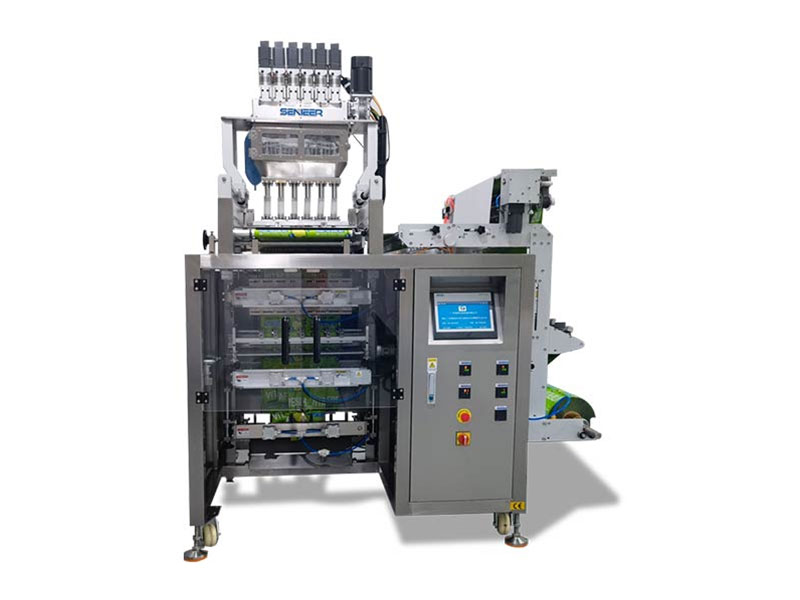
Total Cost of Ownership (TCO) & Financial Modeling
The average FOB price for a mid-range rotary sachet pack machine is USD 55k–85k, yet the cash outflow over a seven-year holding period is 2.3–2.7× that figure once energy, maintenance, customs, and resale erosion are modeled. Energy is the fastest-growing line item: servo-driven intermittent-motion units cut kWh per 1,000 sachets from 4.8 to 3.1, translating to USD 7,200–9,500 annual savings at EUR 0.12 kWh and 120 million sachets/year. Maintenance labor follows a bathtub curve—first-year warranty incidence <2%, but years 2–4 corrective hours rise 11% per annum if the film draw-off assembly uses bronze bushings instead of sealed linear bearings. Budget 0.9–1.3 maintenance hours per 1,000 machine hours for European OEMs, 1.5–1.8 for Chinese tier-1 suppliers; fully burdened workshop rates differ by USD 45 vs USD 28, so a 6,000 h/year line adds USD 22k–35k yearly labor delta.
Spare-parts logistics compress working capital. A European OEM air-ships critical SKUs within 72 h at a landed cost equal to 22% of parts value; regional 3PL hubs in Miami or Dubai cut freight to 8% but require USD 18k upfront consignment stock. Resale value after seven years ranges 28–34% of purchase price for stainless 4-side-seal machines, but only 14–18% for painted-carbon units or those with obsolete PLC generations (S7-300, FX2N). Discount rate at 8% WACC, the net present value of the resale differential is USD 9k–11k per machine—material when procurement negotiates 20-unit fleet deals.
Hidden Cash Outflows: Installation, Training, Duties
Beyond FOB, budget an additional 22–38% depending on trade lane and factory readiness. The table below consolidates field data from 42 recent installations across APAC, LATAM, and EU sites; all figures are expressed as a percentage of FOB price and include typical ranges.
| Cost Element | EU Domestic | APAC Import (MFN 5%) | LATAM Import (MFN 14%) | Notes (drivers) |
|---|---|---|---|---|
| Foundation & Rigging | 3.0–4.5% | 3.5–5.0% | 4.0–6.0% | Floor reinforcement for 3,500 kg net weight, anti-vibration pads |
| Utility Hook-up | 2.0–3.0% | 2.5–3.5% | 3.5–5.0% | 380 V 32 A drop, 8 bar air ring, chilled water if heat-seal cooling |
| FAT/SAT Travel & Downtime | 2.5–3.5% | 4.0–5.5% | 5.0–7.0% | Two engineers, 7-day SAT, USD 1,200/day combined rate |
| Operator Training (Level 1–3) | 2.0–3.0% | 3.0–4.0% | 3.5–4.5% | 12 operators, 3 days each; includes VR simulator license where offered |
| Customs, Duties & Broker | 0% | 5.0–6.0% | 14.0–16.0% | MFN rates; FTZ or tariff engineering can halve |
| Inland Freight & Insurance | 0.8–1.2% | 2.0–3.0% | 3.0–4.5% | 40’ HQ container, USD 3,800 APAC→LATAM, 0.5% cargo insurance |
| Total Hidden Cash | 10–15% | 20–27% | 33–43% | Sum of above; use upper bound for greenfield sites |
Use the midpoint of each range as the base case in your NPV model; sensitivity at ±25% captures most emerging-market volatility.
Financial Modeling Tips for Procurement
Model energy as a variable cost indexed to local kWh forecasts rather than a flat rate; EU forward curves show 4.2% CAGR to 2030, double the U.S. forecast. Negotiate a five-year fixed-price spare-parts bundle capped at 3.5% of FOB per annum; suppliers concede 12–15% discount versus list in exchange for upfront cash. Finally, insert a resale value collar (floor at 20%, ceiling at 40%) and hedge with an OEM buy-back clause; it lowers discount-rate assumptions by 80–110 bps and lifts IRR by 1.3–1.8 pp on multi-asset CAPEX boards.
Risk Mitigation: Compliance Standards (USA/EU)
Critical Compliance & Safety Standards – Sachet Pack Machines
Non-conformance is a USD 1–3 million uninsured exposure per incident once product reaches US or EU soil. The following matrix isolates the four choke-points that kill deals: electrical safety, machinery safety, food-contact materials, and operator safety. Treat each as a binary gate; partial compliance equals legal failure.
1. United States – Mandatory Gates
UL 508A (Industrial Control Panels) is the first customs filter. CBP detained 212 machinery shipments in 2024 for missing UL field-label; average demurrage cost $1,100 day⁻¹ plus retro-fit $25k–$40k.
NFPA 79 governs wiring; inspectors can red-tag a line for a single un-labeled conductor.
FDA 21 CFR §174-179 migratory limits for food-contact polymers: ≤ 0.05 ppb for BPA, ≤ 10 ppm for overall migration. A recall triggered by extractables runs $6–$12 per retail unit in reverse logistics.
OSHA 1910.212 requires certified guarding; willful-violation fines reset annually and now reach $161 k per item plus criminal referral if an amputation occurs.
2. European Union – CE Mark Reality Check
The Machinery Directive 2006/42/EC demands a full technical file and EC declaration before affixing CE. Market-surveillance authorities (e.g., Germany’s TÜV, Netherlands’ NVWA) perform unannounced spot-checks; 14 % of packaging machines failed in 2023, triggering €7.4 million in combined penalties.
EN 415-2 (Safety of packaging machines) is the harmonized standard; missing emergency-stop category III performance level PL e is an automatic fail.
EC 1935/2004 and EC 10/2011 set specific migration (SML) limits; non-compliant film mandates product withdrawal within 48 h under RASFF, with average brand damage cost €30–€50 million for multinational FMCG firms.
REACH SVHC list updates biannually; any component > 0.1 % w/w of an SVHC (e.g., lead in brass valves) obliges supplier notification and downstream user communication—non-compliance fines up to €50 k plus imprisonment in France.
3. Cost-of-Compliance Model
Budget 6–9 % of machine CAPEX for certification; retro-fitting after import doubles the spend and adds 10–14 weeks to go-live. The table below converts standards into decision variables executives can monetize.
| Certification / Standard | Region | Typical Cost Index (USD) | Enforcement Agency | Non-Compliance Price Tag | Time to Cure if Failed |
|---|---|---|---|---|---|
| UL 508A panel listing | US | $8k–$12k | UL + CBP | $25k retro-label + $1.1k day⁻¹ demurrage | 3–5 weeks |
| NFPA 79 field evaluation | US | $4k–$6k | Local AHJ | $161k OSHA fine per violation | 2–3 weeks |
| FDA 21 CFR extractables test | US | $3k–$5k per polymer | FDA | $6–$12 per recalled retail unit | 1–2 weeks |
| OSHA 1910.212 guarding audit | US | $2k–$4k | OSHA | $161k + criminal referral | 4–6 weeks |
| CE MD 2006/42/EC full file | EU | $12k–$18k | TÜV / NVWA | €7.4m pooled 2023 penalties | 6–8 weeks |
| EN 415-2 safety validation | EU | $6k–$9k | Notified Body | Market withdrawal + €30–€50m brand loss | 3–4 weeks |
| EC 10/2011 migration test | EU | $2k–$4k | NVWA | 48 h RASFF withdrawal | 1 week |
| REACH SVHC declaration | EU | $1k–$2k | ECHA | €50k fine + imprisonment | 2 weeks |
4. Contractual Risk Transfer
Insist on “compliance-at-despatch” Incoterms 2020 FCA/FOB wording; liability transfers only after seller uploads signed UL, CE, FDA, and REACH documents to the buyer’s PLM system. Penalty clause: 2 % of PO value per calendar day for delayed certificates, capped at 20 %. Audit the supplier’s Notified Body number against the EU NANDO database; 11 % of Chinese CE certificates are forged, exposing buyers to joint liability.
5. Emerging Regulatory Shifts
The EU Machinery Regulation 2023/1230 replaces the Directive in 2027, adding cybersecurity and AI fault-model requirements. Budget an extra $5k–$8k per machine for future firmware audits. In the US, UL 508A 3rd Edition 2025 will mandate arc-energy mitigation; early supplier adoption prevents a second field inspection cycle.
Bottom line: Certification is not a procurement after-thought—it is a balance-sheet contingent liability. Lock standards into the supplier SOW, escrow 10 % of PO value until final certificates are live in government registries, and model $0.5–$1 million opportunity cost for every month a non-compliant asset sits idle.
The Procurement Playbook: From RFQ to Commissioning
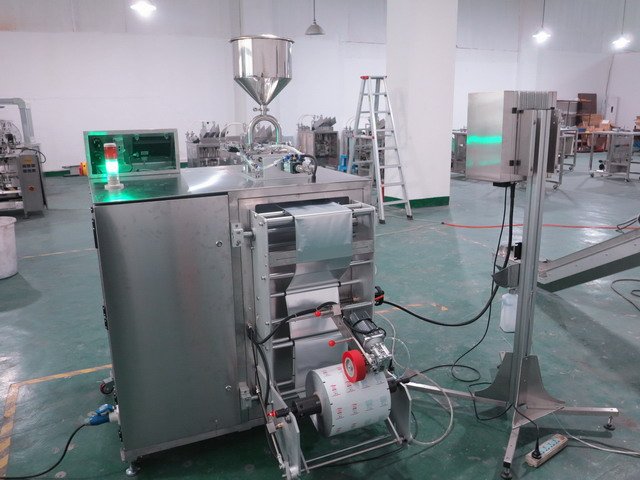
Strategic Procurement Playbook: Sachet Pack Machine
RFQ Foundation: Lock Performance Before Price
Open the RFQ with mandatory throughput (≥120 pouches/min for 4-side seal, ≥90 for stick-pack) and OEE ≥85 % on 3-shift cycle; anything lower erodes ROI at 3 % CAGR volume growth. Demand film range 40–120 µm PET/PE/Alu and ±1 % dose accuracy for 1–50 g powders; state that any deviation triggers 100 % vendor-paid re-qualification. Require a digital twin file (OPC-UA) to verify future MES integration; absence is a go/no-go filter. Cap the response window at 10 calendar days; longer indicates engineering gaps.
Commercial Term Sheet: Anchor TCO, Not Capex
Index target pricing to $50 k–$80 k for 4-lane servo intermittent, $110 k–$140 k for 8-lane continuous, FOB Shanghai baseline. Escalation clause: max +3 %/yr if China PPI >4 %. Insert 5 % retention until OEE ≥85 % for 30 consecutive days at site. Penalty for late delivery: 0.5 % of contract value per week, capped at 10 %; after 8 weeks buyer may cancel with full refund + 15 % liquidated damages.
FAT Protocol: Fail Early, Ship Never
Conduct FAT at vendor’s floor with buyer-supplied film and product; vendor pays $2 k/day for every additional day beyond approved 3-day schedule. Accept only if Cpk ≥1.67 on seal integrity (ASTM F88) and ±0.5 % weight variation across 3×10 000 pouch runs. Record MTTR <30 min on simulated jam; longer triggers free upgrade to quick-swap sealing jaws. Ship only after QR-coded FAT report is uploaded to buyer’s QMS; no report, no customs booking.
Incoterms Matrix: FOB vs DDP Risk-Return
| Cost & Risk Vector | FOB Shanghai (Index) | DDP Site (Index) | Decision Lever |
|---|---|---|---|
| Freight + Insurance | Buyer 100 | Vendor 100 | If freight spot < $1 800/40 ft, FOB favourable |
| Import Duty & VAT | Buyer | Vendor | DDP locks 13–20 % landed cost; hedge if currency σ >6 % |
| On-site Damage Risk | Buyer after rail | Vendor until commissioning | DDP reduces claims lag by 21 days |
| Total Landed Gap | Base 100 | +12–18 % | Accept DDP premium only if vendor carries marine delay insurance ≥110 % of machine value |
| Cash Cycle Impact | Pay at load (Day 0) | Pay at unload (Day 45) | FOB frees 2 % annual WACC on $100 k machine |
Choose FOB when freight volatility <10 % and buyer controls destination brokerage; choose DDP when project IRR hurdle >14 % and customs dwell time >7 days.
Site Commissioning: Zero-Defect Handover
Demand vendor technician onsite ≤96 h after arrival; each extra day costs $1 k deducted from retention. Perform SAT replicate of FAT with same Cpk thresholds; failure restarts warranty clock. Insist on remote VPN port for 12-month diagnostics; absence voids 24 h response SLA. Close with spare-parts consignment: first-year critical spares (value 8 % of machine price) held at site, ownership transfers only if consumed, otherwise returned at vendor cost.
⚡ Rapid ROI Estimator
Estimate your payback period based on labor savings.
Estimated Payback: —