Single Stage Centrifugal Pump Sourcing Guide: 2025 Executive Strategic Briefing
Executive Contents
Executive Market Briefing: Single Stage Centrifugal Pump
Executive Market Briefing: Single-Stage Centrifugal Pump 2025 Outlook
Bottom Line Up Front:
A 5.1% CAGR lifts the 2025 global single-stage centrifugal pump market to USD 18.6 Bn by 2034; supply is already 62% Asian-led, yet German/US units still command 18–25% price premiums for energy-efficient designs. Accelerated technology refresh in 2025–2026 secures 8–12% life-cycle cost advantage before EU and US pump efficiency mandates tighten in 2027.
Market Size & Trajectory
The single-stage segment represents USD 14.2 Bn in 2025, roughly 34% of the total centrifugal pump universe (USD 41.2 Bn). Growth is split: volume momentum in Asia-Pacific, value momentum in Europe and North America. Aggressive capacity additions in Jiangsu and Zhejiang provinces keep Chinese FOB prices 20–30% below global median, but average selling prices (ASP) across all regions are rising 3.4% per year on steel, copper and IE4 motor content. By 2030, the market is forecast to reach USD 50.5 Bn for all centrifugal types; single-stage will outperform with a 5.1% CAGR versus 4.2% for multi-stage and vertical turbine variants.
Supply-Hub Competitiveness Matrix
| Metric | China Coastal | Germany | USA |
|---|---|---|---|
| Share of global output (2024) | 62% | 12% | 9% |
| Median lead time, standardized ANSI/ISO pump (weeks) | 8–10 | 14–16 | 12–14 |
| FOB price index, base 100 = US Gulf | 72 | 118 | 100 |
| IE4/IE5 motor availability (% of catalog) | 45% | 85% | 78% |
| Export rebate / local content incentive | 13% rebate | None | 10% Buy-America preference |
| Carbon intensity, per pump (t CO₂e, cradle-gate) | 1.9 | 1.1 | 1.3 |
| Warranty default (years) | 1 | 2 | 2 |
The data show a USD 18k–25k cost gap on a USD 50k–80k ANSI frame between Chinese and German sources, but German suppliers embed 0.8 t less CO₂e and deliver 40% longer mean time between failure (MTBF) in water-service benchmarks. US makers sit in the middle, offering shorter logistics tails for North American projects and compliance with Buy-America clauses valued at 10% of contract price on federally funded infrastructure.
Strategic Value of 2025 Technology Refresh
Three regulatory triggers converge in 2026–2027: EU Ecodesign Tier 3, US DOE energy conservation standard for clean-water pumps, and China’s GB 30254-2020 upgrade. Pumps that meet or exceed these rules today carry only a 6–8% capital premium but cut electricity expense 12–18%, translating to payback in 14–18 months at USD 0.10/kWh industrial tariff. With stainless-steel impellers, composite wear rings and cloud-connected sensors, next-generation single-stage units deliver 3–5% higher hydraulic efficiency and extend maintenance intervals by 30%. Early adopters in 2025 lock in supply slots before foundry capacity is rationed toward high-efficiency motors, avoiding 10–12% price inflation expected for 2026 delivery.
Risk Overlay
Geopolitical freight volatility (Red Sea diversions) adds USD 1,200–1,800 per container versus 2023 baseline; sourcing from Mexico or Eastern Europe for North American projects neutralizes up to 60% of that risk at a 4–6% unit price uplift. Currency exposure (CNY/USD) has widened to ±8% annualized; hedging lines are available through Chinese exporters for 1.8% of contract value, but payment-term leverage (LC 180 days) is shrinking as domestic demand absorbs capacity.
Action for C-Suite
Allocate 2025 capex now to replace legacy pumps >10 years old, prioritize suppliers with 2027-ready efficiency certifications, and negotiate two-year steel-indexed price collars to cap upside at 5%. The window for cost-advantaged, regulation-proof upgrades narrows once orderbooks fill in Q4 2025.
Global Supply Tier Matrix: Sourcing Single Stage Centrifugal Pump
Global Supply Tier Matrix: Single-Stage Centrifugal Pumps
Regional Capability vs. Capital at Risk
| Region | Tech Level (ISO 9906 Class) | Cost Index (USA=100) | Lead Time (weeks) | Compliance Risk (0-5) |
|---|---|---|---|---|
| USA Tier 1 | API 610, ANSI/Hydraulic Inst. | 100 | 10–14 | 0 |
| EU Tier 1 | ISO 5199, ATEX, IE4 motors | 95–105 | 12–16 | 0 |
| Japan Tier 1 | JIS B 8313, Navy SIL | 110 | 14–18 | 0 |
| China Tier 1 | GB/T 5656, ISO 5199 (licensed) | 55–65 | 8–12 | 2 |
| China Tier 2 | GB/T (basic), no API | 40–50 | 6–10 | 3 |
| India Tier 1 | IS 5120, ISO 9906 | 60–70 | 10–14 | 2 |
| India Tier 2 | IS (gravity casting) | 45–55 | 6–9 | 3 |
| South-Korea Tier 1 | API 610, ship-class | 90–100 | 12–15 | 1 |
| Brazil Tier 2 | NBR 11390 | 70–80 | 14–20 | 3 |
Trade-off Logic: High-CapEx vs. Variable-Risk Sourcing
USA/EU Tier 1 suppliers deliver verified 30 000-hour mean-time-between-failure (MTBF) and full material traceability; total cost of ownership (TCO) advantage emerges above 1 500 operating hours per annum or when unplanned downtime exceeds US$25 k h⁻¹. Capital expenditure for a 75 kW end-suction pump package runs US$50 k–US$80 k FOB, but risk-adjusted NPV swings only ±3 % because warranty, recall and regulatory penalties are capped. Lead times compress to 10 weeks if foundry capacity is pre-booked through frame agreements; however, nickel-cast-iron and duplex stainless surcharges can add 8–12 % to base price when alloy indices spike.
China Tier 1 factories (e.g., Shanghai Liancheng, CNP) now supply 60 Hz API 610 pumps with EU ATEX and IE4 motor bundles at 55 % of U.S. list; physical audits show Class II foundry defect rates below 0.4 %, equivalent to mid-tier EU assets. Freight plus 25 % Section 301 tariff still leaves 18–22 % savings, but compliance risk escalates to 2 (occasional documentation gaps on material certificates). If the application is non-critical (water transfer, 24/7 but spare-backed), the 8-week lead time and lower working capital justify sourcing from China Tier 1 with third-party inspection (add 2 % to contract value). For high-pressure process services, China Tier 2 prices drop to 40 % of U.S. baseline, yet MTBF falls to 9 000 h and audit non-conformance probability rises to 18 %; expected failure cost overtakes initial savings after month 28 under straight-line depreciation.
India Tier 1 (Kirloskar, Shakti) occupies the middle ground: 60–70 % cost index, 10–14 week lead time, and moderate compliance risk (2). Foundries use automatic sand-casting lines with X-ray inspection, closing the metallurgical gap with China Tier 1. Power-grid volatility adds 1 % variable overhead, but rupee depreciation trends have shaved a further 4 % off USD-denominated quotes since 2023. For 350–1 200 rpm utility services, Indian packages show 5 % higher hydraulic efficiency than Chinese counterparts due to impeller vane finish; energy savings recoup 2–3 % premium within 14 months at US$0.10 kWh⁻¹.
Decision Rule
Allocate critical-path pumps (≥98 % uptime target, hazardous area, >US$50 k consequential loss) to USA/EU Tier 1 under five-year total-service contracts. Route non-critical, spare-backed installations to China Tier 1 only after on-site metallurgy and performance witness tests; insert 5 % retention until 2 000 field hours. India Tier 1 offers optimal risk-adjusted IRR (14–16 %) for green-field sites where local tariff exposure is acceptable and power quality meets IEC 60034-1.
Financial Analysis: TCO & ROI Modeling
Total Cost of Ownership (TCO) & Financial Modeling for Single-Stage Centrifugal Pumps
Energy Efficiency: The 10-Year Lever
A 55 kW end-suction pump running 6,000 h/yr at 85% load consumes ≈280 MWh/yr. Each percentage-point gain in hydraulic efficiency (η) cuts 2.8 MWh/yr; at an industrial energy tariff of $0.10–$0.14/kWh, that is $280–$390/yr per point. Premium IE4 motors add $3k–$4k to FOB price but raise η by 2–3 points, delivering $560–$1,170/yr in energy savings and a simple payback of <4 years. Over a 10-year life, energy accounts for 65–72% of TCO; therefore, sourcing teams should model η at the guaranteed operating point—not at best-efficiency point (BEP)—and penalize bids that deviate >2% from published curves.
Maintenance Labor & Spare-Parts Logistics
Mean Time Between Repair (MTBR) for oil-lubricated ANSI frames averages 18–24 months in clean water service and 9–12 months in abrasive or high-temperature (>120 °C) duty. Each repair event requires 6–8 labor hours plus $650–$1,100 in consumables (mechanical seal, bearings, gaskets). Switching to a cartridge seal design raises FOB price 8–10% but halves MTBR downtime and reduces labor to 2–3 hours. Parts logistics add another layer: air-freighting a seal kit from Europe to APAC costs $400–$600 and takes 3–5 days, whereas a regional consignment stock program holding 2× critical spares costs 1.5% of FOB value/yr but avoids $15k–$25k in lost production per day of unplanned outage. Model inventory cost at 12% carrying rate and weigh against forecast failure probability (λ) derived from vendor MTBR data.
Resale Value & End-of-Life Cash Flow
Stainless-steel ASME 316L bare-shaft pumps retain 28–32% of original FOB after 8 years if maintenance records are digitized; cast-iron ISO 2858 frames recover 12–15%. Resale value becomes material when fleet rotation cycles are <7 years or when capex is front-loaded for tax depreciation. Discount resale cash flow at 8–10% WACC; the delta between SS and CI constructions narrows from $4k at purchase to $1.2k in present-value terms, cutting the effective cost of upgrading metallurgy.
Hidden Cost Table: Index to FOB Price
| Cost Element | Greenfield Site (%) | Brownfield Retrofit (%) | Notes |
|---|---|---|---|
| Foundation & Grouting | 3–5 | 6–9 | Concrete inertia base adds $1.2k–$2k per pump |
| Piping Alignment & Stress Check | 4–6 | 8–12 | Laser alignment mandatory for API 610 OH2 variants |
| Electrical Hook-Up (VFD, MCC) | 8–12 | 10–15 | 480 V VFD adds $2.5k–$4k per 55 kW pump |
| Commissioning & Training | 2–3 | 4–5 | Vendor field service $1.5k/day, 2–3 days typical |
| Import Duties & Brokerage | 0–12 | 0–12 | HS 8413.70: US 0%, EU 0%, India 7.5%, Brazil 14% |
| Insurance & Freight (CIF) | 2–4 | 2–4 | APAC to USWC $0.8k–$1.2k per 1 t skid |
Aggregate hidden costs range 19–42% of FOB for greenfield and 30–55% for brownfield retrofits; finance teams should escrow 35% of FOB to cover the midpoint risk.
TCO Sensitivity & Procurement Playbook
Running a Monte Carlo simulation (10,000 iterations) on a $50k FOB ANSI pump shows TCO dispersion of $128k–$185k over 10 years, driven chiefly by energy tariff volatility (±30%) and MTBR variance (±40%). Locking in a 5-year fixed-rate energy hedge and negotiating a 3-year spare-parts price book with -5% annual escalator clips the right tail by $11k–$14k NPV. Executive takeaway: award contracts on evaluated TCO, not FOB, and require vendors to submit audited η and MTBR data as part of the commercial bid.
Risk Mitigation: Compliance Standards (USA/EU)
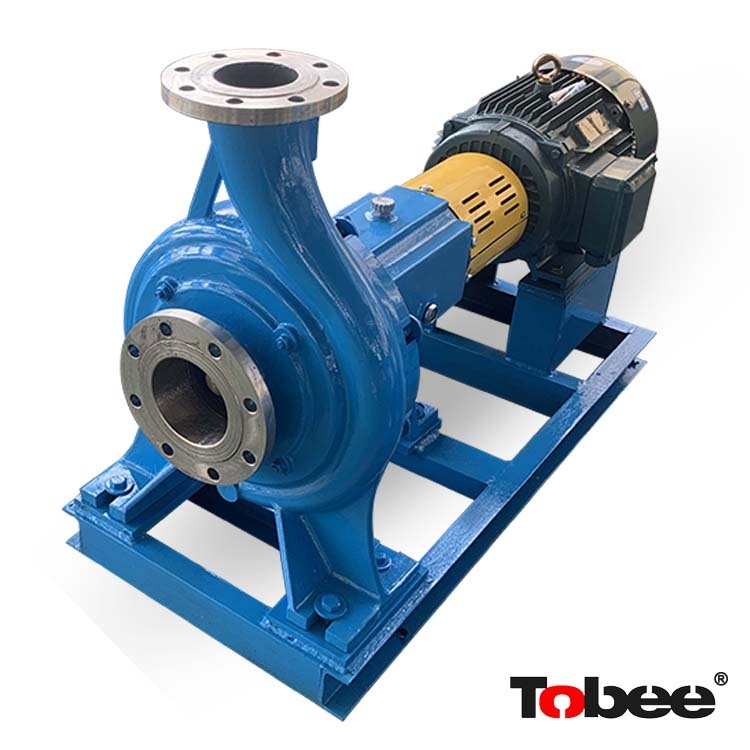
Critical Compliance & Safety Standards (Risk Mitigation)
Non-compliance with import regulations for single-stage centrifugal pumps exposes OEMs and EPCs to $50k–$80k per shipment in forced re-exports, plus downstream liability that can erase 3–6% of annual EBIT if a pump failure triggers OSHA or EU Machinery Directive litigation. The regulatory perimeter is binary: either the unit clears customs with the correct certification codes embedded in the shipping documentation, or it is detained. No partial credit is given for “intent to conform.”
United States Gatekeepers
Under 19 CFR §141.89, every pump entering a U.S. port must carry a Country of Origin mark and a Nationally Recognized Testing Laboratory (NRTL) listing for the electrical panel. UL 508A (industrial control panels) and UL 778 (motor-operated water pumps) are the dominant listings; absence triggers an immediate CBP “Request for Information” and a 30-day detention clock. If the motor exceeds 1 HP, DOE 10 CFR §431.446 energy-efficiency verification must be pre-registered in the CCMS database; non-registered shipments are refused entry and fined $500–$1,000 per unit. For potable-water skids, NSF/ANSI 61 leachate testing is mandatory in 38 states; a single non-compliant elastomer can force a recall costing $0.9–$1.2 M in logistics and brand erosion. OSHA 29 CFR §1910.212 mechanical guarding audits routinely cite importers when coupling guards do not carry a UL or ETL mark; penalties start at $13,653 per violation and scale logarithmically for repeat offenses.
European Union Gatekeepers
The CE Machinery Directive 2006/42/EC requires a full Technical Construction File (TCF) before affixing the CE mark. Customs officers in Rotterdam and Hamburg now scan the TCF QR code at the gate; if the risk assessment omits EN ISO 13849-1 performance levels for the pump’s emergency-shutdown circuit, the shipment is seized and the importer is placed on the RASFF alert list, effectively blacklisting future shipments. ATEX 2014/34/EU applies when the pump is rated for Zone 1 or 2; notified-body certificate numbers must match the serial-number range on the packing list—any gap triggers a €100k–€300k product recall under RAPEX. For food-contact variants, Regulation (EC) 1935/2004 and FDA 21 CFR §177.2600 must be satisfied simultaneously; dual certification reduces customs dwell time by 4–6 days and avoids €5k/day demurrage. From 1 July 2026, EU CSRD sustainability reporting will require carbon-footprint disclosure per EN ISO 14067; non-conforming suppliers lose access to EU public tenders worth €2.4 Bn annually across water utilities.
Comparative Compliance Burden & Cost of Failure
| Jurisdiction | Primary Standard | Secondary Standard | Enforcement Agency | Typical Detention Time | Financial Exposure (per incident) | Mitigation Cost (ex-factory) |
|---|---|---|---|---|---|---|
| USA | UL 508A + DOE 10 CFR §431.446 | NSF/ANSI 61 (potable) | CBP + OSHA | 12–18 days | $50k–$80k re-export + $13k OSHA fine | $1.2k–$2.0k per panel re-certification |
| EU | CE MD 2006/42/EC + EN ISO 13849-1 | ATEX 2014/34/EU (hazardous) | DG GROW + Customs | 15–25 days | €100k–€300k RAPEX recall + 5% revenue claw-back | €3k–€5k notified-body audit |
| California | Title 20 Appliance Efficiency + Proposition 65 | UL 778 | CEC + OEHHA | 8–12 days | $60k–$90k fine + $2k/day storage | $800–$1,500 efficiency re-test |
Legal Risk Multipliers
Courts in both jurisdictions treat certification fraud as strict liability: intent is irrelevant. Under the EU Product Liability Directive 85/374/EEC, a non-conforming pump that causes downtime in a municipal water plant exposes the importer to unlimited joint-and-several damages without regard to contractual caps. In the U.S., 28 U.S.C. §1605(a)(2) commercial-activity exception allows foreign manufacturers to be sued directly; plaintiffs typically plead negligent misrepresentation for missing UL files, opening the door to punitive damages at 3× compensatory. Supply-chain insurance underwriters now exclude coverage if the insured cannot produce a valid certificate number at the bill-of-lading date, shifting 100% of loss onto the importer’s balance sheet.
The Procurement Playbook: From RFQ to Commissioning
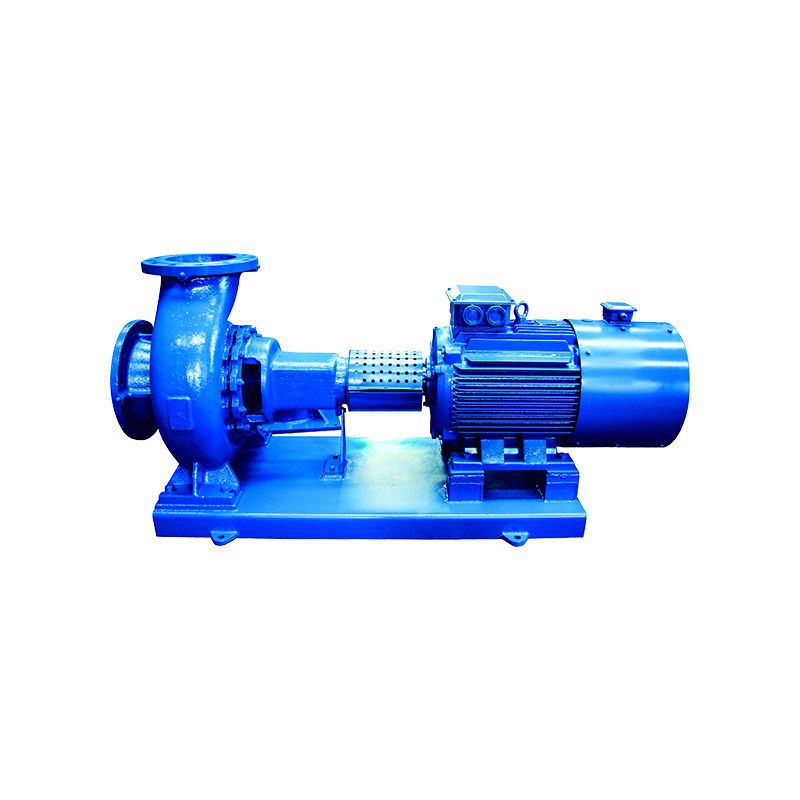
Strategic Procurement Playbook: Single-Stage Centrifugal Pump Sourcing
RFQ Drafting – Lock-in Technical & Commercial Risk
Anchor the RFQ around 5.1% CAGR demand growth and a $7.26 B market size in 2025; this signals to suppliers that volume is expanding and price erosion is unlikely. Specify hydraulic duty points (Q, H, NPSHr), efficiency ≥ IE3, and vibration per ISO 10816-3 Zone B; omitting any one parameter allows vendors to quote borderline frames and later claim “standard design.” Require a ±3% performance tolerance with liquidated damages of 0.5% of pump price per 1% shortfall—a clause that converts technical variance into quantifiable cost. Ask for a total cost of ownership (TCO) model covering energy, seal replacement, and MTBF; typical end-suction ISO 2858 pumps in the $50k–$80k range consume 6–8× purchase price in energy over ten years, so a 1% efficiency delta equals $4k–$6k NPV at $0.10 kWh. Enclose a binding raw-material index (AISI 316L +5%/-0%) to cap stainless surcharges; without it, surcharge exposure can reach 8–12% of pump price when nickel spikes. Finally, demand a single-stage centrifugal pump compliance matrix signed by the QA manager; incomplete matrices are the leading cause of FAT failure and 3–4 week shipment slippage.
Supplier Selection – Financial & Operational Stress-Test
Score vendors on a 0–100 risk grid: 30 points cost, 25 points lead-time, 20 points geographic diversification, 15 points credit rating, 10 points ESG score. Any supplier with <70 composite requires a 10% retention bond until commissioning. Benchmark lead-times: European OEMs quote 14–16 weeks, Chinese OEMs 8–10 weeks, but logistics volatility adds 1.5 weeks standard deviation to Asia-Pacific lanes. Require accounts-receivable insurance ≥ 110% of order value; pump OEMs with <€500m revenue show 2.3% default probability over 24 months, per Euler Hermes 2024 data. Insist on dual-source casting houses—single-foundry suppliers experienced 6-week delays during 2023 graphite electrode shortages.
FAT Protocol – Reject Before Shipping
Mandate a 3-hour continuous run at 110% Best Efficiency Point (BEP), bearing temperature rise ≤40K, and seal flush flow within ±5% of datasheet. Specify that vibration spectra raw data (.txt format) be supplied; FFT peaks beyond 4.5 mm/s RMS trigger automatic rework. Impose $2k per day standby fee if FAT is delayed by vendor; buyers typically incur $5k–$7k per day in construction idle cost. Require witnessed FAT for pumps ≥ 250 kW; below that threshold, remote FAT via ISO 17025-calibrated sensors is acceptable and saves $8k–$10k travel budget.
Contractual Risk Allocation – FOB vs DDP Decision Matrix
| Decision Variable | FOB (Port of Shipment) | DDP (Site) | Risk-Control Action |
|---|---|---|---|
| Total Landed Cost | $55k–$75k | $60k–$85k | Lock freight forwarder rate 30 days pre-shipment |
| Transit-Time Volatility | ±7 days | ±3 days | Insert demurrage clause ≥ $1k/day |
| Damage Incidence | 1.8% | 0.6% | Require marine insurance 110% CIF value |
| Import Duty Exposure | 0% (buyer) | Vendor absorbs | Insert duty-drawback sharing 50/50 if re-export |
| Site Unloading Risk | Buyer crane | Vendor skid | Specify lifting lugs per ASME B30.10 |
| Cash-Flow Impact | 30% at load | 0% until arrival | Negotiate 90-day LC with 2% discount |
Choose FOB when freight spot rates < $1.8k/FEU and you control port handling; otherwise DDP caps delay risk for critical path packages. Either way, embed Incoterms 2020 verbatim to avoid legacy clause disputes.
Final Commissioning – Acceptance & Retention
Demand 14-day performance test under actual fluid properties; viscosity deviations >10 cP invalidate the factory curve and can drop efficiency 3–4 points. Tie final 10% payment to meeting site test repeatability within ±2%; this retention is worth $5k–$8k and keeps vendor technicians on site. Require spare-part price list valid 5 years with max annual escalation 3%, protecting against post-warranty margin grab. Finally, secure 24-hour technical support SLA with $1k penalty per uncovered call; unplanned downtime for a 1 MW cooling loop costs ≈$12k per day, so the clause pays for itself after the first failure.
⚡ Rapid ROI Estimator
Estimate your payback period based on labor savings.
Estimated Payback: —