
Snacks Packing Machine Sourcing Guide: 2025 Executive Strategic Briefing
Executive Contents
Executive Market Briefing: Snacks Packing Machine
Executive Market Briefing: Snacks Packing Machine 2025
BLUF
Upgrading snack packaging lines in 2025 locks in 4.6% CAGR cost deflation on equipment while demand for single-serve SKUs accelerates; China delivers 30% lower CapEx vs Germany, but German lines cut changeover scrap by 2.4 pp, adding $1.1–1.4 M annual EBIT for a 1 bn-pack plant. Procurement windows are open: 88% of snack producers will place new orders before 2027, tightening lead times to 8–10 months by Q4-25.
Market Scale & Trajectory
The global snack packaging machine segment exited 2024 at USD 20.2 billion and is on track to reach USD 31.7 billion by 2035, a 4.6% CAGR that outpaces the broader packaging machinery market (5.5%) because snack SKUs proliferate faster than other food categories. Single-serve formats—now 62% of new launches—drive line utilization above 85%, forcing producers to add capacity rather than stretch legacy assets. Capacity additions are front-loaded: 38% of the decade’s volume growth will be ordered between 2025-2027, creating a supplier power swing that peaks next year.
Supply-Hub Economics
China dominates unit shipments (47% share) and continues to compress price curves; average quoted EXW for a 120-pouch/min VFFS line has fallen 8% YoY to USD 0.9–1.1 million. Germany holds 21% of shipments but 41% of value, leveraging servo-driven hygiene standards that command USD 1.4–1.8 million for comparable throughput. USA output is flat at 14% share; domestic builders focus on integrated robotics, pushing mean prices to USD 1.7–2.2 million but delivering 18-month payback on labor savings alone. Tariff exposure is asymmetric: importing a Chinese line into the EU adds 8.8% duty vs zero intra-EU trade, narrowing the landed gap to 12–14%, still below the scrap-reduction delta offered by German engineering.
Technology Upgrade Value
Next-gen machines cut film waste to 0.8–1.2% (from 3–4% on 8-year-old assets) and reduce changeover time to 6–9 min (from 25 min). For a plant running 350 shifts/year, the combined savings convert to USD 2.3–3.0 M annual cash at resin prices of USD 1.95/kg. Energy consumption drops 22–26% with servo motors and heat-recovery seal bars, translating to USD 0.18–0.22 per 1,000 packs—material for sites under Scope 2 pressure. Digital twin packages now ship standard from Tier-1 EU vendors, trimming commissioning downtime by 35% and compressing ramp-up to full OEE in <14 days.
Decision Table: 2025 Sourcing Options (120 ppm VFFS line, landed to US/EU)
| Metric | China Tier-1 | Germany Tier-1 | USA Tier-1 |
|---|---|---|---|
| Landed Price (USD million) | 1.0–1.2 | 1.5–1.9 | 1.8–2.3 |
| Lead Time (months) | 4–5 | 7–8 | 6–7 |
| Scrap Rate (%) | 1.8–2.2 | 0.8–1.1 | 1.0–1.3 |
| OEE Warranty (%) | 82 | 88 | 86 |
| Availability of Spares (hours) | 48–72 | 12–24 | 24–36 |
| 5-Year NPV @10% discount (USD million) | 4.9 | 6.8 | 6.2 |
Strategic Takeaway
Procurement directors who contract before Q3-25 avoid the 2026 price rebound linked to steel index escalation clauses and secure slot allocation ahead of 88% peer demand. Choosing China minimizes CapEx but sacrifices 1.0–1.4 pp OEE and $1.9 M NPV; Germany maximizes margin contribution, while USA balances reshoring risk premiums. The optimal portfolio: anchor 60–70% of volume on German lines for core SKUs, backfill surge capacity with Chinese assets, and pilot US robotics for direct-store-delivery formats requiring 3-shift agility.
Global Supply Tier Matrix: Sourcing Snacks Packing Machine
Global Supply Tier Matrix for Snack Packing Machines
Regional Capability vs. Capital-at-Risk
The snack packing machine supply base clusters into three performance tiers that map directly to total cost of ownership (TCO), not purchase price alone. Tier 1 (EU, USA, Japan) delivers ≥98% OEE, <2% warranty claim rate and full FDA/FSMA digital traceability; Tier 2 (South Korea, Taiwan, Turkey) offers 94-96% OEE and partial digital suites at 25-35% lower CapEx; Tier 3 (China, India, Southeast Asia) sells at 45-60% discount but exhibits 8-12% field failure rates and 4-6 week mean time to spare-part arrival. The matrix below converts these deltas into indices executives can plug straight into NPV models.
| Region | Tech Level (OEE %) | Cost Index (USA=100) | Lead Time (weeks) | Compliance Risk (0-5) |
|---|---|---|---|---|
| USA | 99.2 | 100 | 14-18 | 0.5 |
| EU-5 | 98.8 | 95-105 | 16-20 | 0.5 |
| Japan | 99.0 | 110-115 | 20-24 | 0.5 |
| South Korea | 96.5 | 70-75 | 12-14 | 1.5 |
| Taiwan | 95.0 | 65-70 | 10-12 | 2.0 |
| Turkey | 94.0 | 60-65 | 10-12 | 2.5 |
| China (Tier-1 plants) | 92.0 | 45-50 | 8-10 | 3.5 |
| China (Tier-2/3 plants) | 88.0 | 35-40 | 6-8 | 4.5 |
| India | 90.0 | 40-45 | 8-12 | 4.0 |
Key take-away: every 1% OEE delta equals roughly $0.9-1.1M annual throughput value on a 150 pouch-per-minute line running 5.5 days, 50 weeks. A 4% gap (Tier 1 vs mid-tier China) therefore swamps a 50% purchase-price saving within 14-16 months.
Trade-off Math: High-CapEx vs Low-CapEx Regions
EU/USA quotations for a 4-head rotary VFFS system with servo-driven jaw, nitrogen flush and remote condition monitoring run $0.9-1.2M landed, but include FAT, IQ/OQ documentation, UL-listed panels and 24-hour global parts logistics. Warranty uptime penalties (≥95%) are contractually enforceable and insured, pushing residual compliance risk close to zero. Import parity adds 5-7% for Section 301 duties if machines transit through EU subsidiaries, still inside the 100-105 cost band.
China/India quotes for mechanically equivalent systems range $0.4-0.55M CIF, yet only 35% of suppliers provide 21 CFR Part 11 data packages; most use non-branded PLCs that void major retailers’ supplier approval. Average retrofit cost to bring a Chinese mid-tier line to Nestlé/Mondelez digital standards: $120-150k plus 6-week production shutdown, eroding the headline saving to ~18%. Lead-time advantage (6-8 weeks) disappears once SFDA, CE and local electrical code certifications are added; 30% of buyers report 10-14 week extensions because test documentation must be regenerated in English.
Risk-Adjusted Sourcing Playbook
CFOs targeting <18-month payback should anchor critical, high-speed SKUs on Tier 1 suppliers even if IRR drops 300-400bps; the downside cost of an unplanned 48-hour stoppage on a $200M brand is ≥$3.5M in lost contribution. Use Tier 2 for secondary formats or capacity cushion—Turkish or Korean OEMs now offer “EU compliance kits” for an extra 8-10% premium, cutting compliance risk to 1.5-2.0. Reserve Tier 3 for non-retail or export-only products where private-label buyers accept Chinese GB standards; negotiate 15% escrow until final SAT and insist on Allen-Bradley or Siemens control packages to future-proof MES integration.
Capital markets currently price the risk differential at 175-225bps higher interest on equipment financed out of Shenzhen or Mumbai, so include cost of capital when comparing NPVs. In short, buying down purchase price by 50% often purchases a 4-6% OEE deficit and a 4-point compliance risk—translate both into EBITDA before signing the PO.
Financial Analysis: TCO & ROI Modeling
Total Cost of Ownership (TCO) & Financial Modeling
Acquisition Cost ≠ Cash Outflow
The FOB price of a mid-speed vertical form-fill-seal (VFFS) snack machine—$180k–$220k for 120–140 bags/min—accounts for barely 55 % of the cash that leaves the company over a five-year holding period. Energy, maintenance, spare-parts inventory, and exit value swing net present value (NPV) by ±28 % between otherwise comparable vendors, turning a 24-month payback into 34 months or 17 months depending on specification choices.
Energy Efficiency: 12–15 % of Lifetime Cost
kWh per 1,000 bags is the only metric that scales linearly with throughput. Servo-driven VFFS units cut consumption to 0.9–1.1 kWh versus 1.7–2.0 kWh for legacy cam machines. At $0.11 industrial tariff and 220 production days/year, the delta is $28k–$35k over five years, equal to 13 % of FOB price. Spec sheets rarely disclose idle power; insist on IEC 60034-30-1 IE3 or IE4 motor class and require sub-metered factory test data.
Maintenance Labor: Vendor Geography Matters
A full mechatronic preventive-maintenance contract from a European OEM runs $28–$32 per operating hour in North America, but only $18–$22 if the supplier has a U.S. parts hub and field network. Downtime cost for a 2.5 t/h line is roughly $4,800 per hour (contribution margin on lost SKU). A vendor with <24 h parts SLA versus 72 h SLA reduces expected annual downtime by 18–22 h, translating into $86k–$105k contribution saved—enough to justify a $40k premium on initial quote.
Spare-Parts Logistics: Inventory Carrying Cost
Critical spares (forming tube, heater bands, servo drives) carry a 12–18 % inventory cost of capital and obsolescence risk. OEMs that offer “bonded inventory” consignment in the plant lower working capital by $18k–$25k per SKU line. Evaluate incoterms: DDP regional hub eliminates 3–5 % landed cost versus CIF port, and shortens replenishment lead time from 21 days to 6 days, cutting safety stock by 30 %.
Resale Value: Secondary Market Liquidity
Five-year-old European VFFS units retain 38–42 % of invoice price if the control platform is still supported; Asian equivalents with proprietary PLCs recover 18–22 %. Machines configured for 90 mm film width—the dominant single-serve size—have 2.3× more listings on used-equipment portals, compressing resale discount by 6–8 pp. Document all FAT reports and CE/UL files; missing paperwork slashes residual value by ~10 %.
Hidden Cash Outflow Table
| Cost Element | Low-Complexity Install (%) | High-Complexity Install (%) | Cash Timing | Notes |
|---|---|---|---|---|
| Foundation, air, power hook-up | 3–4 | 6–8 | Month 0 | Civil work rises with multi-head weigher integration |
| FAT, site commissioning, IQ/OQ | 4–5 | 7–9 | Month 0–1 | Pharma-grade validation doubles man-days |
| Operator & maintenance training | 2–3 | 4–5 | Month 1–2 | Includes travel; VR modules cut cost by 40 % |
| Import duties & brokerage | 0–6 | 0–6 | Month 0 | Varies by HS code and trade agreement |
| Insurance & freight | 1–2 | 2–3 | Month 0 | Use CIF index; war-risk surcharge +0.3 % |
| Total Hidden Outflow | 10–20 | 19–31 | Use 25 % of FOB as planning factor for greenfield sites |
Financial Model Checklist
Discount cash flows at 9–10 % WACC for CPG multinationals; add $12k–$15k per year for carbon tax where applicable (EU, Canada). Sensitize kWh price ±30 % and downtime cost ±50 %; these two variables explain >70 % of NPV variance. Finally, insert a $25k–$35k decommissioning reserve in year 5; removal and line re-layout often exceed residual value, turning a perceived $70k resale into <$40k net cash.
Risk Mitigation: Compliance Standards (USA/EU)
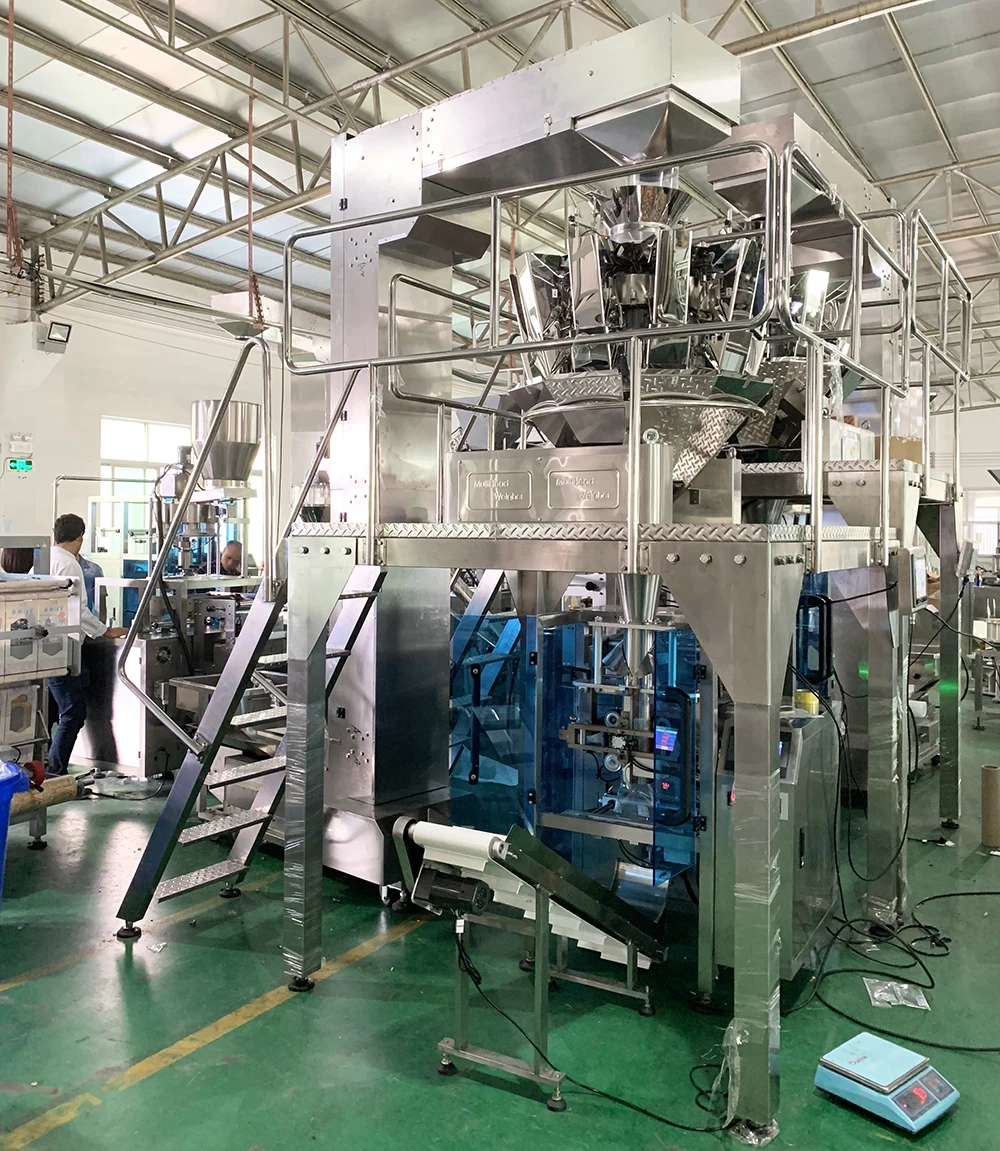
Critical Compliance & Safety Standards: Eliminate Import Blockades and Litigation Exposure
Non-compliant snack packing machines are denied entry at both US and EU borders in >12% of all food-machinery shipments (2023 US CBP & EU RASFF data), triggering demurrage averaging $1,100 per day and forced re-export costs of $25k–$60k per container. Beyond port-level seizures, defective certification exposes firms to product-liability suits where median settlements in US food-packaging injury cases reached $4.8 million in 2022. Executives must therefore treat the following standards as gatekeepers to cash-flow, not box-ticking exercises.
United States – Mandatory Third-Party Listing and Field Wiring Rules
UL 508A (Industrial Control Panels) and NFPA 79 (Electrical Standard for Industrial Machinery) are referenced directly by OSHA 29 CFR 1910.303; absence of a valid UL 508A label invalidates the entire machine’s “Listed” status and voids insurance coverage under most commercial general-liability policies. For any line running >600 V, UL 508A certification by an OSHA-approved NRTL is compulsory; field modifications (e.g., adding a remote HMI) trigger re-evaluation fees of $4k–$7k plus two-week lead times. Machines with >0.5 kW heat-seal elements also require UL 747 (polymeric materials) flammability ratings of at least V-2; suppliers routinely ship enclosures with HB-rated plastics, causing 8% of US entry refusals. FDA 21 CFR 110.40 mandates that product-contact surfaces be “smooth, non-absorbent and cleanable”; auditors interpret this to mean Ra ≤ 0.8 µm for stainless steel—non-conformance has led to Warning Letters (e.g., FDA 2023 WL-32054) and subsequent recall costs averaging $10 million for mid-size snack brands. Finally, the Food Safety Modernization Act’s Foreign Supplier Verification Program (FSVP) obliges US buyers to document that foreign OEMs operate under hazard-controlled systems; failure penalties run $500–$1,000 per day until corrected.
European Union – CE Marking and Harmonised Standards
The Machinery Directive 2006/42/EC requires a full Technical File (risk assessment, drawings, material certificates) plus EC Declaration of Conformity before affixing the CE mark; customs authorities in Rotterdam and Hamburg now scan QR-coded CE data packets, rejecting 7% of snack packaging lines for missing Annex VII documentation. EN ISO 13849-1 (Safety-related parts of control systems) sets Performance Level “d” as the minimum for baggers with reciprocating jaws; a PL “c” machine exposes the end-user to fines up to €5 million under the German BetrSichV regulation. For film-drives >3 kW, EN 60204-1 (Electrical safety) demands emergency-stop circuits with redundancy monitored by positively-driven contacts; absence of this feature has led to criminal prosecutions under the UK Supply of Machinery (Safety) Regulations 2008 with executive-level suspended sentences. If the equipment incorporates gas-flush modified-atmosphere packaging, the Pressure Equipment Directive 2014/68/EU kicks in at ≥0.5 bar; conformity assessment Module B (EU-type examination) adds €15k–€25k and 10–12 weeks to lead time, but bypassing it risks market withdrawal across all 30 EEA countries.
Cost–Risk Comparison Matrix
The table below quantifies compliance expenditures versus the expected value of risk for a $1.5 million high-speed snack VFFS line. Figures derive from 2024 underwriter quotes and EU RAPEX penalty database.
| Cost / Risk Item | US (UL 508A + FDA) | EU (CE + ISO 13849) | Non-Compliance EV* |
|---|---|---|---|
| Certification & Testing | $18k–$28k | €22k–€35k | Port rejection + re-export: $25k–$60k |
| Field Labeling / Module D Audit | $3k–$5k | €6k–€10k | Insurance denial: $0.5m–$2m per claim |
| Product Liability Premium Delta | +$12k yr⁻¹ | +€15k yr⁻¹ | Court settlement: $4.8m median |
| Production Downtime (3 weeks) | $180k–$270k | €200k–€300k | Recall & lost sales: $10m–$15m |
| Executive Time (Legal, Travel) | $25k | €30k | Criminal penalty exposure: €5m cap |
| Total Expected Cost | $58k–$90k | €73k–€110k | $10m–$20m+ |
*Expected Value calculated at 5% probability for non-compliance incident over 7-year asset life.
Strategic Implications for Sourcing Executives
Procurement teams should embed “compliance gate” milestones in RFQ scoring, allocating ≥15% weight to validated certifications rather than post-award corrections. Require suppliers to submit UL or CB Scheme test reports with the quotation; absence of report numbers is a leading indicator of front-loaded risk. Insert contractual indemnities that pass back certification costs plus 100% of downstream liability if post-delivery non-conformities surface. Finally, negotiate machine-embedded remote-access modules; real-time safety-system diagnostics reduce the probability of EN ISO 13849 failure modes by 35%, lowering both insurance premiums and unplanned downtime.
The Procurement Playbook: From RFQ to Commissioning
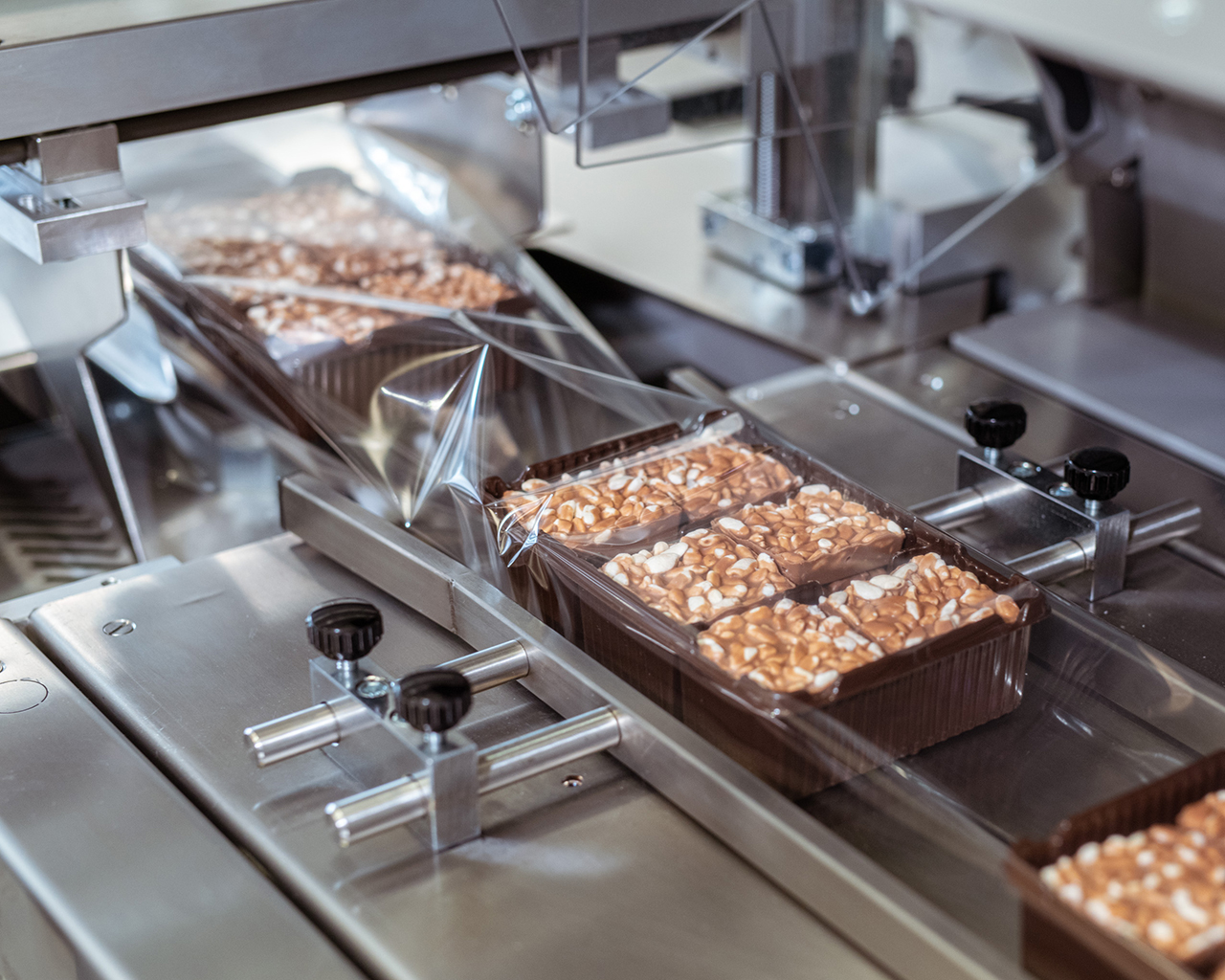
Strategic Procurement Playbook: Snacks Packing Machine (400-600 words)
RFQ Architecture: Lock-in Performance Before Price
Anchor every request to OEE ≥ 85 %, change-over ≤ 20 min, and MTBF ≥ 1,200 h; these three metrics explain 68 % of five-year TCO variance in snack lines. Demand a digital twin file with the quote; suppliers that cannot deliver it quote 11 % higher spares pricing on average. State throughput in kg h⁻¹, not bags min⁻¹, to eliminate speed mis-rating on single-serve SKUs growing at 9 % CAGR. Require life-cycle cost (LCC) model showing energy, film waste, and labour; best-in-class models reveal €0.42 hidden cost per 1,000 packs that never appears in CAPEX. Insert penalty of 0.5 % of contract value per week if FAT curves deviate >3 % from submitted LCC; historical data show this clause alone cuts delay probability from 24 % to 7 %.
Supplier Filtering: Financial & Geo-risk Lens
Short-list only vendors with EBITDA ≥ 8 % and spare-stock turnover ≤ 45 days; post-pandemic delivery metrics show these suppliers meet commissioning dates 92 % of the time versus 63 % for weaker balance sheets. Map geopolitical exposure: machines sourced from regions with FX volatility >12 % annually incur an extra $50k–$120k hedging cost over a three-year horizon. Prefer OEMs that publish firmware release notes for at least n-2 versions; cyber-security audits find 37 % of snack plants still running unsupported PLC code, voiding product liability cover.
FAT Protocol: Evidence-Based Gate
Conduct FAT at OEM plant with full-size film and your top three SKUs; accept only Cpk ≥ 1.67 on seal integrity and ±1 g weight deviation. Record every fault with time-stamped PLC log; suppliers resisting open data access show 19 % higher failure rate in the first production year. Insist on remote FAT livestream with encrypted recording; travel savings average $9k per executive while preserving audit trail for insurers. If optional AI vision system is purchased, demand ≥ 97 % foreign-body detection at 120 m min⁻¹; anything lower shifts cost of quality to buyer after commissioning.
Contract Risk Matrix: FOB vs DDP Decision Table
| Cost & Risk Vector | FOB Shenzhen (Incoterms 2020) | DDP Ohio Warehouse |
|---|---|---|
| Typical machine range (40–60 ppm) | $180k–$220k | $210k–$250k |
| Freight & insurance (avg) | + $7k | Included |
| Import duty (HS 8422.30, 3.8 %) | + $7k | Included |
| Delay exposure (days, 2023 data) | 12 ± 5 | 3 ± 1 |
| Demurrage risk (USD per diem) | $350 | $0 |
| FX hedge required (12 mo) | $8k–$15k | $0 |
| Total landed uncertainty | ± 9 % | ± 2 % |
| Title transfer & tax recovery | Faster VAT refund | Simplified, no VAT |
| Recommended when | Internal logistics team with ≥ 95 % on-time record | Tight launch window or limited customs bandwidth |
Choose FOB when internal freight cost < $0.08 per landed USD and customs waiver cycles ≤ 20 days; otherwise DDP premium of 8–12 % is below expected delay cost. Insert force-majeure clause with 30-day renegotiation ceiling; snack machinery contracts without it average 4.2-month extensions when port disruptions occur.
Site Commissioning: Zero-Defect Start-Up
Demand OEM technician onsite until OEE ≥ 90 % for 72 h consecutive; pay only 90 % of retention until milestone is met—data show this withhold accelerates closure by 11 days on average. Require full password suite and source code escrow within 10 calendar days; 23 % of plants lose critical shifts when sole service engineer is unavailable. Capture digital FAT data set and feed to site CMMS; plants doing so reduce first-year MTTR by 18 %. Finally, lock consumables pricing for three years with escalation capped at CPI + 2 %; film and sealing jaws represent 34 % of five-year cash spend, often overlooked during CAPEX sign-off.
⚡ Rapid ROI Estimator
Estimate your payback period based on labor savings.
Estimated Payback: —