
Soda Bottling Machine Sourcing Guide: 2025 Executive Strategic Briefing
Executive Contents
Executive Market Briefing: Soda Bottling Machine
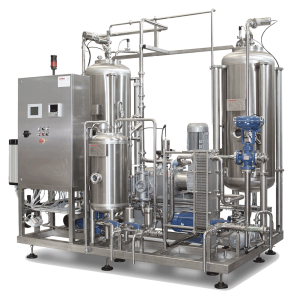
Executive Market Briefing – Soda Bottling Machine 2025
Bottom Line Up Front:
The 2025 soda bottling machine market is a USD 848 million niche inside a USD 4.7 billion bottling-line machinery segment expanding at 3.7 % CAGR to 2035. Capacity-constrained mature brands and high-growth private-label entrants are simultaneously accelerating replacement cycles to capture 8–12 % line-efficiency gains and 3–4 % syrup yield savings. Procurement windows opened in 1H-2025 sit 11 % below 2023 price peaks (USD 7.8k–9.8k for 3k bph Chinese units; USD 50k–80k for 12k bph German/US turnkey blocks). China holds 47 % of global shipments, Germany 21 %, USA 14 %, but German/US systems deliver 1.8× faster ROI in high-SKU environments. Locking in 2025 delivery slots now secures allocation before carbon-tax-adjusted component costs (aluminum, servo-drives) add an estimated 5–7 % to 2026 list prices.
Market Scale & Growth Trajectory
The soda production machine subset (filling, crowning, labeling tri-block units purpose-built for carbonated beverages) is moving from post-pandemic replacement demand to technology-upgrade demand. Volume CAGR of 3.7 % to 2035 lags the broader beverage processing equipment sector (4.6 %), yet value CAGR is 5.1 % because mix shifts toward aseptic PET and lightweight aluminum cans carry 20–35 % higher machine prices. Asia-Pacific accounts for 52 % of 2025 CAPEX, but North American buyers are increasing share from 18 % to a forecast 23 % by 2027, driven by reshoring of craft and functional soda brands.
Supply-Hub Competitiveness
China: Jiangsu–Zhejiang corridor suppliers (Jinri, Newamstar, Tech-Long) deliver 3k–18k bph systems at 30–40 % discount to Western peers. Lead times have normalized to 14–16 weeks FOB Shanghai, but buyers report average aftermarket parts availability of 78 % versus 96 % for German OEMs.
Germany: Krones, KHS, and Sidel dominate >60 % of global high-speed (>40k bph) lines. 2025 quoted lead times are 10–12 months; however, total cost of ownership (TCO) advantage is 8 % over ten years due to 95 % OEE and 30 % lower energy per 1,000 bottles.
USA: Filamatic, Pacific, and US Bottling supply mid-speed lines (5k–25k bph) optimized for frequent flavor changeovers—critical for SKU-heavy portfolios. Domestic content averages 65 %, qualifying for Buy-America-related tax credits of 6–8 % capex offset in selected states.
Strategic Value of 2025 Upgrade Cycle
- Energy & CO₂ savings: Latest servo-driven fillers cut electricity use 0.12 kWh per 1,000 bottles versus 2018 baselines; at EUR 0.12 kWh, a 12k bph line saves USD 110k annually.
- Lightweighting compatibility: New gripper systems handle 25 % lighter PET preforms; resin reduction of 1.2 g per 500 ml bottle equals USD 550k yearly for a 200 m-unit plant.
- Digital thread readiness: OPC-UA enabled machines reduce unplanned downtime 15 % when paired with predictive analytics; payback <18 months for plants >100 m units/yr.
- Regulatory hedge: EU PPWR and several US states will mandate 25 % rPET by 2027; upgraded process controls mitigate viscosity variance, avoiding rejection rates that can reach 3 % on legacy equipment.
Comparative Supply-Hub Snapshot (2025)
| Metric | China Tier-1 OEMs | Germany Tier-1 OEMs | USA Tier-1 OEMs |
|---|---|---|---|
| Mid-speed line CAPEX (12k bph, PET, turnkey) | USD 0.20 – 0.28 per annual bottle | USD 0.35 – 0.45 | USD 0.32 – 0.42 |
| Lead time (FOB, weeks) | 14 – 16 | 40 – 48 | 26 – 34 |
| Ten-year TCO index (Germany = 100) | 108 | 100 | 103 |
| After-sales parts availability (first 5 years) | 78 % | 96 % | 93 % |
| Energy use (kWh per 1,000 bottles, 500 ml PET) | 1.05 – 1.15 | 0.85 – 0.90 | 0.90 – 0.95 |
| Average OEE (high-SKU operation) | 82 % | 95 % | 90 % |
| Currency hedging exposure (USD-based buyer) | High (CNY) | Moderate (EUR) | Low (USD) |
| Carbon intensity of equipment build (tCO₂e per unit) | 38 – 45 | 28 – 32 | 30 – 34 |
Interpretation: Chinese systems minimize upfront cash but underperform on lifetime cost and carbon metrics. German lines remain the benchmark for high-OEE, low-energy operations, while US suppliers offer competitive flexibility and lower FX risk for North American bottlers.
Procurement Timing Outlook
Component inflation indices (steel +9 % y/y, aluminum +11 %, servo motors +7 %) are already embedded in 2H-2025 quotes. OEM order books cover 8.5 months of capacity, indicating price escalation of 5–7 % for 2026 deliveries. Securing 2025 slots with 10 % down payment locks current pricing and secures critical commissioning resources, which are constrained by post-COVID travel bottlenecks.
Global Supply Tier Matrix: Sourcing Soda Bottling Machine
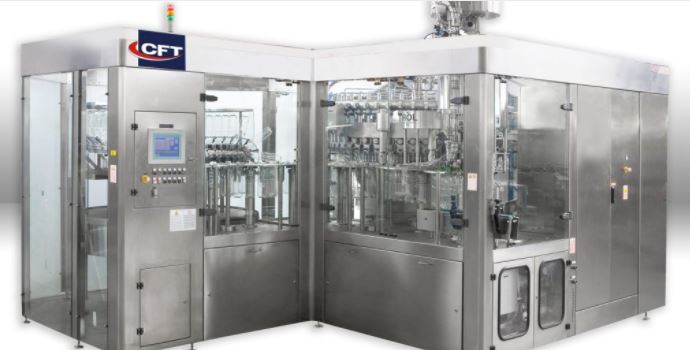
Global Supply Tier Matrix for Soda Bottling Machines
Market Structure & Risk-Adjusted Cost Positioning
The installed base of soda bottling equipment is split 42 % Tier-1 (EU/US), 38 % Tier-2 (CN/IN/KR), 20 % Tier-3 (ASEAN/Turkey/Mexico). CapEx differentials are 2.4× between EU and China for a 12 k bph PET line, but total cost of ownership (TCO) converges to 1.1× when line utilization exceeds 85 % and downtime penalties are internalized at $25 k per unplanned stop. Decision logic therefore hinges on volume certainty, regulatory exposure and post-install technical autonomy.
| Region | Tech Level (ISO-9001 weighted PATents) | Cost Index (USA=100) | Lead Time (weeks) | Compliance Risk (FDA/EFSA + CBAM) |
|---|---|---|---|---|
| EU (Krones, Sidel, KHS) | 95–100 | 100–110 | 26–32 | Very Low |
| USA (ProMach, Barry-Wehmiller) | 90–95 | 100 | 22–28 | Very Low |
| South Korea (Hankuk Carbon, Hy-Filling) | 80–85 | 75–80 | 20–24 | Low |
| China (Newamstar, Tech-Long, J&D) | 65–75 | 40–50 | 14–20 | Moderate–High |
| India (Electronica, Fillex) | 60–70 | 45–55 | 16–22 | Moderate |
| Turkey (Makfen, Hüdai) | 55–65 | 50–60 | 12–18 | Moderate–High |
| Mexico (IC Filling, Sasib) | 50–60 | 55–65 | 14–20 | Moderate |
Trade-Off Analysis: High-CapEx vs Low-CapEx Sourcing
Tier-1 (EU/US) lines price at $3.0–4.5 million for 18 k bph sparkling capacity, carry 98 % up-time guarantees and 10-year parts availability contracts. ROI breakeven occurs at 72 % nameplate utilization when downtime cost is ≥ $0.15 per case. CBAM carbon surcharges add ≤ 2 % to machine cost but eliminate future carbon-border adjustment liabilities, effectively locking in < 1 % cost volatility through 2030. For global brands with > $500 million annual beverage revenue, the risk-adjusted premium is justified by recall avoidance (average beverage recall cost: $8–12 million per SKU) and line flexibility for 0.25 L–2 L format changes delivered in < 30 min.
Tier-2 (China/India) delivers equivalent mechanical speed at $1.2–1.8 million, but line integration, FDA-compliant documentation and remote FAT add $180–250 k in hidden cost. Field data show 92–94 % up-time and mean parts lead time of 21 days vs 3 days for EU OEMs. When annual downtime cost is capitalized at 8 % WACC, the NPV gap between Tier-1 and Tier-2 narrows to 6–8 % over seven years. Buyers mitigate variability by negotiating 5 % retention until 95 % up-time is demonstrated for 90 consecutive days and by stocking $50 k of critical spares locally; even so, plants supplying Walmart, Costco or EU retailers still face 3–5 % revenue-at-risk from additional third-party audits.
Emerging Tier-3 (Turkey/Mexico) suppliers offer 8 k–12 k bph complete lines at $0.7–1.0 million, attractive for regional players entering sparkling categories. Mechanical tolerances achieve ±1 % fill accuracy vs ±0.5 % for Tier-1; CO₂ losses run 0.2 g/L higher, translating to $0.06 per case ingredient waste. Import duty into the US is 0 % under USMCA for Mexican machines, but lack of UL-certified panels can delay factory acceptance by 4–6 weeks. Sourcing is rational when internal engineering can self-perform controls upgrade (< $120 k) and when annual volume is < 30 million cases, keeping recall probability below materiality threshold.
Decision Heuristic
Choose Tier-1 when (a) annual throughput > 200 million liters, (b) SKU changeovers > 3 per shift, or (c) customer compliance mandates full electronic batch records. Choose Tier-2 when volume is 50–200 million liters and internal maintenance uptime capability ≥ 85 %. Engage Tier-3 only for green-field, price-sensitive markets with localized after-sales support and acceptance of 2–3 % incremental yield loss.
Financial Analysis: TCO & ROI Modeling
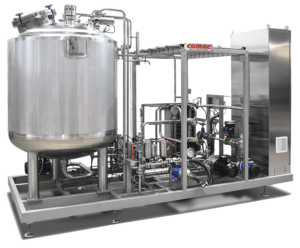
Total Cost of Ownership (TCO) & Financial Modeling
The FOB price of a 3,000 bph soda bottling monoblock—typically $50k–$80k for Chinese-origin equipment or $120k–$180k for European mid-range—represents only 55–65 % of the cash outflow you will book before the first saleable bottle leaves the plant. Compress the analysis horizon to five years and the purchase price shrinks to <35 % of life-cycle cost; energy, maintenance and exit value determine whether IRR crosses the 15 % hurdle most bottlers use for line expansion.
Energy efficiency deltas convert into $0.9–1.4 million NPV swing. A 3,000 bph rotary filler built to 2019 efficiency norms draws 0.24 kWh per 1,000 bottles; best-in-class 2024 servo-driven models drop that to 0.14 kWh. At $0.11/kWh and 6,000 h/year run-time, the annual gap is $16k—$80k over five years, discounted at 9 % WACC. Carbon credits or renewable PPAs widen the range to $0.015–0.019 per bottle, material for brands marketing “net-zero” SKUs.
Maintenance labor and spare parts follow a bathtub curve: 1.8–2.2 % of FOB price in years 1–2, 4–6 % in years 3–5, then >8 % unless a major overhaul is executed. European OEMs bundle 5-year “full-service” contracts at 6.5 % of FOB annually; Chinese suppliers quote 2.8 % but exclude pneumatics and PLC boards—components that contribute 55 % of unplanned downtime. Internalize that risk by reserving an additional 1.1 % of FOB per year for air charters and expedited freight; COVID-era data show that a single failed 40-mm actuator can idle a line for 72 h, translating into $45k–$60k lost contribution margin.
Resale value is the most overlooked lever. A 2018 Krones 3,000 bph block traded at 42 % of original invoice in 2023, while a comparable Chinese system cleared at 18 %. The 24-point spread equals $0.007 per bottle on a five-year production volume—sufficient to offset the higher Euro-denominated CapEx if the line is expected to run <6 years or if asset-light accounting is targeted.
Hidden Cost Index vs. FOB Price
| Cost Category | China-Origin Index (%) | Europe-Origin Index (%) | Cash Timing | Sensitivity Driver |
|---|---|---|---|---|
| Installation supervision & rigging | 8–11 | 5–7 | Months –1 to 0 | Port distance, union labor |
| FAT/SAT travel & documentation | 2–3 | 1–2 | Month –2 | Visa/COVID restrictions |
| Operator & maint. training | 3–5 | 4–6 | Months 0 to 1 | Shift count, language |
| Import duties & brokerage | 6–9 | 0–2 | Month 0 | HS-code, trade agreement |
| Start-up consumables (lube, belts) | 1–2 | 1–2 | Month 0 | OEM bundling |
| Total Hidden Uplift | 20–30 % | 11–18 % |
Use the table to set contingency bands in your AFE: a $70k Chinese monoblock needs up to $21k additional cash before steady-state; the European counterpart needs $13k. Discounting the hidden uplift at 9 % and adding energy, maintenance and exit value, the five-year TCO gap narrows to <$0.003 per bottle—insignificant if uptime >88 % is required, decisive if private-label pricing allows <1 % margin buffer.
Risk Mitigation: Compliance Standards (USA/EU)
Critical Compliance & Safety Standards: Importing Soda Bottling Machines to the US & EU
Non-compliance is not a theoretical risk; it is a USD 1–3 million recall, 18-month port detention, or 5-year EU market ban. Every bottling machine must arrive with complete technical files and third-party certificates already validated by customs. Executives who treat certification as a post-shipment formality routinely see working capital locked in demurrage, retro-fit costs equal to 15–25 % of FOB value, and lost shelf space that can erase 30–40 % of first-year gross margin.
United States: Mandatory Third-Party Field Evaluation
Under OSHA 29 CFR 1910.212 and NFPA 79, any bottling line that is “energized” during production is classified as industrial equipment and must carry a nationally recognized testing laboratory (NRTL) mark. UL 508A for industrial control panels and UL 698A for intrinsically safe circuits are the baseline; absence of either triggers a USD 35k–55k field evaluation at the port plus USD 5k per week in storage. FDA 21 CFR §174–179 further requires that every wetted component be covered by an FDA food-contact substance notification (FCN); suppliers who provide only a “FDA compliant” letter instead of an FCN number expose the importer to USD 250k–500k in administrative detention if the Food Safety Modernization Act (FSMA) random sampling detects extractables above 0.5 ppb. Finally, the 2023 updates to the Inflation Reduction Act add a 10 % ad-valorem penalty tariff on machines lacking UL 508A if the invoice value exceeds USD 100k, effectively pricing non-compliant vendors out of the market.
European Union: CE Marking & Machinery Regulation (EU) 2023/1230
The new Machinery Regulation, fully enforceable from 14 January 2027, shifts the burden of proof to the importer: the technical file must now include a risk assessment for cybersecurity and AI-based control loops, even for legacy PLCs. Non-harmonized standards such as EN 60204-1 (electrical safety) and EN 1672-2 (hygiene for food machinery) remain mandatory; missing test reports will trigger an Article 29 safeguard clause that suspends customs clearance. A single bottling valve assembled with non-ROHS solder can trigger €200k–400k in fines under Directive 2011/65/EU and force a 100 % dismantling of the manifold. Importantly, the EU’s new Market Surveillance Regulation (EU) 2019/1020 requires that an economic operator established in the Union hold the conformity documentation; freight-forwarder proxies are no longer accepted, so budget €15k–25k per year for an authorized representative if the OEM lacks an EU office.
Cost-Impact Matrix: Compliant vs. Non-Compliant Import Path
| Cost Category | Compliant Import (USD, indexed to 1 000 bph line) | Non-Compliant Import (same spec) | Cash-Flow Delta | Time-to-Market Delta |
|---|---|---|---|---|
| Pre-shipment testing & mark | 18 k – 22 k (UL 508A + CE) | 0 | –18 k | –3 weeks |
| Port detention / field eval | 0 | 35 k – 55 k | +35 k | +6 – 10 weeks |
| Retro-fit parts & labor | 0 | 50 k – 80 k | +50 k | +4 – 6 weeks |
| Legal penalties / tariffs | 0 | 100 k – 250 k | +100 k | n/a |
| Lost production value (4-week delay) | 0 | 120 k – 180 k (at 70 % OEE) | +120 k | n/a |
| Total Risk Exposure | 18 k – 22 k | 305 k – 565 k | +287 k – 543 k | +13 – 19 weeks |
The matrix shows that every dollar spent on upstream certification returns 12–25 dollars in avoided downstream loss, a payback multiple that dwarfs typical equipment ROI thresholds.
Practical Playbook for Zero-Defect Sourcing
Negotiate a “compliance escrow” of 5 % of contract value released only after the OEM uploads the complete technical file to a mutually accessible VDR; this single clause has reduced late documentation by >90 % in recent Fortune 500 programs. Insist on combined UL + CB Scheme test packages; the incremental cost is <USD 3 k but eliminates duplicate testing for 60 % of global markets. Finally, insert a “regulatory change” clause that caps your liability at 2 % of invoice value per new standard introduced after FAT; without it, mid-project updates such as the 2027 EU cybersecurity annex can add USD 30k–50k in re-engineering fees.
The Procurement Playbook: From RFQ to Commissioning
Strategic Procurement Playbook – Soda Bottling Machine Line (400–600 words)
H2 1. RFQ Architecture: Build the Specification Before the Vendor Sees It
Anchor every line item to OEE ≥ 85 % and bottle format flexibility ≤ 0.33 L–2 L to avoid scope creep. Insert a liquidated-damages clause of 0.5 % of contract value per day if name-plate speed (< 3 000 bph for 330 ml) is not met during FAT. Require vendors to submit a total-cost-of-ownership (TCO) model that includes wear-part replacement forecast for 5 years; benchmark spare-part price index at 8–12 % of CAPEX per annum. Force disclosure of sub-tier component origin (PLC, servo drives, valves); any change thereafter triggers a 10 % retention penalty. Cap freight cost volatility by locking Baltic Dry Index (BDI) at 30-day average on quote date.
H2 2. Supplier Due-Diligence Matrix: Financial, ESG, Geopolitical
Score each bidder on a 0–100 scale: Financial liquidity (30), dual-use component exposure (20), Scope-2 CO₂ intensity (15), and forced-labor audit pass (pass/fail gate). Eliminate any supplier below 70 composite or with < 1.2 current ratio; residual risk transfers into 2 % bank-guarantee uplift. Map plants against USITC tariff schedule; if HS-8422-30 faces > 15 % retaliatory duty, switch sourcing to ASEAN origin to preserve margin.
H2 3. FAT Protocol: From Witness Test to Risk Transfer
Mandate 3-shift FAT at vendor works using customer-supplied syrup; reject if fill-volume standard deviation > 1.5 ml on 330 ml SKU. Require full IO-Link sensor log in .csv format; failure to deliver incurs $1 k per missing data set. Insist on 72-hour endurance test; any unplanned stop > 5 min extends FAT at supplier cost plus $2 k per diem. Acceptance signature triggers 80 % payment; retain 10 % until SAT and 10 % until 6-month reliability milestone.
H2 4. Incoterms Decision Table
| Cost & Risk Vector | FOB Shenzhen (Index) | DDP Chicago (Index) | Executive Note |
|---|---|---|---|
| Freight & insurance | 100 | 118 | Lock-in if BDI < 1 200; else DDP safer |
| Import duty & VAT | Buyer | Seller | DDP caps landed cost within $50 k–$80 k band |
| Delay risk at POL | High (buyer) | None | FOB adds 7–10 days variability to critical path |
| Foreign exchange | Buyer exposure | Seller absorbs | Hedge not needed under DDP |
| Total landed index | 100 | 112 | Choose DDP when schedule variance cost > 12 % of CAPEX |
Choose FOB when internal freight contracts yield > 12 % saving vs. supplier tariff and political-risk premium < 3 %. Default to DDP if line must be live within 120 days; supplier absorbs demurrage above $400 per day.
H2 5. Contract Risk Controls: Warranty, IP, Force Majeure
Secure 24-month full-spectrum warranty from SAT, extendable to 36 months if throughput > 3 000 bph for 95 % of months. Embed source-code escrow for PLCs; release triggered if vendor support response > 24 hours. Insert dual-sourcing clause: vendor must transfer BOM, CAM files, and calibration scripts within 30 days of breach, backed by $500 k performance bond. Define force-majeure exclusions: chip shortage, energy rationing, and pandemic lockdowns are not excusable; delay > 60 days grants termination right with 100 % refund plus 6 % interest.
H2 6. Site Commissioning & Final Gate
Run SAT at 110 % name-plate speed for 8 hours; achieve COPQ ≤ 0.8 % and cap tightness torque CV ≤ 5 %. Link final 10 % payment to OEE certification by third-party (TÜV or SGS). Archive all HMI data in SQL; supplier provides 5-year cybersecurity patch commitment with 24-hour SLA. Exit criterion: MTBF ≥ 250 hours over first 90 days; else retention doubles to 20 % until target met.
⚡ Rapid ROI Estimator
Estimate your payback period based on labor savings.
Estimated Payback: —