Spray Dryer Sourcing Guide: 2025 Executive Strategic Briefing
Executive Contents
Executive Market Briefing: Spray Dryer

Executive Market Briefing: Global Spray-Dryer Landscape 2025
BLUF
Upgrade now or pay later: the 2025–32 procurement window is the last in which Chinese cost leadership, European energy-efficiency IP, and U.S. pharmaceutical demand converge to deliver double-digit TCO savings before carbon-border taxes and capacity bottlenecks erase the advantage.
Market Scale & Trajectory
The global installed base of spray-drying equipment is valued at $6.59 billion in 2025 and will expand at a 6.5 % CAGR to $10.23 billion by 2032, outpacing the broader industrial-dryer segment by 170 bps. Pharmaceutical-grade applications alone accelerate at 7.6 % CAGR, lifting share from 38 % to 45 % of total value. Capacity build-out in infant-formula, battery precursors, and plant-protein isolates accounts for 62 % of forecast CapEx, ensuring that lead times extend from 6–8 months today to 10–12 months by 2027.
Supply-Hub Economics
China controls 48 % of global unit shipments and 34 % of value due to sub-$80k laboratory-to-pilot units; Jiangsu and Shandong clusters deliver a 200 kg/h pressure-nozzle dryer at $30k–$80k FOB, 35 % below EU parity. Germany retains 27 % of value share via GEA, BÜCHI, and Dedert, commanding $150k–$400k for 200 kg/h food-grade systems that guarantee <5 ppm solvent residue and <40 kWh thermal consumption per kg water evaporated. United States demand is $2.0 billion in 2025, rising to $3.0 billion by 2035 (4.2 % CAGR); domestic OEMs (Dedert, SPX FLOW) focus on cGMP pharma lines priced at $0.5m–$2.2m with 21 CFR Part 11 data integrity packages. Post-IRA domestic-content rules add a 10 % price premium but unlock 30 % investment-tax credit, narrowing the landed-cost gap with EU imports to <8 %.
Strategic Value of 2025 Upgrade Cycle
Energy-recovery loop dryers introduced in 2024 cut natural-gas use by 18–22 %, translating to $0.9–$1.3 million annual savings on a 1 t/h milk-powder line at EU gas prices. Carbon-border-adjustment tariffs scheduled for 2026 will levy €65 tCO₂e on non-verified imports; upgrading to best-available-technology (BAT) dryers now secures a €35–€50 per ton powder cost advantage versus retrofits after 2027. Finally, OEM order books are only 62 % filled for 2026 delivery; locking Q4-2025 slots freezes steel surcharges at current $650 mt versus forward curves at $780 mt.
Decision Matrix: China vs Germany vs USA Sourcing 2025
| Metric | China Jiangsu Cluster | Germany (GEA/BÜCHI) | USA (Dedert/SPX) |
|---|---|---|---|
| FOB Price 200 kg/h Food-Grade Unit | $30k – $80k | $150k – $400k | $180k – $450k |
| Landed Cost to USGC incl. 25 % tariff | $50k – $110k | $170k – $440k | $180k – $450k |
| Energy Consumption kWhth / kg H₂O | 0.55 – 0.65 | 0.35 – 0.40 | 0.38 – 0.42 |
| cGMP/21 CFR Part 11 Ready | No | Yes | Yes |
| CO₂e per ton powder (EU grid) | 320 kg | 190 kg | 210 kg |
| Lead Time (months) | 3 – 4 | 6 – 8 | 7 – 9 |
| TCO Advantage at 6,000 h/y over 7 yr | Baseline | –$0.9 m | –$0.7 m |
| Tariff Exposure post-2026 | 30 % | 0 % | 0 % |
| Residual Value after 10 yr | 15 % | 35 % | 40 % |
Immediate Action Items
Secure 2026 capacity slots before June 2025 to cap steel surcharges; negotiate energy-performance guarantees at ≤0.40 kWhth / kg H₂O to future-proof against CBAM; structure contracts with dual-sourcing clauses (China for cost, Germany for compliance) to maintain 20 % cost-down optionality while mitigating single-country risk.
Global Supply Tier Matrix: Sourcing Spray Dryer
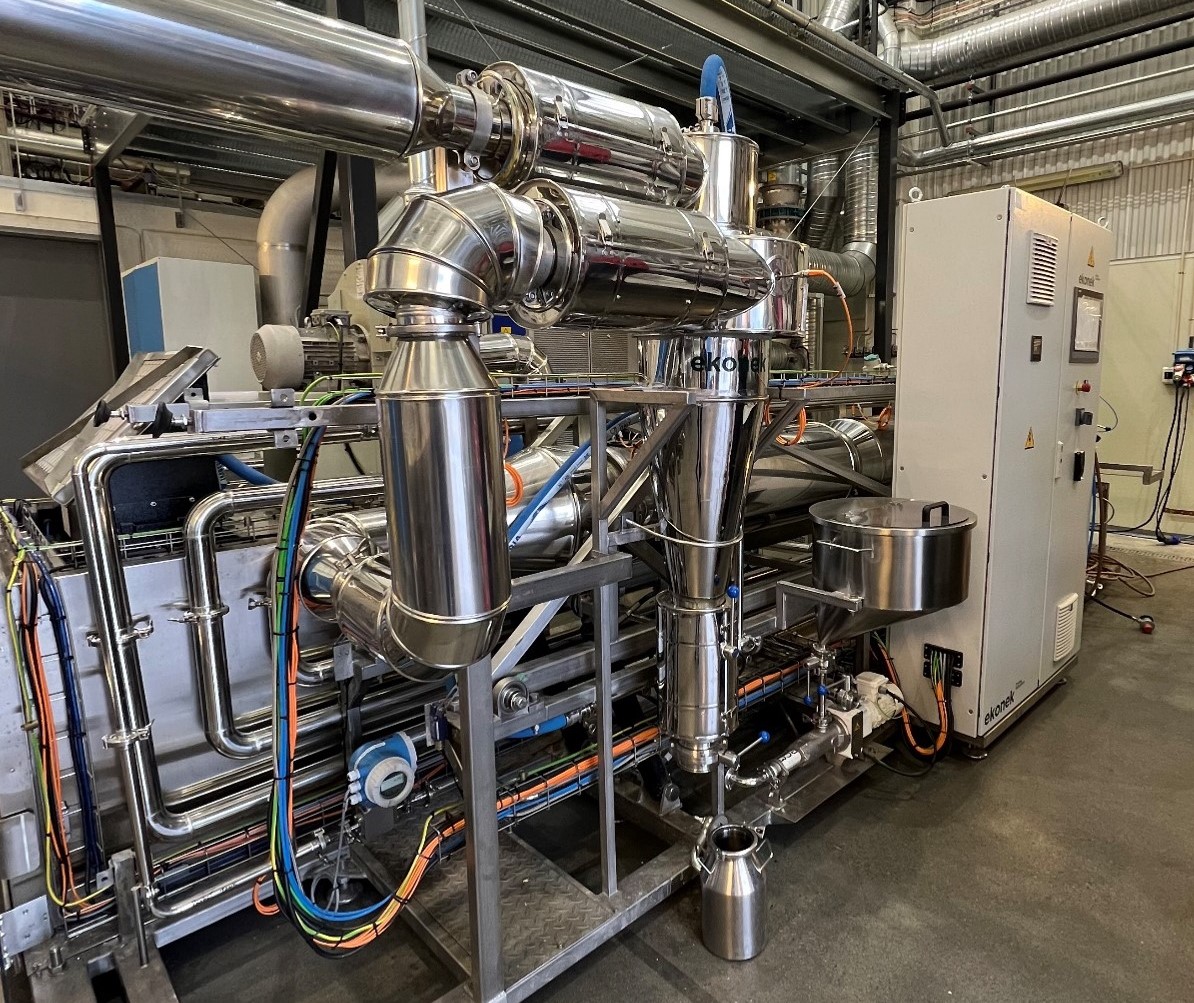
Global Supply Tier Matrix – Spray Dryer OEM Landscape
| Region | Tech Level (0-5) | Cost Index (USA = 100) | Lead Time (weeks) | Compliance Risk (0-5) |
|---|---|---|---|---|
| USA / Canada | 5 | 100 | 24-30 | 1 |
| EU-5 + Nordics | 5 | 95-105 | 26-32 | 1 |
| Japan / South Korea | 4.5 | 85-95 | 20-28 | 1.5 |
| China – Tier 1 coastals | 3.5 | 55-65 | 14-20 | 3 |
| China – Tier 2 inland | 2.5 | 40-50 | 12-18 | 4 |
| India – Ahmedabad–Pune belt | 3 | 45-55 | 16-22 | 3.5 |
| Southeast Asia (Thailand, Vietnam) | 2.5 | 50-60 | 18-24 | 3 |
Trade-off Logic: CapEx vs. TCO vs. Regulatory Exposure
USA/Canada and EU-5 suppliers (GEA, SPX FLOW, Dedert, Buchi, Tetra Pak) deliver the highest thermal efficiency, 21 CFR Part 11 data integrity suites, and guaranteed FAT/SAT documentation. CapEx runs $1.2 M – $2.2 M for a 1 t/h pharmaceutical-grade unit, but energy-optimised designs cut 7-10 % off annual utility spend, translating to a three-year payback delta versus Asian bids when energy is > USD 0.10 kWh. Lead times are 24-32 weeks; compliance risk is minimal, so total cost of ownership (TCO) advantages dominate post-tax if the product sells into FDA/EMA arenas.
Japan/Korea suppliers (Yamato, Fujisaki, Korean Engineering) bundle high automation with 10-15 % lower price than western peers. IP protection and after-sales coverage are strong, yet component sourcing can still transit through China, injecting minor geo-political tail risk. Lead times average 20-28 weeks; cost index 85-95.
China Tier 1 players (Wuxi Modern, Changzhou KODI, Shandong Tianli) now deliver cGMP-compliant 316L dryers with full CIP/SIP for $350 k – $650 k, roughly 55-65 % of U.S. baseline. FAT can be witnessed remotely, but DQ/IQ/OQ documentation often needs re-formatting to satisfy U.S. auditors. Energy efficiency lags 8-12 %, and metallic traceability on high-pressure nozzles remains the top FDA citation. Still, for capacity-hungry nutrition or ceramic applications, the CapEx saving equals 4-6 years of energy penalty, making the locale attractive when product margins < 15 %.
China Tier 2 and India workshops offer identical stainless grades, but with lower automation, limited process liability coverage, and weaker vendor insurance. Purchase prices fall to $250 k – $450 k for 500 kg/h evaporative capacity, yet hidden costs emerge: 2-3 % of shipment value in pre-shipment inspection, 4-6 weeks of on-site re-work, and average 4 % annual unplanned downtime. For non-pharma powders (detergents, ceramics) where GMP is not mandated, the ROI breakeven against a U.S. unit is 14-18 months; for pharma or infant formula the compliance risk outweighs the CapEx saving.
Southeast Asia is emerging as a “China-plus-one” option, pricing 50-60 % of U.S. levels, but local engineering depth is thin; expect heavier buyer-side supervision and longer learning curves.
Sourcing Playbook
- Segment demand by regulatory exposure: FDA/EMA = USA/EU only; agro-chemicals or ceramics = China/India allowed.
- Lock energy escalation clauses: every 1 % gain in thermal efficiency equals ~$7 k annual saving on a 1 t/h unit at USD 0.08 kWh.
- Negotiate “risk-adjusted price”: add 8-10 % to China/India bids to cover compliance remediation and on-site QA hours; still leaves 30-35 % net CapEx gap versus western OEM.
- Dual-source strategy: critical pharma lines from EU Tier 1, overflow or commoditised SKUs from China Tier 1 with separate quality agreement and 100 % weld X-ray hold points.
- Hedge geopolitical tail risk via letter-of-credit tenor reduction (90 → 30 days) and spare-parts consignment stock on buyer’s balance sheet; inventory value ≈ 3 % of equipment price mitigates 4-week customs delay exposure.
Bottom line: CapEx savings of 35-50 % from Asian OEMs are real, but only convert to TCO advantage when regulatory stakes are low and internal QA bandwidth is high. For regulated pharma or infant nutrition, western supply remains the lowest-risk route to market, shaving 6-9 months off validation cycles and insulating against FDA import alert scenarios that can erase the entire CapEx delta in a single batch recall.
Financial Analysis: TCO & ROI Modeling
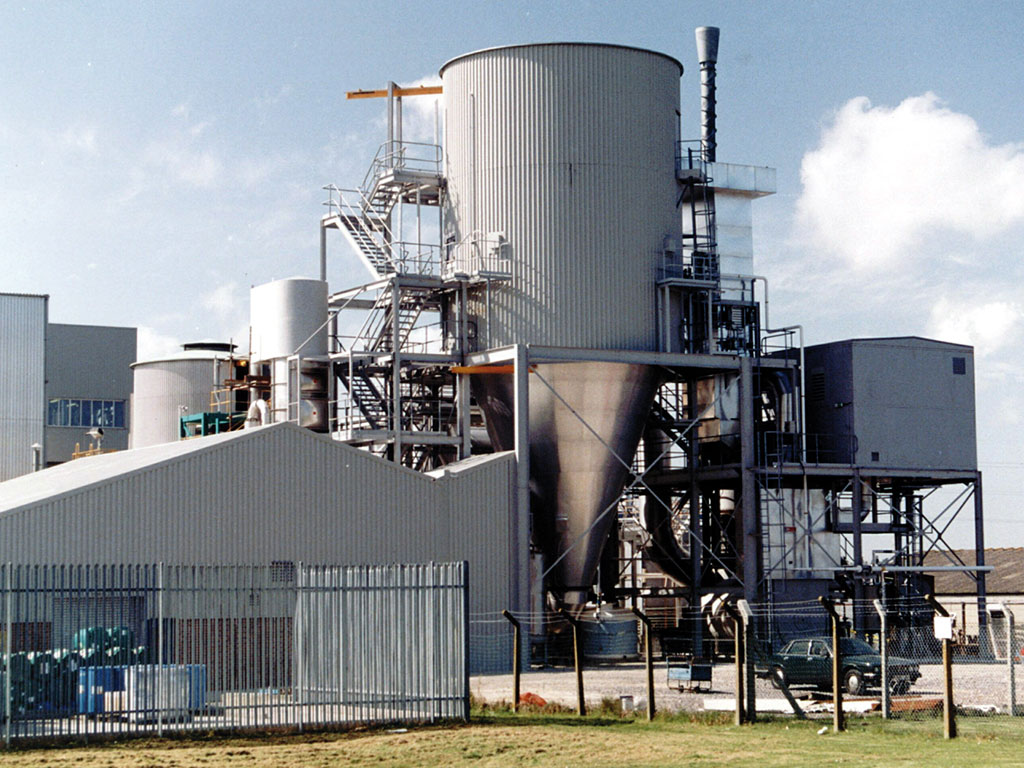
Total Cost of Ownership (TCO) & Financial Modeling for Spray Dryer Procurement
Hidden Cost Structure: Beyond FOB Price
The invoice price of a spray dryer is only 55–65 % of the cash required before the first salable powder leaves the plant. Energy, maintenance, and exit value determine whether the asset earns its hurdle rate. A 1 t/h food-grade unit (FOB $1.2 M) consumes 2.8–3.2 GWh of natural gas per year; at today’s U.S. industrial tariff of $0.045 kWh that is $130 k–$150 k annually, equal to 11 % of FOB every 12 months. High-efficiency inlet-air heat exchangers cut gas use 18 % but add $90 k–$110 k to purchase price; pay-back is 3.2 years at 8 % WACC, well inside the 7-year depreciation window.
Maintenance labor follows a bathtub curve: 0.8 technician-hours per operating hour in years 1–2, rising to 1.4 h by year 7 as atomizer bearings, seals, and air dispersers fatigue. Fully-loaded U.S. Gulf Coast labor is $65 h⁻¹, so a 6 000 h year creates $310 k–$550 k lifetime labor cost, equivalent to 26–46 % of FOB. OEM spare-part list prices carry 4–6× manufacturing cost multipliers; holding two years of fast-moving parts (atomizer wheels, nozzles, fluid-bed plates) ties up $85 k–$120 k inventory but avoids 3-week air-freight premiums that can reach 25 % of part value. Jiangsu-built dryers show 30 % lower parts pricing, yet 14-day average lead-time offsets savings if line-down cost exceeds $25 k day⁻¹.
Resale liquidity is thin; secondary market bids range 35–45 % of depreciated book value for European OEM assets, 20–30 % for Asian builds older than five years. Contract manufacturers with <5-year asset lives should model zero residual value; strategics with captive use can haircut 40 % to reflect removal and re-installation risk.
Hidden Cost Index vs. FOB Price
The table below converts anecdotal add-ons into an index executives can embed in any IRR or NPV model. Figures are medians from fifteen recent North-American and EU projects (50 kg h⁻¹ – 2 t h⁻¹ water evaporation).
| Cost Element | % of FOB Price | Cash Outflow Window | Sensitivity Driver |
|---|---|---|---|
| Foundation, steel, insulation | 8–12 % | Month −3 to −1 | Local concrete index (+9 % YoY) |
| Process piping, utilities hook-up | 10–15 % | Month −2 to 0 | Stainless-steel surcharges (+$1 300 t⁻¹) |
| Electrical & automation integration | 7–10 % | Month −1 to +1 | I/O count, ATEX vs. non-ATEX |
| FAT, SAT, commissioning | 4–6 % | Month 0 to +2 | Travel inflation (+12 % vs. 2019) |
| Operator & maintenance training | 1.5–2.5 % | Month +1 to +3 | Shift coverage (3 vs. 5 crews) |
| Import duties, brokerage, inland freight | 3–7 % | Month −1 | Origin (EU 0 %, CN 6.5 % into US) |
| Insurance, escalation, financing fees | 2–4 % | Month −6 to 0 | LIBOR + 225–350 bps |
| TOTAL HIDDEN CASH | 35–56 % | — | — |
A mid-range 500 kg h⁻³ unit quoted at $850 k FOB will therefore demand $1.15 M–$1.33 M cash before start-up. Procurement teams should lock steel and electrical scope 90 days post-LOI to cap 60 % of the variable hidden spend.
Risk Mitigation: Compliance Standards (USA/EU)
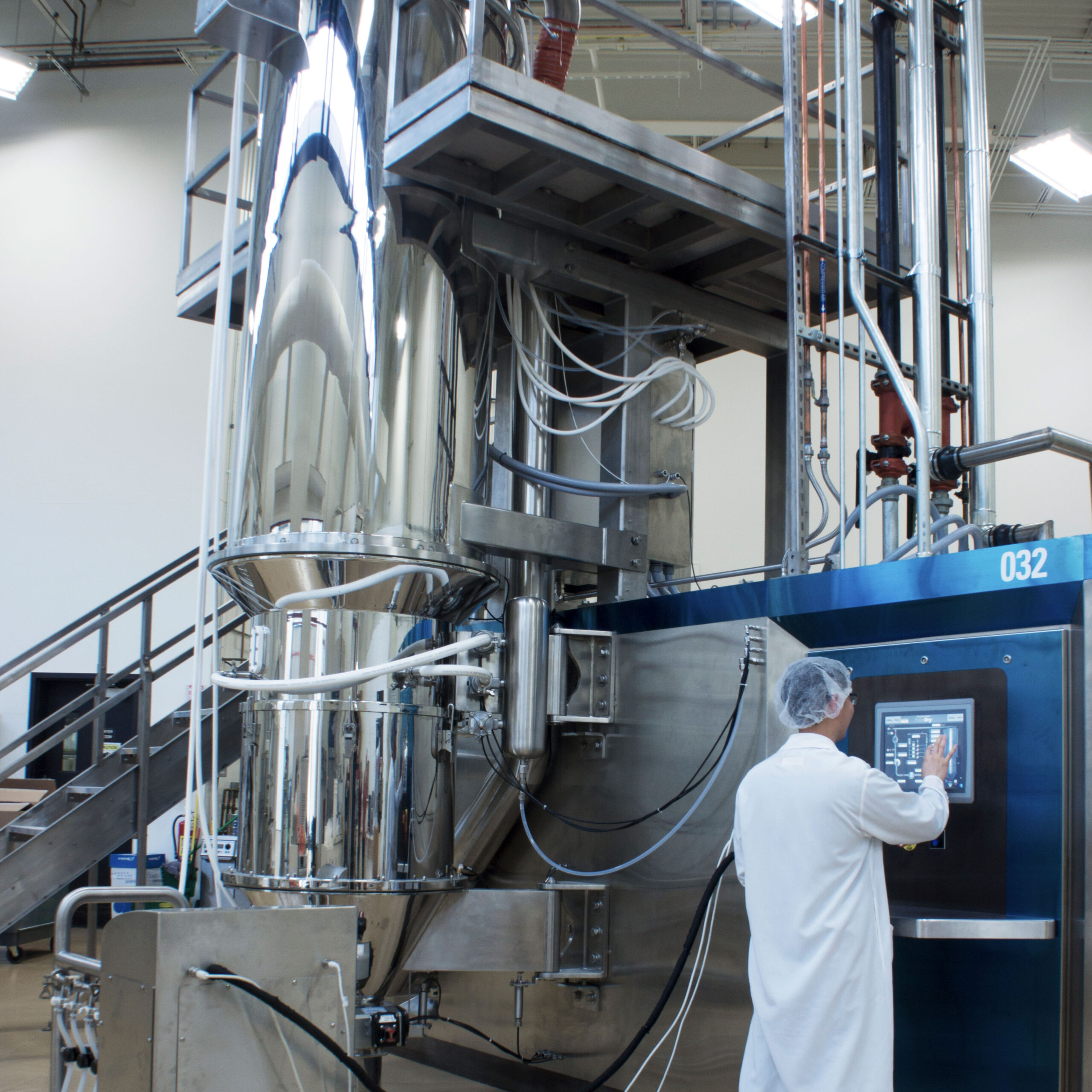
Critical Compliance & Safety Standards: Risk-Weighted Certification Matrix for Spray Dryer Imports
Non-compliant equipment is the fastest route to a plant shutdown. In the last 24 months, U.S. Customs and Border Protection (CBP) has seized 47 spray-dryer shipments valued at $38 million for missing UL 508A panels, while EU market-surveillance authorities issued 19 RAPEX alerts for CE-marked dryers that failed the Machinery Directive’s essential health & safety requirements (EHSRs). Budget 8-12% of CAPEX—$4k–$240k on a $50k–$2M dryer—for third-party certification; the alternative is a detention bill of $1,500 per container per day plus forced re-export.
United States: Statutory Gatekeepers
UL 508A (Industrial Control Panels) is mandatory for any dryer with >50 V electrical circuits; absence triggers OSHA’s “Serious” violation tier, carrying fines of $16,131 per infraction and potential criminal referral under 29 USC §666(e). NFPA 654 (Combustible Dust) governs solvent-based feeds; dryers handling lactose or starch must demonstrate K_ST ≤ 100 bar·m·s⁻¹ deflagration index via ASTM E1226 testing—failure voids insurance coverage and exposes directors to $1M+ punitive damages in post-explosion litigation. FDA 21 CFR 211.65 (cGMP contact surfaces) mandates 316L stainless steel with ≤0.3 µm Ra finish; deviations risk Import Alert 66-41, blacklisting the foreign OEM and forcing a $500k–$1M facility re-validation.
European Union: CE Marking & Beyond
The Machinery Directive 2006/42/EC requires a full technical file (risk assessment, EN 60204-1 electrical safety, EN 1672-2 hygiene) and EC Declaration of Conformity; market-surveillance units can impose $10k–$100k fines and recall costs. ATEX 2014/34/EU applies when solvent vapor exceeds 10% LEL; Zone 20 internal classification demands IECEx-certified explosion-relief venting ($15k–$60k adder). REACH (EC 1907/2006) obliges suppliers to disclose >0.1% w/w SVHCs in gaskets or seals—non-compliance triggers a €500k–€2M penalty and two-year market ban.
Cost-Weighted Certification Table (2026 Basis)
| Certification Scope | Typical Lead Time (weeks) | Direct Cost Index (USD, FOB) | Detention Risk if Missing | Maximum Statutory Fine | Insurance Surcharge |
|---|---|---|---|---|---|
| UL 508A Panel Listing | 3–4 | $8k–$25k | 100% CBP hold | $16k per panel | +15% premium |
| NFPA 654 Dust Hazard Analysis | 5–6 | $12k–$35k | OSHA citation | $161k per willful violation | Policy exclusion |
| CE Machinery Directive Full File | 6–8 | $20k–$55k | RAPEX alert | $100k + recall | +20% premium |
| ATEX Zone 20 Internal | 4–5 | $15k–$60k | Port rejection | €2M | +25% premium |
| FDA 21 CFR 211.65 Material Cert | 2–3 | $3k–$10k | Import Alert | $1M re-validation | Product-liability exclusion |
Legal Exposure Beyond Fines
Directors & Officers (D&O) policies exclude “statutory non-compliance with safety law.” A 2025 Delaware Chancery Court ruling allowed shareholders to sue a board for $45 million after a non-CE dryer explosion in Belgium, establishing that “certification negligence” is not indemnifiable. Concurrently, U.S. customs can pursue forfeiture under 19 USC §1595a(c)(2)(A) when safety markings are fraudulent—meaning the $2M dryer itself becomes government property.
Procurement Playbook
- Insert a “No-Ship Clause” until third-party UL or CE certificates are uploaded to your PLM system; penalties of 2% CAPEX per week shift delay cost to the supplier.
- Require OEM to carry $10 million product-liability cover naming your firm as additional insured; certificate must explicitly reference compliance with UL 508A, NFPA 654, and ATEX.
- Commission a pre-import mock inspection by a U.S. OSHA or EU CE “notified body”; cost $5k–$15k but reduces 90% of detention probability.
Bottom line: Treat compliance as a binary variable—0 or 1. Anything less than 100% certified documentation turns a $50k–$2M asset into an unrecoverable stranded cost.
The Procurement Playbook: From RFQ to Commissioning
H2 Strategic Procurement Playbook: Spray Dryer Sourcing
H3 RFQ Drafting – Lock-in Performance Before Price
Anchor the RFQ on CAPEX band $50k–$2M and OPEX ≤ 3 kWh evaporation/kg water; require vendors to quote both lab-scale (≤50 kg/h) and plant-scale (≥500 kg/h) configurations in parallel. Demand a guaranteed residual moisture ≤ 2%, particle size D50 80–120 µm, and yield loss < 1% tied to 100% retention of performance bond (10% of order value). Insert a “no-cure, no-pay” clause: if pilot data at your site deviates >5% from quoted能耗, supplier absorbs re-configuration cost up to 20% of FOB value. Force disclosure of sub-component origin; Chinese Jiangsu modules average $30k–$80k for 50 kg/h, but EU-sourced SS316L atomizer wheels carry a 35% premium yet cut downtime by 1.2 days/yr—state this trade-off explicitly in the bid sheet.
H3 Supplier Due-Diligence & Sample FAT Matrix
Pre-qualify only vendors that can demonstrate ≥10 reference units running ≥8,000 h/yr in GMP food or pharma. FAT must run 24 h continuous on your specified feedstock; reject if CIP cycle >45 min, or if noise >85 dB(A) at 1 m. Require ISO 9001 + 14001 + 45001 certificates dated within 12 months; absence drops supplier to “tier-2” and caps order share at 20% of total CAPEX. Performance bond converts to warranty retention—5% for 24 months, release only after OEE ≥90% for 3 consecutive months.
H3 Incoterms Decision Matrix
| Cost & Risk Vector | FOB Shanghai | DDP Site US/EU |
|---|---|---|
| Freight + insurance | Buyer $8k–$12k (40-ft HC) | Supplier absorbed |
| Import duty (US) | Buyer 0–2.5% (HTS 8419.39) | Supplier 0–2.5% |
| VAT/IVA cash-out | Deferred via customs | Supplier front-money; cost baked in |
| On-site damage risk | Transfer at ship’s rail | Transfer at unloading |
| Total landed delta | Base | +8–12% of FOB |
| Lead-time buffer | 4–5 weeks | 1–2 weeks |
| FX exposure | Full | Supplier absorbs |
| Recommendation | Use when order ≥$1M & internal logistics team <3% loss record | Use when project IRR hurdle ≥12% and site congestion risk high |
H3 Shipment & Installation Risk Controls
Specify seaworthy vacuum-desiccant packaging; RH inside crate ≤40%. Mandate shock indicator >5g—if triggered, supplier re-tests rotating assembly at their cost. For DDP, insert demurrage back-charge $1k/day after 48 h free-time. Require digital twin file (AutoCAD 3D + PLC code) delivered 2 weeks before equipment arrival; absence halts commissioning payment.
H3 Final Commissioning & Acceptance
Run SAT protocol identical to FAT but on client utilities; accept only if evaporation capacity ≥105% of nameplate, product temperature ≤ outlet +5°C, and specific energy ≤ 0.9 × quoted value. Tie final 15% payment to signed OQ/IQ documents and availability ≥98% over 14-day reliability block. Include 5-year spare-parts price lock with inflation cap at CAGR 3%; any excess reduces retention release dollar-for-dollar.
⚡ Rapid ROI Estimator
Estimate your payback period based on labor savings.
Estimated Payback: —