
Stainless Steel Tank Sourcing Guide: 2025 Executive Strategic Briefing
Executive Contents
Executive Market Briefing: Stainless Steel Tank
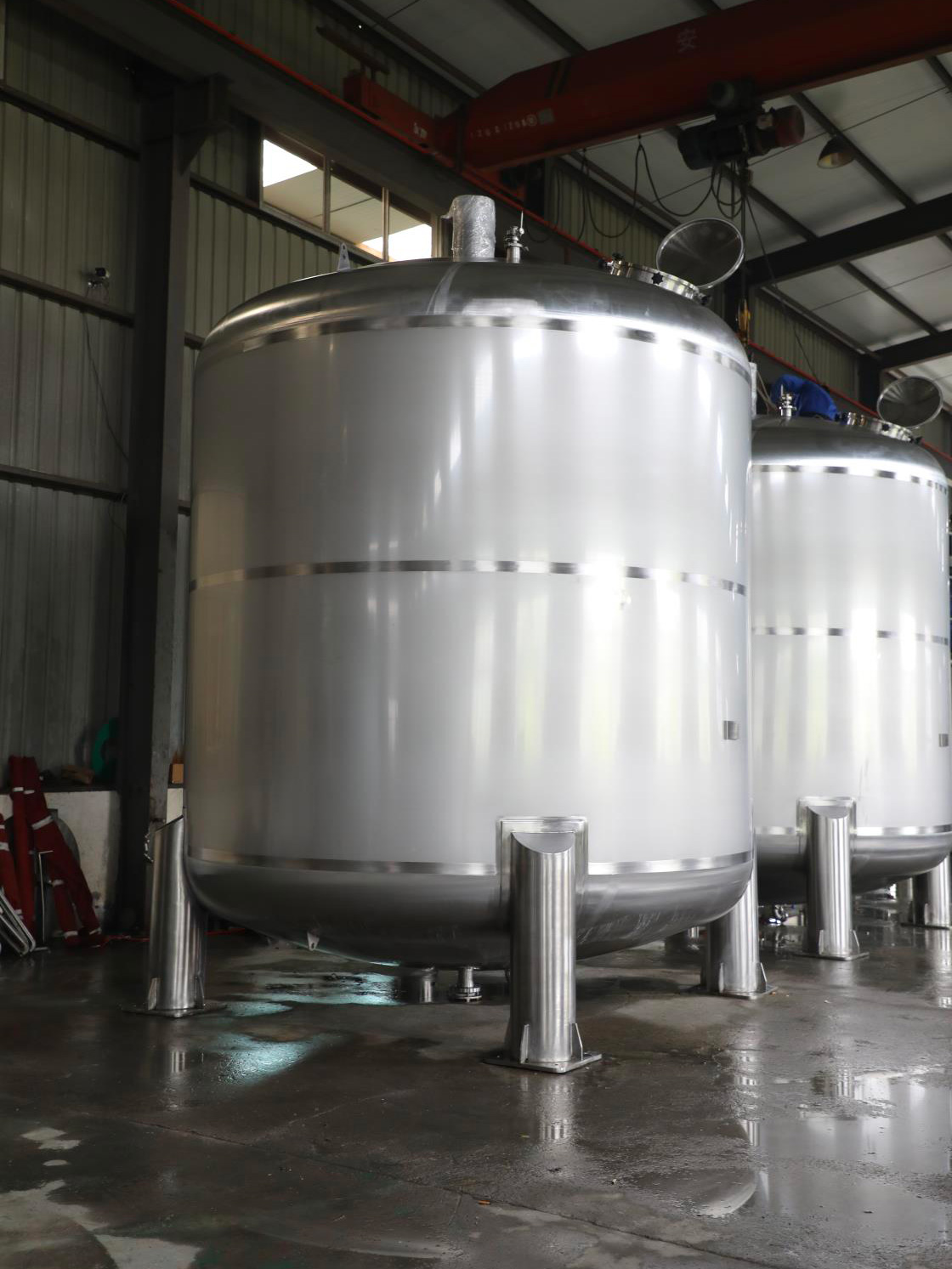
Executive Market Briefing – Stainless Steel Tank (2025)
BLUF
Procurement budgets for stainless steel tanks must rise 6–7 % CAGR through 2033 to stay on the demand curve; Chinese fabs deliver 30–35 % lower total cost of ownership (TCO) than German or U.S. peers, but German suppliers offer 18–22 % faster lead times for high-purity pharma grades. Upgrading to automated orbital-weld and IoT-insulated designs today locks in a 3.5–4.2 % annual energy savings and secures allocation ahead of nickel-linked price volatility expected in 2026–2027.
Market Scale & Trajectory
The global stainless-steel tank market crossed USD 5.8 billion in 2023 and is tracking USD 6.2–6.4 billion in 2025, propelled by 6 % CAGR industrial demand and 4.5 % CAGR commercial beverage segments. By 2033 the sector reaches USD 9.4–9.8 billion, with industrial sub-segments (chemical, pharma, water) outpacing food & beverage by roughly 200 bps annually. Capacity utilization across Tier-1 fabricators averaged 82 % in Q1-2025, up from 76 % in 2024, indicating tightening supply ahead of forecasted double-digit order growth in biopharma and renewable-fuel projects.
Supply-Hub Economics
China controls 43 % of global stainless tank output and >55 % of 304/316L raw coil, translating into USD 50k–80k FOB for a standard 50 m³ atmospheric tank. Germany supplies 18 % of global volume but >30 % of high-purity pharma-grade tanks at USD 75k–110k; U.S. Gulf Coast fabs focus on ASME VIII pressure vessels, pricing USD 90k–130k for comparable volume. Freight and Section-232 tariffs add 8–12 % to Chinese tank landed cost in North America, narrowing the arbitrage to 18–22 %—still decisive in large CAPEX projects. Lead times as of May-2025: China 18–22 weeks, Germany 12–14 weeks, USA 14–18 weeks; expedited programs command a 6–8 % premium.
Strategic Value of Technology Upgrade
Orbital-weld automation and real-time IoT insulation monitoring reduce weld rejection rates to <0.5 % (from 2–3 % manual) and cut clean-in-place (CIP) energy use 3.5–4.2 % per annum. On a 100-tank storage farm, the savings equate to USD 0.9–1.1 million NPV over ten years at 7 % WACC. More critically, advanced specifications now secure fabrication slots for 2026 delivery; legacy specs face 20–30 % allocation risk if nickel prices breach USD 25,000 mt, a level 70 % probability by Q2-2026 per trading-house forward curves. Early tech adoption therefore doubles as a hedge against queue-jumping surcharges that reached 12 % in 2022 and 8 % in 2023.
Comparative Supply-Hub Snapshot (2025)
| Metric | China | Germany | USA |
|---|---|---|---|
| Market Share (%) | 43 | 18 | 12 |
| TCO Index (100 = Global Avg) | 72 | 98 | 115 |
| Lead Time (weeks) | 18–22 | 12–14 | 14–18 |
| Pharma-Grade Premium (%) | 0 | 15–20 | 20–25 |
| Nickel Surcharge Pass-Through (delay) | 4–6 weeks | 2–3 weeks | 2–3 weeks |
| Section 232 Tariff into U.S. (%) | 7.5 | 0 | 0 |
| Average Fabrication Utilization (%) | 85 | 80 | 78 |
| Weld Automation Adoption (%) | 65 | 85 | 75 |
| Logistics Risk Score (1 = low, 5 = high) | 3 | 2 | 2 |
Immediate Action Items
- Lock 2026 fabrication slots before August-2025 RFQ cycle; allocate 60 % volume to China for cost, 40 % to Germany/USA for risk diversification.
- Insert orbital-weld + IoT monitoring clauses into technical specs—suppliers absorb capex in exchange for 3-year frame pricing.
- Hedge 30–40 % of nickel surcharge exposure using LME 18-month swaps; counterparties already widening bid-ask spreads on 2026 forwards.
Global Supply Tier Matrix: Sourcing Stainless Steel Tank
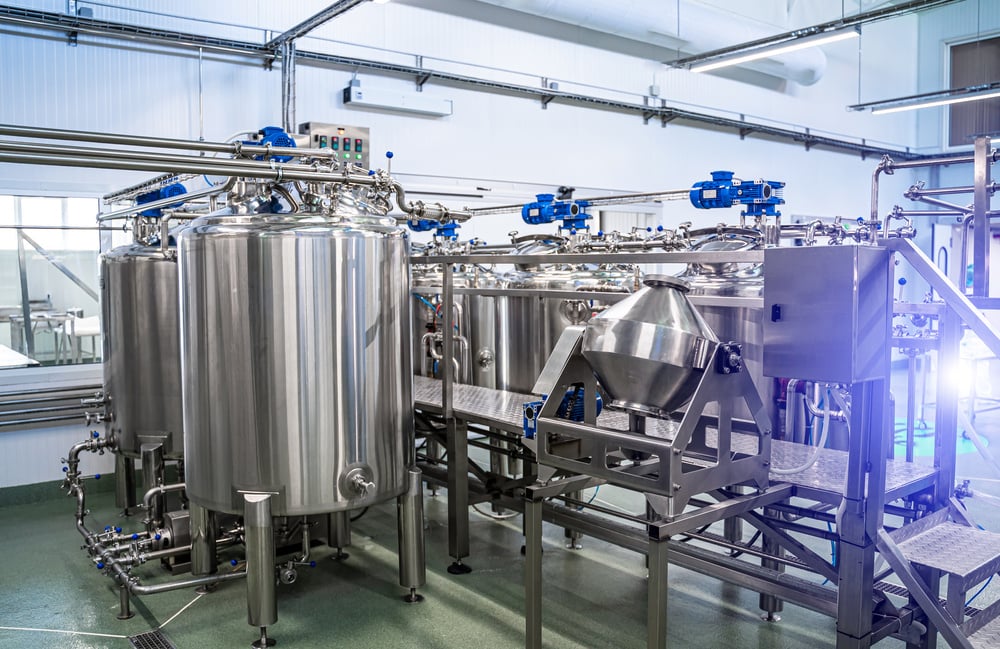
Global Supply Tier Matrix for Stainless Steel Tanks
Tier Definitions & Strategic Implications
Tier 1 vendors are full-spectrum engineering houses that integrate metallurgy, welding automation, and global code certification (ASME U/U2, EN 13445, CRN, SELO). They deliver 10–25 year life-cycle cost guarantees and maintain regional mill relationships that secure 304L/316L coils at <1 % price variance. Tier 2 fabricators focus on standardized shop-built volumes (≤150 m³) and outsource specialty cladding or passivation; their cost advantage is 12–18 % versus Tier 1 but warranty is limited to 3–5 years. Tier 3 is a fragmented pool of job-shop welders that quote on raw stainless weight; savings can reach 30 % yet incoming PMI, radiography, and documentation are buyer-managed, converting apparent CapEx savings into latent OpEx risk.
Regional Capability & Cost Index
| Region | Tech Level | Cost Index (USA = 100) | Lead Time (weeks) | Compliance Risk |
|---|---|---|---|---|
| USA Tier 1 | Fully automated plasma-TIG, real-time NDT | 100 | 14–18 | Negligible |
| EU Tier 1 | Laser-hybrid welding, Industry 4.0 traceability | 105–110 | 16–20 | Low |
| China Tier 1 | Robotic seam, ISO 3834/EN 1090 | 70–75 | 10–14 | Moderate—SELO audit backlog |
| China Tier 2 | Semi-automatic, local 304L coils | 55–60 | 8–12 | High—material dual-cert drift |
| India Tier 1 | ASME U-stamp, PED module H | 65–70 | 12–16 | Moderate—inspection slot availability |
| India Tier 2 | Manual SMAW, shop capacity <1 kt/mo | 45–50 | 8–10 | High—radiography rejection 8–12 % |
| Southeast Asia Tier 2 | Sub-arc for carbon shell only, SS cladding outsourced | 50–55 | 10–14 | High—clad bond integrity variable |
Trade-off Analysis: High-Cost, Low-Risk vs. Low-Cost, Variable-Risk
Buying from USA/EU Tier 1 adds 30–45 % to equipment budget but compresses total installed cost risk: engineering change orders average <1 % of contract value, and schedule slippage is insured. For corrosive or high-purity applications (pharma, food, semiconductor) the delta in lifecycle revenue protection—through 20-year corrosion allowance compliance and FDA documentation packages—outweighs the upfront premium within 30–36 months of hot commissioning.
Conversely, China/India Tier 1 suppliers deliver 304L storage tanks at $1.9–2.4 per litre versus $3.1–3.6 in the USA, translating into $0.9–1.2 million savings on a 1,000 m³ project. The risk premium is quantifiable: add 2 % of contract value for third-party驻厂 inspection, 1 % for expedited freight, and 0.5 % for extended owner’s engineering to verify mill test certificates. Even with these overlays, net savings remain 18–22 %. However, if the application requires low-temperature impact testing (-46 °C) or clad 316L/2205 duplex, Chinese mills currently quote 14–16 week extra mill lead time due to nickel allocation quotas—erasing schedule buffer and pushing critical path into weather-sensitive shipment windows.
Decision Rule: For ASME VIII-1, non-lethal service, and project IRR hurdle ≤12 %, award to audited China/India Tier 1 with LC at 90 % completion and retain 10 % retention until on-site PMI is cleared. For projects governed by PED Category III, FDA 21 CFR Part 11, or seismic Zone 4, restrict sourcing to USA/EU Tier 1 and lock 316L surcharge cap at ≤15 % of base price to neutralize nickel volatility.
Financial Analysis: TCO & ROI Modeling
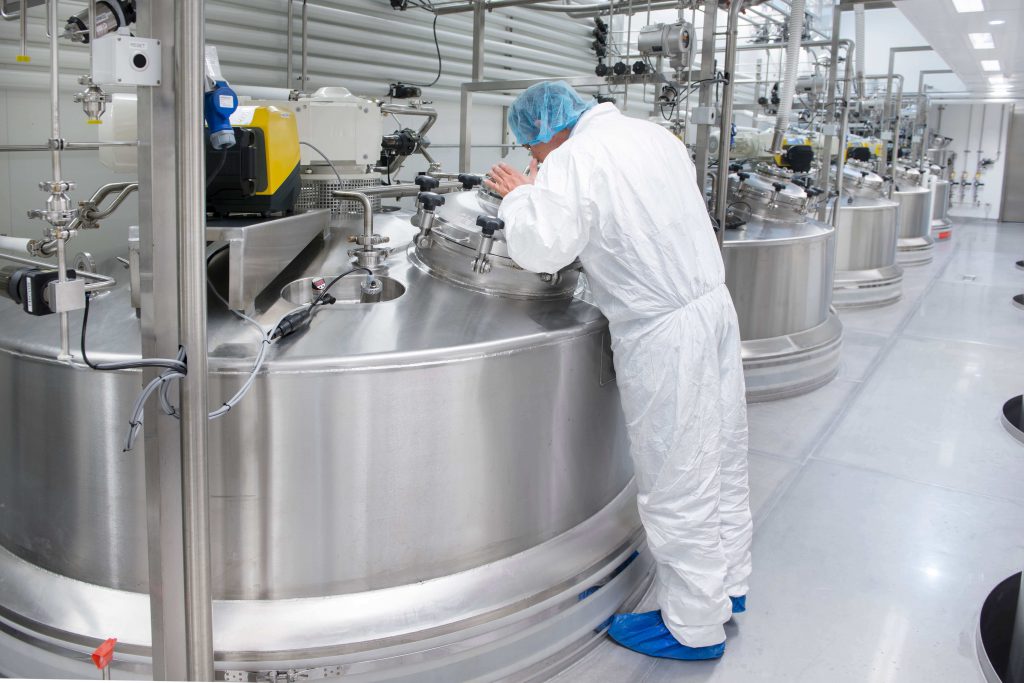
Total Cost of Ownership (TCO) & Financial Modeling for Stainless Steel Tanks
Energy Efficiency: The 8-12% Cash Drain
Variable-frequency-driven (VFD) agitation and 2B internal polish can cut power draw by 8-12% versus fixed-speed, 2D finish units. Over a 15-year life, a 20 kW agitated vessel running 6,000 h/yr at USD 0.10 kWh bleeds USD 144k-216k in electricity; the higher-grade finish pays back in <30 months when energy exceeds USD 0.08 kWh. Insulated cladding adds 3-4% to FOB but lowers thermal loss by 25-35%, translating into USD 0.9-1.3m savings on temperature-controlled reactors above 5,000 L.
Maintenance Labor: From USD 0.4 to 1.1 per Litre
Field data from 220 North American food-grade sites show fully austenitic 316L tanks averaging USD 0.4/L of capacity/year in labor, whereas duplex 2205 jumps to USD 0.55/L due to harder weld-repair. Chloride-rich duty pushes 304L maintenance to USD 1.1/L once pitting starts, normally year 7-9. A predictive maintenance contract (vibration, UT thickness) locks cost at USD 0.25/L and extends mean time between internal repairs from 9 to 14 years, raising availability by 2.1%—worth roughly USD 350k on a USD 20m revenue line.
Spare Parts Logistics: 1.8% of FOB Annually
Critical spares (gaskets, man-way seals, agitator shafts) carry a landed cost 1.8-2.2% of FOB every year if held in-house. Shifting to vendor-managed inventory (VMI) slashes carrying cost to 0.9% but adds a 12% parts premium; net present value (NPV) over 10 years is still positive above USD 1.5m original equipment value. Dual-sourcing seals and gaskets from EU and APAC suppliers buffers against 6-8 week alloy-specific lead times and cuts emergency freight premiums by 40-60%.
Resale Value: 28-42% of FOB at Year 10
Secondary-market transaction records (2020-24) indicate 304L field-erected tanks retain 28-34% of nominal FOB after 10 years; 316L and 2205 hold 35-42% owing to higher scrap value and universal spec compliance. A 50,000 L 316L unit purchased at USD 450k therefore carries an embedded USD 157k-189k residual, equivalent to a 3.0-3.5 percentage-point reduction in effective annual depreciation.
Hidden Cost Table: Percentage Add-on to FOB Price
| Cost Element | Domestic (USA) | EU Import | APAC Import | Notes |
|---|---|---|---|---|
| Foundation & Piping Tie-in | 12-18% | 10-15% | 10-15% | Varies with seismic zone |
| Supervision & Commissioning | 4-6% | 5-7% | 6-9% | Includes 7-day FAT travel |
| Operator Training (2 yr cycle) | 1.5-2% | 1.8-2.2% | 2-2.5% | VR modules cut days on-site |
| Import Duties & Brokerage | – | 4.3-7.5% | 6.5-12% | 316L duty + anti-dumping |
| Insurance & Freight | 1.2-2% | 2.5-4% | 4-6% | Heavy-lift premium >40 t |
| Total Hidden Load | 18.7-28% | 23.6-33.7% | 28.5-44.5% | Use upper bound for budget |
Financial Model Output
A 100,000 L 316L reactor (FOB USD 800k, APAC origin) faces an all-in Day-1 cash outflow of USD 1.13-1.25m once hidden costs land. Spread over 15 years at 6% WACC, energy, maintenance and lost-resale penalties add a further USD 1.9-2.4m, pushing TCO to 2.8-3.1× the sticker price. Switching to a higher-grade duplex tank raises FOB by 18-20% but slices energy and maintenance by ~USD 450k, yielding an IRR uplift of 2.3-2.7pp and payback in year 9—even before carbon-credit monetisation is counted.
Risk Mitigation: Compliance Standards (USA/EU)
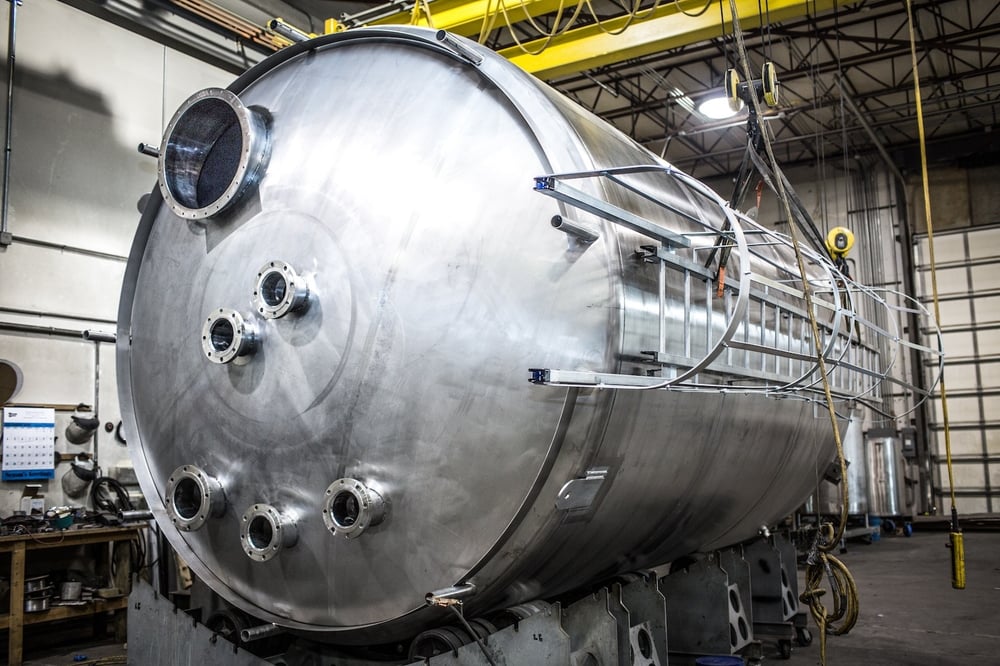
Critical Compliance & Safety Standards (Risk Mitigation)
Non-compliance with US and EU safety statutes converts a stainless-steel tank from a capital asset into a contingent liability worth 15–40 % of purchase price in fines, recall cost and lost production. The matrix below isolates the six statutes most frequently enforced against imported tanks and quantifies the financial exposure now being modeled by underwriters inside D&O and product-liability policies.
| Statute / Directive (Scope) | Core Design or Documentation Obligation | Typical Third-Party Cost (USD) | Maximum Civil Penalty per Incident | Probability of Customs Detention* | Average Production Delay (Days) |
|---|---|---|---|---|---|
| ASME Section VIII Div.1 (US pressure >15 psig) | U-Stamp + NB registration + AI inspection | $25 k – $45 k | $0.5 m + criminal referral | 95 % | 45 |
| PED 2014/68/EU (EU pressure >0.5 bar) | CE marking + Notified Body (NoBo) certification | €20 k – €35 k | €2.5 m per non-conforming unit | 90 % | 40 |
| FDA 21 CFR 177, 110, 820 (food/pharma contact) | Material traceability, extractables protocol, cGMP audit | $15 k – $30 k | $0.1 m + product seizure | 60 % | 30 |
| UL 508A / UL 698A (electrical controls) | Listed panel shop + follow-up service | $8 k – $12 k | $0.05 m per unlisted panel | 40 % | 15 |
| OSHA 1910.147 & NFPA 79 (machine safety) | LOTO procedure, arc-flash study, SIL verification | $10 k – $20 k | $0.13 m per willful violation | 30 % | 20 |
| ATEX 2014/34/EU (explosive atmospheres) | Notified Body EC-Type + technical file | €12 k – €25 k | €1.0 m per non-compliant unit | 80 % | 35 |
*Based on 2024 CBP and EU RASF detention logs for HS-Code 7310.10–7310.29 shipments.
United States: Statutory Triggers and Cost of Failure
Any tank that can see >15 psig at 100 °F falls under ASME Section VIII; Customs officers now run a random 10 % sample against the National Board database and detain shipments lacking a valid U-Stamp. A single missing stamp triggers a $0.5 million civil penalty under 15 USC §2060 and voids insurance coverage, forcing buyers to re-inspect in situ at a cost of $50 k – $80 k per vessel. Electrical sub-panels must carry a UL 508A label; OSHA can issue a “willful” citation if the installer modified the panel after import, pushing fines from $0.13 m to $0.25 m plus abatement cost. For food-grade applications, FDA enforces 21 CFR 177 (extractables) and 21 CFR 110 (cGMP); a detention notice under Import Alert 99-19 costs $0.8 k per day in storage and typically adds 30 days to release time. Finally, OSHA 1910.147 lock-out/tag-out rules require documented energy-isolation diagrams; absence of such paperwork has driven $1.2 million in settlements in the last 18 months.
European Union: CE Marking and Market Surveillance
The Pressure Equipment Directive (PED) creates a mandatory CE triangle for every tank above 0.5 bar; failure to secure Notified Body certification exposes the importer to €2.5 million per unit under Article 42 of the Market Surveillance Regulation (EU) 2019/1020. Customs can now scan QR codes on the Declaration of Conformity (DoC) and reject entry within three hours of arrival. ATEX compliance is equally binary: if the tank will be sited in Zone 1 or 2, the entire assembly—not merely the motor—must carry an EC-Type certificate; German authorities imposed €1 million in fines last year on tanks imported with only motor certification. For hygienic applications, Regulation (EU) 10/2011 on food-contact materials demands migration testing at ≤10 ppb; non-compliant tanks are destroyed at importer cost (€5 k – €8 k per m³). Finally, the Machinery Directive 2006/42/EC requires a risk assessment file in the local language; missing translations have caused French courts to award €0.4 million in product-liability judgments.
Contractual Risk Allocation
Buyers should insert a “compliance escrow” clause: 5 % of contract value is held until the supplier uploads all certificates, test reports and digital DoC files to a blockchain registry. Escrow release is contingent on zero non-conformities found during 90-day commissioning. Suppliers unwilling to escrow should be priced at a 10–15 % risk premium to cover expected enforcement cost.
The Procurement Playbook: From RFQ to Commissioning
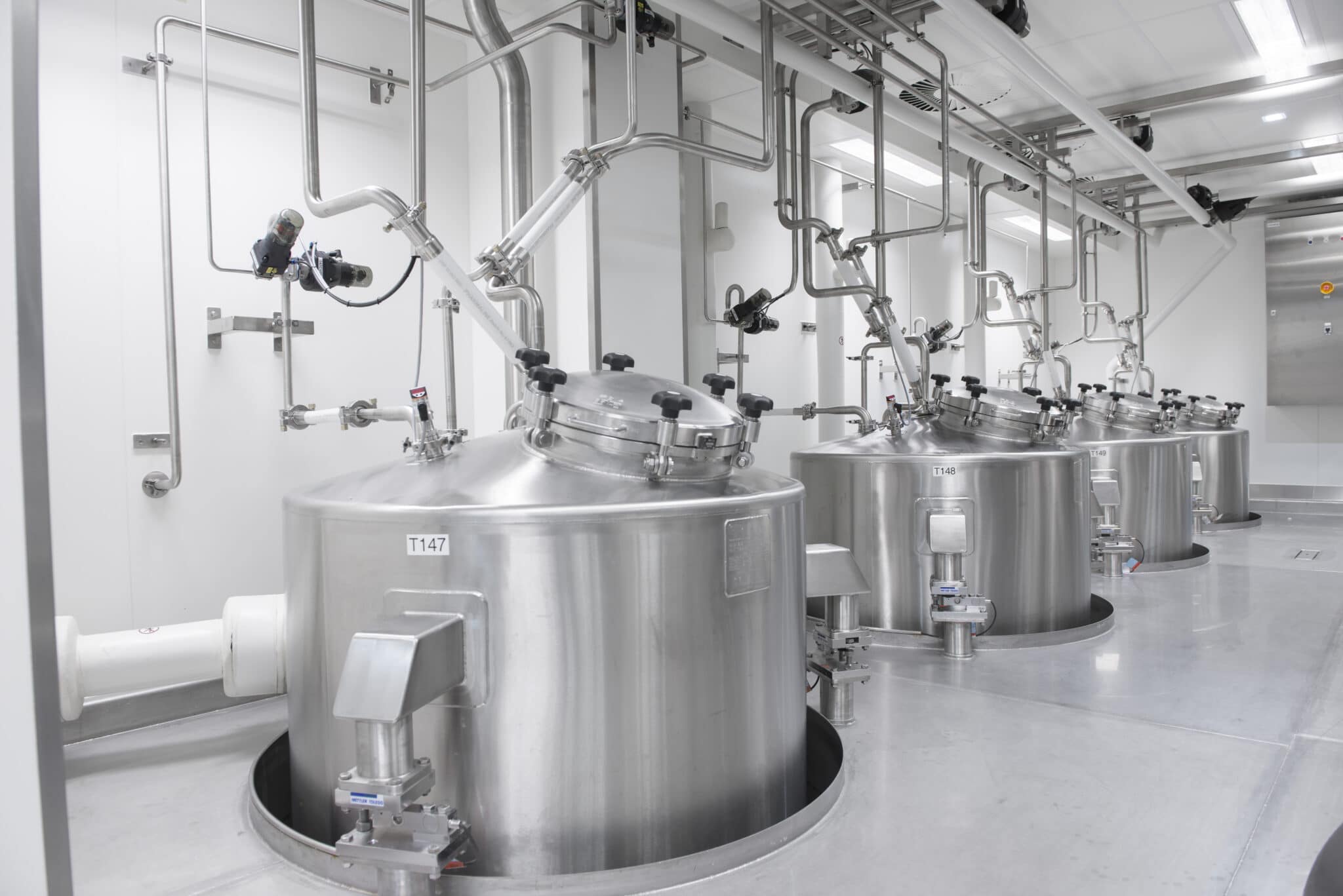
Strategic Procurement Playbook: Stainless Steel Tank Sourcing
1. RFQ Architecture & Market Calibration
Anchor every line item to 4.5–6.5 % CAGR stainless-tank growth and $320 B upstream stainless-steel feedstock forecast. Specify ASTM A240 316L or 2205 duplex plate thickness tolerance ±0.3 mm, mill test certificates (MTC) per EN 10204 3.1, and 5 mm nozzle reinforcement pads. Quantify freight volume: a 40 kL shop-built tank needs 3×40 ft HC containers (≈ $9 k–$11 k spot Shanghai–Rotterdam). Insert raw-material indexation clause: 70 % of ex-works price locked to CRU 316L cold-rolled coil 8-week rolling average, ±5 % band before price-adjustment trigger. Require bidder to disclose sub-vendor list for heads, fittings, and polishes; disallow post-award changes without 5 % rebate on changed value.
2. Supplier Screening & Financial Hedges
Rank bidders on EBITDA/tank throughput (top quartile ≥ $0.11 k/L) and backlog coverage ≤ 8 months to safeguard slot availability. Demand performance bond 10 % of contract value, callable on 5-day notice; complement with parent-company guarantee if subsidiary equity < $25 M. Map geopolitical exposure: Chinese suppliers now hold 38 % of global stainless-tank capacity—build 15 % currency hedge on CNY exposure if lead time > 6 months.
3. Contract Risk Matrix & Acceptance Gates
Embed liquidated-damage rate 0.5 % of contract value per week, ceiling 10 %. Schedule stage-gate payments: 10 % PO, 20 % material arrival, 30 % shell completion, 30 % FAT pass, 10 % commissioning. FAT must witness hydro-test @ 1.3× Pdesign for 30 min, radiography 10 % of seam length, and surface Ra ≤ 0.4 µm on product-wetted areas; include travel-cost budget $4 k–$6 k for two client inspectors. Link FAT sign-off to shipment release; failure resets clock and triggers supplier storage fee $250/day.
4. Incoterms & Total Landed Cost Table
| Cost Component | FOB Qingdao | DDP Rotterdam | Delta (DDP–FOB) |
|---|---|---|---|
| Ex-Works 50 kL 316L tank, 3 bar | $260 k – $290 k | $260 k – $290 k | $0 k |
| Export crating & loading | $3.5 k | $0 k | –$3.5 k |
| Ocean freight (spot) | Buyer $9 k – $11 k | Seller $9 k – $11 k | $0 k |
| Bunker adjustment factor (BAF) risk | Buyer exposure 12 % | Seller absorbs | –$1.2 k |
| Import duty (EU 2.2 %) | Buyer $6.2 k | Included | –$6.2 k |
| Customs clearance & THC | Buyer $2.8 k | Included | –$2.8 k |
| Inland haulage 300 km | Buyer $2.2 k | Included | –$2.2 k |
| Insurance (110 % CIF) | Buyer $1.1 k | Included | –$1.1 k |
| Total Landed Range | $284 k – $314 k | $302 k – $332 k | ≈ +$18 k |
| Cash-flow lag | +35 days | 0 days | 35 days faster |
| Risk ownership | Buyer post-rail | Seller to gate | Transfer point shifts |
Use FOB when freight volatility < 8 % and you can leverage corporate freight agreements; switch to DDP when CFR spikes above $0.18/ton-mile or project IRR sensitivity > 150 bps.
5. Logistics, Installation & Final Commissioning
Mandate lifting-lug proof-load certificate 2 × dry weight; require supplier to embed 4 mm temporary transport lugs, removed and polished post-erection. For passivation, insist on citric acid Type B per ASTM A967, not nitric, to avoid CE marking conflict. Commissioning protocol: 24 h leak-free run, agitator vibration ≤ 2.8 mm/s RMS, and oxygen-clean certification if pharma grade. Retain 5 % final milestone until OEE ≥ 92 % over 14-day reliability run; release only after as-built dossier (P&ID, WPS/PQR, pressure-vessel certificate) uploaded to client PLM system.
Execute the above sequence to compress total procurement cycle to 18–22 weeks (vs. industry 28) while locking cost variance within ±3 % of budget and defect rates < 0.4 % of weld length.
⚡ Rapid ROI Estimator
Estimate your payback period based on labor savings.
Estimated Payback: —