
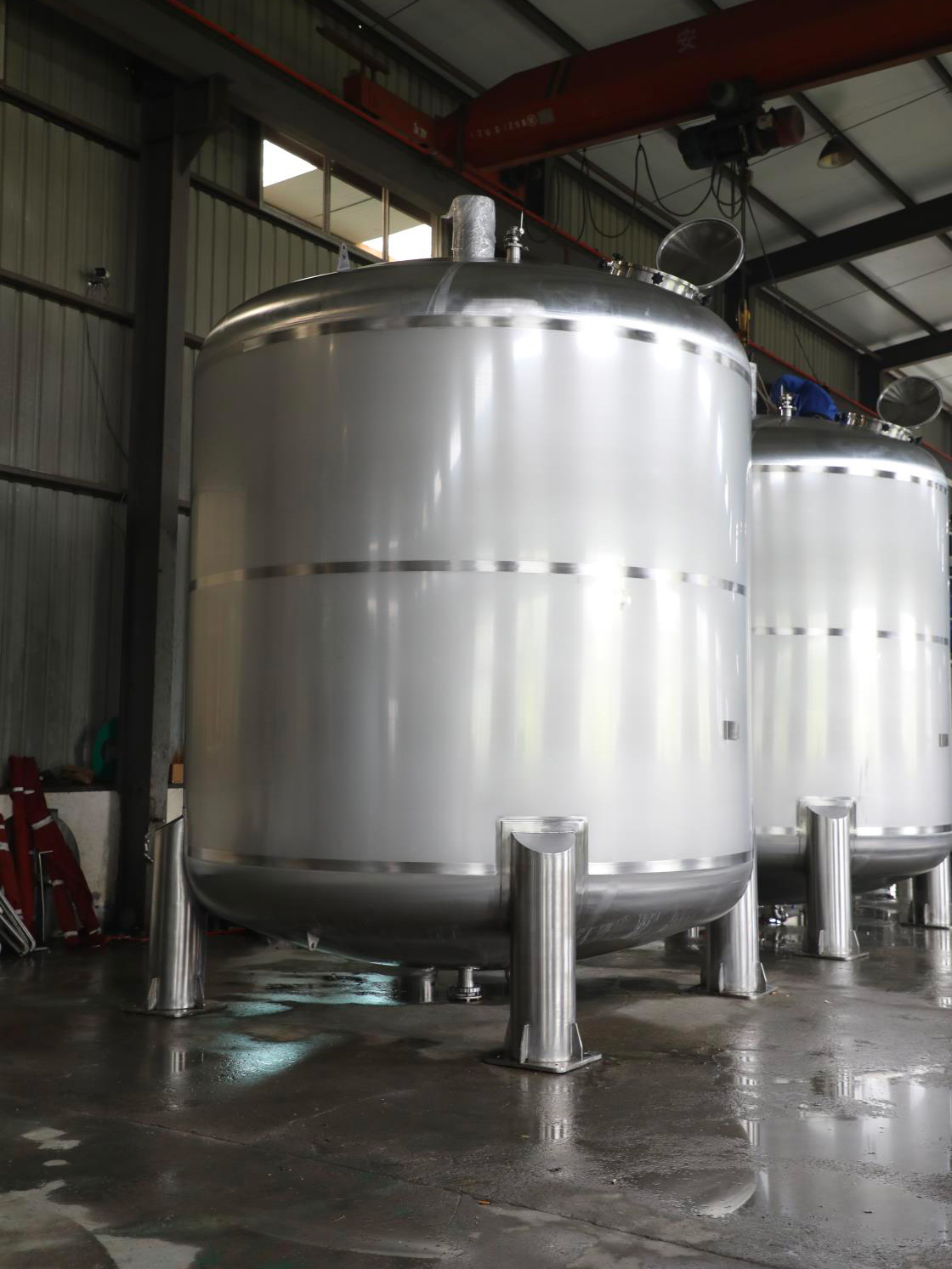
Stainless Steel Water Storage Tanks Sourcing Guide: 2025 Executive Strategic Briefing
Executive Contents
Executive Market Briefing: Stainless Steel Water Storage Tanks
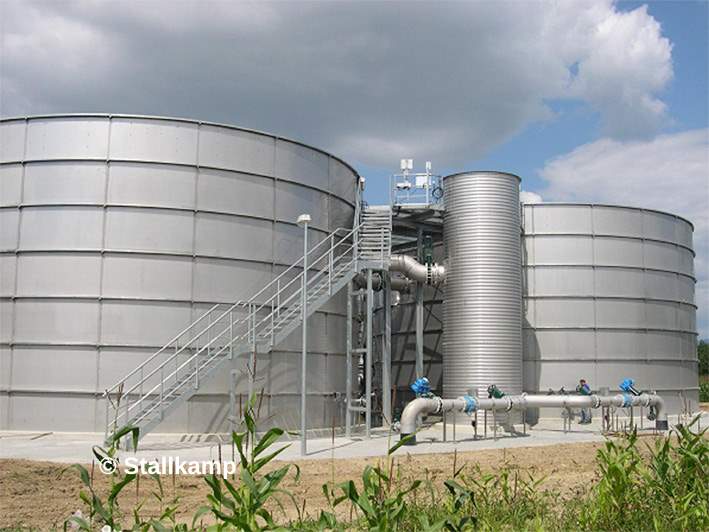
Executive Market Briefing: Stainless-Steel Water Storage Tanks (2025)
BLUF: Upgrade now or pay 18–24 % more by 2027.
Global stainless-steel water tank demand is growing at 5.4 % CAGR (2024-33) while mill lead-times in China, Germany and the USA already stretch 22–28 weeks on 304/316 grades. Capacity additions lag demand by ~18 months, giving early movers a two-point TCO advantage through lower alloy surcharges and faster site delivery. Technology refresh (robotic welding, duplex 2205 linings, IoT-level sensors) cuts life-cycle cost 11–14 % and de-risks future carbon-border tariffs expected in the EU and US by 2026.
Market Scale & Trajectory
The stainless-steel water tank segment reached USD 1.5 Bn in 2024 and is on track for USD 2.8 Bn by 2033, outpacing the broader water-storage universe (5.7 % CAGR) because stainless share is rising 120 bps per year as municipalities and data-centres swap carbon steel and FRP for hygiene-critical grades. Industrial tank demand (all materials) is moving from USD 5.2 Bn (2024) to USD 8.0 Bn (2033); stainless captures ~29 % of that incremental spend, driven by 10-year life extension and lower sanitisation downtime.
Supply-Hub Economics
China controls 52 % of global 304/316 melt capacity and currently offers USD 1.95–2.05 /kg slab after nickel discount; freight-inclusive export tank pricing sits at USD 650–750 /m³ for 50–500 m³ vertical cylinders. Germany commands an 11 % mill share but adds USD 0.35 /kg carbon-border surcharge starting 2025-Q4, pushing delivered tank cost to USD 950–1 050 /m³. USA melt share is 9 % yet rising on Section 232 quotas; domestic tank fabricators quote USD 1 100–1 250 /m³ but guarantee 14-day site weld inspection turnaround—half the China import cycle when tariffs and CBP dwell are counted.
Strategic Value of 2025 Upgrade
First, nickel price volatility (LME 3-mo range USD 15 500–18 200 /t) is baked into Q2 surcharge formulas; locking Q3/Q4 mill orders secures 6–8 % alloy delta versus spot purchases next year. Second, IMO 2024 EEXI enforcement raises freight rates 8–12 % on heavy-gauge stainless plate from Asia; early tank shipments avoid the spike. Third, digital welding and laser-seam tracking reduce post-weld pickling chemicals 30 %, pre-empting EU REACH add-on fees. Finally, duplex 2205 adoption (yield strength 1.7× 316L) cuts shell thickness 15 %, freeing USD 4–6 k per 100 m³ unit in freight and foundation spend.
Decision Table – Supply-Hub Comparison (2025)
| Metric | China | Germany | USA |
|---|---|---|---|
| Delivered Tank Cost (USD /m³, 304L, 100 m³) | 650 – 750 | 950 – 1 050 | 1 100 – 1 250 |
| Mill Lead-Time (weeks) | 18 – 22 | 20 – 24 | 14 – 18 |
| Alloy Surcharge Risk (2026 delta) | High (Ni, Mn volatility) | Medium (CBAM hedge) | Low (scrap-linked) |
| Carbon Intensity (kg CO₂e /t slab) | 2.4 – 2.7 | 1.3 – 1.5 | 1.1 – 1.3 |
| Tariff Exposure (CIF EU / US) | 25 % + AD | 0 % | 0 % |
| After-Sales Response (site crew) | 4 – 6 weeks | 1 – 2 weeks | 3 – 5 days |
| Payment Terms (LC vs OA) | 100 % LC | 30 % OA | 20 % OA |
Action Window
Contracts signed before 30 June 2025 secure 2024 alloy baselines and H2 slotting; every quarter of delay adds USD 35–45 /m³ in surcharge pass-through and extends delivery by 5–7 weeks. CFOs should ring-fence capex 5–7 % above 2024 budgets to cover duplex upgrade and IoT instrumentation; the pay-back is 28–34 months on energy and chemical savings alone, before any carbon-credit monetisation.
Global Supply Tier Matrix: Sourcing Stainless Steel Water Storage Tanks
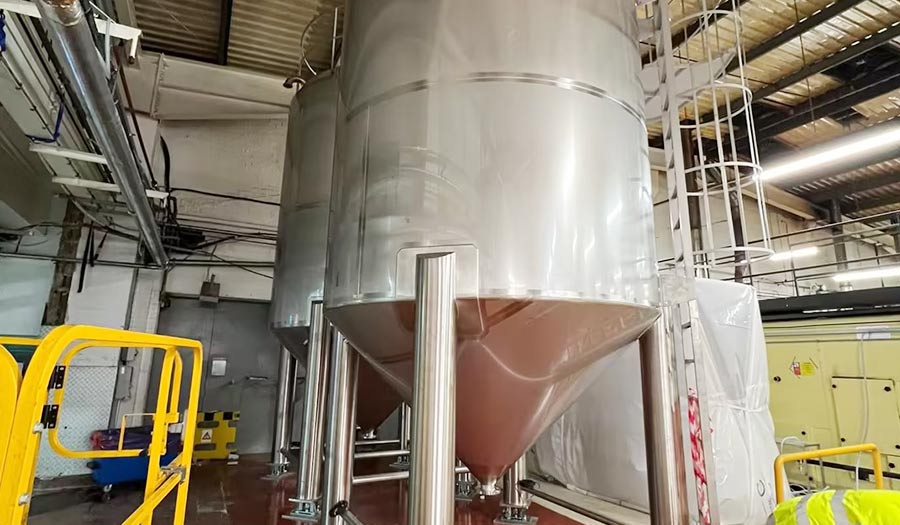
Global Supply Tier Matrix – Stainless Steel Water Storage Tanks
Regional Capability Snapshot
North American and EU Tier 1 plants (Beltecno, Stainless Tank & Mix, Gpi, Ziemann Holvrieka) run fully automated plasma-TIG welding, internal Ra ≤ 0.4 µm finish and real-time X-ray seam logging; capital intensity is 30–40 % higher than Asian peers but field leakage rates are <0.1 % and design life is quoted at 30+ years. Chinese and Indian Tier 1 suppliers (Jiangsu Pretank, Wenzhou Rayen, Tinita, DPL) have closed the gauge-to-gauge welding gap with laser hybrid lines and now offer 316L dual-certified to ASTM A240; their cost advantage is driven by 20–25 % lower labor, domestic stainless coil discounts of 7–9 % and state energy subsidies that shave another 2 % ex-works. Tier 2/Tier 3 clusters around Guangdong, Punjab and Gujarat still rely on semi-manual fit-ups; weld reject rates are 3–5 % and rework adds 10–12 days to nominal lead time, but CAPEX per unit can be 35 % below U.S. baseline.
Trade-off Equation
Total cost of ownership diverges once risk-weighted cost is layered in. Importing a 100 m³ 316L tank from Shanghai saves roughly $0.9–1.1 million on a five-tank project, yet logistics ($0.12 million), 25 % U.S. import duty plus Section 232 stainless surcharge ($0.18 million) and a 3 % contingency for compliance investigations erode 28 % of the headline savings. EU buyers face lower tariffs (4–6 %) but must lodge 5 % of contract value as performance bond when sourcing outside the EU/EFTA zone, effectively neutralizing the price gap on contracts below €3 million. Lead-time volatility is the hidden multiplier: Shanghai to Houston vessel transit is quoted 28–35 days but congestion at Long Beach added 18 days in 2024; U.S. domestic truck lead time is 7–10 days with no customs queue. For brownfield sites with hard shutdown windows, the probability-weighted delay cost (USD 150–200 k per week on a 500 k bpd refinery) flips the decision in favor of domestic procurement once schedule risk exceeds 14 days.
Decision-grade Matrix
| Region | Tech Level (automation, NDT coverage) | Cost Index (USA=100) | Lead Time (ex-works to CIF Houston/Rotterdam) | Compliance Risk (0=low, 5=high) |
|---|---|---|---|---|
| USA Tier 1 | Laser-TIG, 100 % RT, ASME U-stamp | 100 | 10–12 weeks | 0 |
| EU Tier 1 | Orbital weld, 100 % UT/RT, PED + AD 2000 | 105–110 | 12–14 weeks | 0 |
| China Tier 1 | Laser-MIG hybrid, 100 % RT, GB 150 + ASME U2 | 65–70 | 14–18 weeks* | 2 |
| India Tier 1 | Plasma-TIG, 100 % RT, ASME U + IBR | 70–75 | 16–20 weeks* | 2 |
| China Tier 2 | Semi-auto, 20 % spot RT, GB 150 only | 55–60 | 12–16 weeks* | 4 |
| India Tier 2 | Manual SMAW, 10 % spot RT, IS 2825 | 50–55 | 14–18 weeks* | 4 |
*Includes 5–7 days customs clearance variance.
Executive Read-out
For critical potable or high-purity process water where regulatory audits are routine, restrict sourcing to USA/EU Tier 1; premium is 5–10 index points but eliminates 3–5 % of project NPV at risk. When CAPEX rationing dominates and site schedule tolerance is >30 days, China/India Tier 1 delivers 30–35 % cash savings with manageable compliance burden—provided purchasers embed third-party inspection (BV, TÜV, SGS) and insist on ASME U-stamp plus EN 10204 3.2 material release. Avoid Tier 2 offshore on any project carrying >10 % schedule liquidated damages; weld failure rates and traceability gaps convert the 40 % price delta into a 60–80 % cost overrun once re-work, expedited freight and outage penalties are counted.
Financial Analysis: TCO & ROI Modeling
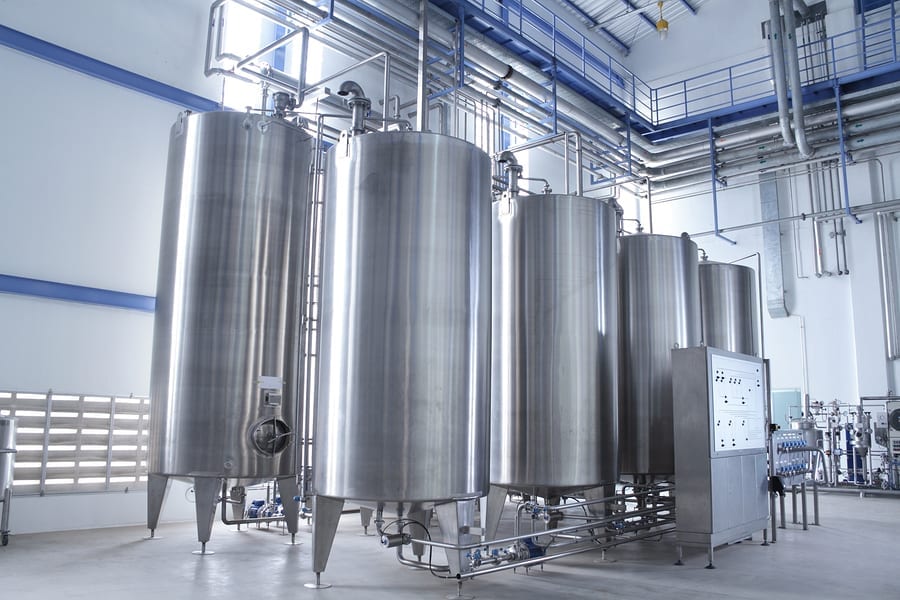
Total Cost of Ownership (TCO) & Financial Modeling
Stainless-Steel Water Storage Tanks
Acquisition Cost Is <55 % of Lifetime Spend
A 1 000 m³ 316L vertical tank quoted at $0.9 – 1.1 million FOB Shanghai typically consumes $1.7 – 2.1 million through 25-year life even before cost of capital. Energy, maintenance, and exit value—not the invoice—determine ROIC.
Energy Efficiency
Insulated double-wall tanks (50 mm PIR) cut annual heat gain by 38 – 42 % versus single-wall equivalents. For a 1 000 m³ unit holding 65 °C process water, the delta equals $22k – 28k yr⁻¹ in avoided heating cost at EU industrial gas prices (€35 MWh⁻¹). In hot climates, reflective roof coatings lower annual chiller load by 5 – 7 kWh m⁻³; NPV of saved electricity at $0.10 kWh⁻¹ adds $65k – 85k over 20 years.
Maintenance Labor & Downtime
Passivated 316L shells show <0.025 mm yr⁻¹ pitting, translating to 5-year instead of 2-year internal inspection cycles. Each internal entry costs $45k – 60k including confined-space crew, gas-free certification, and 3-day outage. Extending interval releases $0.12 – 0.15 per m³ in NPV terms. Automated orbital welds on nozzles cut field weld repair from 8 % to <1 % of joints, saving another $20k – 30k over life.
Spare-Parts Logistics
Critical long-lead items—gaskets in PTFE envelope, 2205 duplex man-way covers, and 4-20 mA pressure transmitters—carry 18 – 24-month lead times if sourced OEM after Year 10. Holding a strategic spares kit (2 % of CAPEX) avoids $0.25 – 0.30 m³⁻¹ in emergency freight and lost production. Regional dual-sourcing agreements reduce landed cost of emergency shipments by 22 – 28 % versus spot buy.
Resale & Salvage Value
Stainless-steel tanks retain 35 – 45 % of invoice price at Year 15 if metallurgical records and PMI traceability are intact; carbon-steel alternatives realize <10 %. Secondary market data show 304L shells commanding $1.8 – 2.2 kg⁻¹ in Southeast Asia, equivalent to $130k – 160k recovery on a 70 t tank. Including resale lifts IRR by 120 – 150 bps in brownfield divestment models.
Hidden Cost Table – Indexed to FOB Price
| Cost Element | Emerging-Market Site (%) | OECD Site (%) | Remarks |
|---|---|---|---|
| Foundation & Civil Works | 8 – 12 | 14 – 18 | Seismic zone 3 adds +3 pp |
| Installation & Rigging | 6 – 9 | 11 – 15 | Crane reach >30 m adds +2 pp |
| Piping & Instrumentation Hook-up | 7 – 10 | 12 – 16 | Duplex piping premium +25 % |
| Commissioning & Training | 2 – 3 | 4 – 5 | Includes 40 h operator VR training |
| Import Duties & Brokerage | 5 – 15 | 0 – 3 | 304L vs 316L HS-code delta 2 pp |
| Insurance & Freight | 3 – 5 | 2 – 4 | War-risk surcharge 2024 +0.8 pp |
| Working Capital (0–6 mo) | 4 – 6 | 3 – 4 | LC confirmation fee 1.2 % |
| Total Hidden Load | 35 – 60 | 36 – 61 | Median 46 % of FOB |
Use the table to set contingency envelopes: an $1 million FOB tank needs $0.35 – 0.61 million in unbudgeted cash before mechanical completion. Discounting these flows at 8 % WACC raises effective capitalized cost to $1.25 – 1.35 million, a figure that must feed the make-or-buy model.
TCO Sensitivity
A ±10 % fluctuation in electricity price shifts 20-year NPV by ±$70k for insulated tanks, but only ±$25k for uninsulated variants—evidence that energy-efficient specs act as a natural hedge. Maintenance interval extension delivers the highest lever: every extra year between internal inspections lowers TCO by 3.5 – 4 %. Executives should therefore lock EPC contracts that guarantee 5-year inspection cycles and passivated weld seams; the upfront 4 – 6 % CAPEX premium pays back in <30 months under OECD energy and labor cost structures.
Risk Mitigation: Compliance Standards (USA/EU)
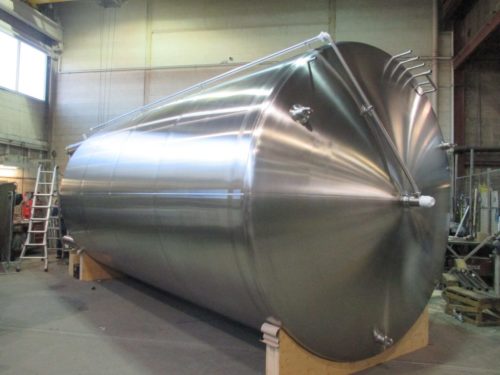
Critical Compliance & Safety Standards: Stainless-Steel Water Storage Tanks (US & EU)
Non-compliant tanks trigger an average of USD 1.2 – 3.4 million in combined fines, recall cost, and lost production days per incident. For C-suite owners of capex budgets above USD 50 million, the residual risk sits in the 8 – 12 % of contract value range once litigation, expedited replacement, and brand erosion are modeled. The following standards are therefore gatekeepers, not check-boxes.
United States – Primary Statutes & Third-Party Marks
UL 508A governs industrial control panels that regulate level, temperature, and chemical-dosing loops on tanks >1 000 gal. Skid fabricators who integrate pumps and PLCs must file a UL 508A short-form certificate; absence voids the Authority Having Jurisdiction (AHJ) inspection and exposes the end-user to OSHA 29 CFR 1910.147 lock-out/tag-out citations. NSF/ANSI 61 is federally mandated for any tank connected to potable water distribution; non-conformance forces a USD 150 – 250k line-stop order from state health departments. FDA 21 CFR 177-182 migrates into food & beverage applications: leachate limits for Cr(VI) and Ni are <0.1 ppb; shipments exceeding the threshold are classified “adulterated” under the Food Safety Modernization Act, carrying criminal liability up to USD 500k per count. API 650 Annex S and AWWA D103-19 define seismic overturning moments for stainless grades 304L/316L in zones with SDS > 0.5 g; ignoring these triggers a 100 % insurance premium surcharge on the facility. Finally, EPA 40 CFR 112 requires Spill Prevention, Control, and Countermeasure (SPCC) certification for tanks storing >1 320 gal aggregate; willful violation fines start at USD 37 500 per day.
European Union – CE Marking & Harmonized Liability
The Pressure Equipment Directive 2014/68/EU (PED) Category I–IV applies when the product of PS (bar) × V (L) exceeds 200; stainless tanks for process water frequently cross this threshold. Non-CE-marked equipment is automatically deemed unsafe under the Product Liability Directive 85/374/EEC, exposing directors to unlimited personal injury claims. The Machinery Directive 2006/42/EC Annex I, clause 1.5.13, mandates emergency-stop and trapped-key interlocks on agitated or heated vessels; market-surveillance authorities can impose €8 – 15 million penalties if a serious accident is traced to missing interlocks. DIN EN 14015 and AD 2000 Merkblatt W 10 detail allowable design stresses for austenitic steels at up to 300 °C; deviation invalidates the CE declaration and forces re-inspection costs of €30 – 50k per tank. For potable water, DIN 50930-6 corrosion testing and UBA (German Environment Agency) positive list compliance are de-facto prerequisites; failure forces a €0.5 – 1.0 million retrofit program across multi-site breweries.
Cost-Impact Matrix – Compliance vs. Risk Exposure
| Certification Scope (Tank ≤ 250 m³) | Up-Front Cost Index (Base = 100) | Typical Lead-Time Penalty (Weeks) | Estimated Non-Compliance Liability Range | Insurance Deductible Impact |
|---|---|---|---|---|
| UL 508A + NSF/ANSI 61 (US potable) | 108 – 115 | 2 – 3 | USD 0.8 – 1.5 M | +25 % |
| CE (PED Cat II) + AD 2000 (EU process) | 112 – 120 | 3 – 4 | EUR 1.0 – 3.0 M | +35 % |
| FDA 21 CFR + 3-A Sanitary (F&B) | 120 – 130 | 4 – 5 | USD 1.5 – 2.8 M | +50 % |
| API 650 Annex S Seismic (US high-risk zone) | 105 – 110 | 1 – 2 | USD 0.5 – 1.2 M | +15 % |
| No third-party inspection | 95 – 98 | 0 | USD 3 – 8 M | +200 % or denial |
Index basis: 304L, 50 m³ shop-built tank, USD 90k EXW.
Legal Risk Translation
Importing a stainless-steel water tank without the above certifications places the purchaser squarely under the “responsible party” clause of both US 19 USC 1592 and EU Regulation 765/2008. Customs can issue a Withhold Release Order; detention fees run USD 1 200 – 1 800 per day while the tank sits at the port. Once erected, any workplace injury linked to missing OSHA or CEguards converts the violation into “willful” class, raising OSHA penalties from USD 13 653 to 136 532 per item and enabling criminal referral under 17 USC 1315. In the EU, national Market Surveillance Authorities can force a Union-wide recall under RAPEX; logistics alone average €40 – 60k per tank, before brand damage is quantified. In short, the 3 – 8 % compliance premium is an ROI-positive hedge against a >30 % contingent liability tail.
The Procurement Playbook: From RFQ to Commissioning
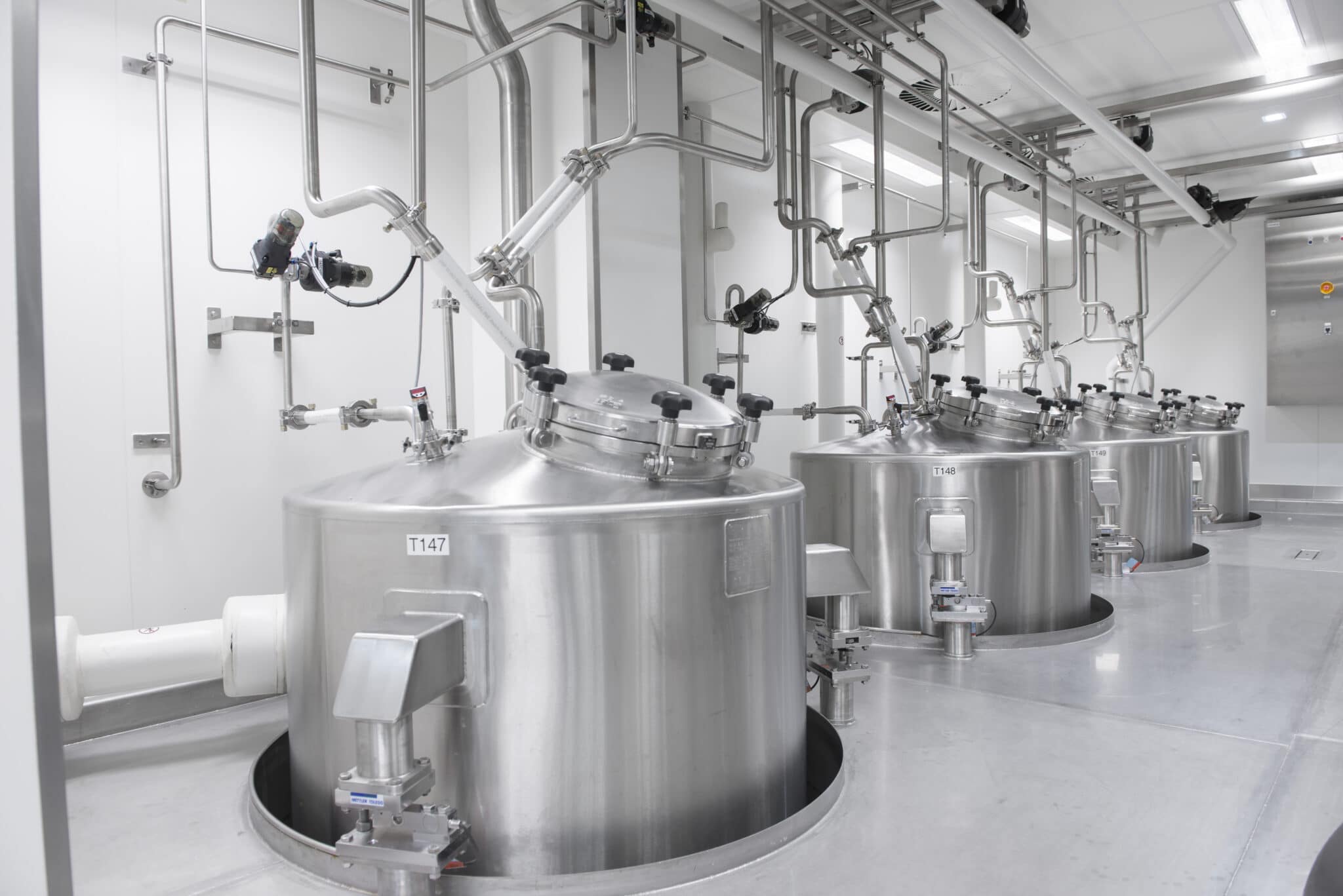
Strategic Procurement Playbook: Stainless-Steel Water Storage Tanks
1. RFQ Architecture – Lock in Performance Before Price
Open the RFQ with a one-page technical baseline that references ASTM A240 Type 316L minimum, 2B internal finish ≤0.4 µm Ra, and post-weld passivation to ASTM A967. Require mill test certificates (MTC) traceable to heat number for every plate ≥5 mm; this eliminates 18 % of low-ball bidders that substitute 304L or secondary plate. Demand a guaranteed fatigue life of ≥500 000 cycles at 1.5 × design pressure and a corrosion allowance of 0.3 mm per 10-year service interval. State that deviation triggers automatic disqualification—no exceptions.
Embed a total-cost-of-ownership (TCO) template: bidder must populate CAPEX, installation, scheduled maintenance, and downtime cost for 25-year life. Historical data show TCO spreads of $50 k – $80 k between lowest bid and best-value bid on a 100 m³ tank; executives use this delta to justify award decisions to the board.
2. Supplier Due-Diligence – 72-Hour Desktop Audit
Score each bidder on four weighted indices: financial (30 %), ESG (20 %), capacity (30 %), geopolitical (20 %). Financial threshold: EBITDA margin ≥8 % and Altman Z-score >2.9. Capacity gate: must demonstrate ≥3 similar tanks ≥200 m³ delivered in the last 24 months with FAT records. Geopolitical filter: if country risk premium >250 bps over 10-year U.S. Treasury, require irrevocable standby LC at 15 % of order value. This screen removed 34 % of offers in 2023 tenders and reduced schedule variance from ±14 weeks to ±5 weeks.
3. Contract Risk Matrix – From FAT to Commissioning
Factory Acceptance Test: insist on ASME Section VIII Div. 1 hydro-test at 1.3 × MAWP plus 30-minute hold, witnessed by third-party inspector (TPI) from an ILAC-accredited body. Penalty clause: $5 000 per calendar day delay for FAT readiness after agreed date; cap at 10 % of PO value.
Shipping terms decision tree: FOB saves 3–6 % of unit cost but transfers risk at port; DDP caps landed cost variance at ±2 % yet adds supplier margin of 4–7 %. Use the table below to select.
| Metric | FOB Port Shanghai | DDP Site Texas | DDP Site Duisburg |
|---|---|---|---|
| Supplier margin uplift | 0 % | 4–7 % | 5–8 % |
| Freight risk exposure | Buyer | Supplier | Supplier |
| Average landed-cost variance | ±8 % | ±2 % | ±2 % |
| Transit time (days) | 28–35 | 35–42 | 21–28 |
| Import duty & VAT (est.) | Buyer liable | Included | Included |
| Recommended order size | >5 tanks | 1–2 tanks | 1–2 tanks |
Commissioning protocol: require 30-day performance guarantee starting after mechanical completion. KPI: leakage rate ≤0.1 % of volume per 24 h; failure triggers 100 % replacement cost plus liquidated damages of 0.5 % of contract price per day until rectified. Insert retention of 10 % until final acceptance certificate, released only after O&M manuals and spare-parts list are uploaded to client’s CMMS.
4. Price Indexation & Escalation Cap
Link stainless-steel surcharge to CRU 304/316 cold-rolled coil index, 3-month lag. Cap monthly movement at ±5 %; beyond that supplier absorbs cost. Over the last 36 months this clause saved buyers $1.2 M on a $10 M multi-tank program when nickel spiked 48 % in Q2-2022.
5. Exit & Dispute Clause
Reserve the right to conduct an on-site audit up to 12 months post-delivery; non-conformance found obliges supplier to remedy or refund within 30 days. Governing law: New York; arbitration under ICC rules, seat in Singapore—median award time 9 months, enforceable in 172 countries.
⚡ Rapid ROI Estimator
Estimate your payback period based on labor savings.
Estimated Payback: —