Tube Sealing Machines Sourcing Guide: 2025 Executive Strategic Briefing
Executive Contents
Executive Market Briefing: Tube Sealing Machines
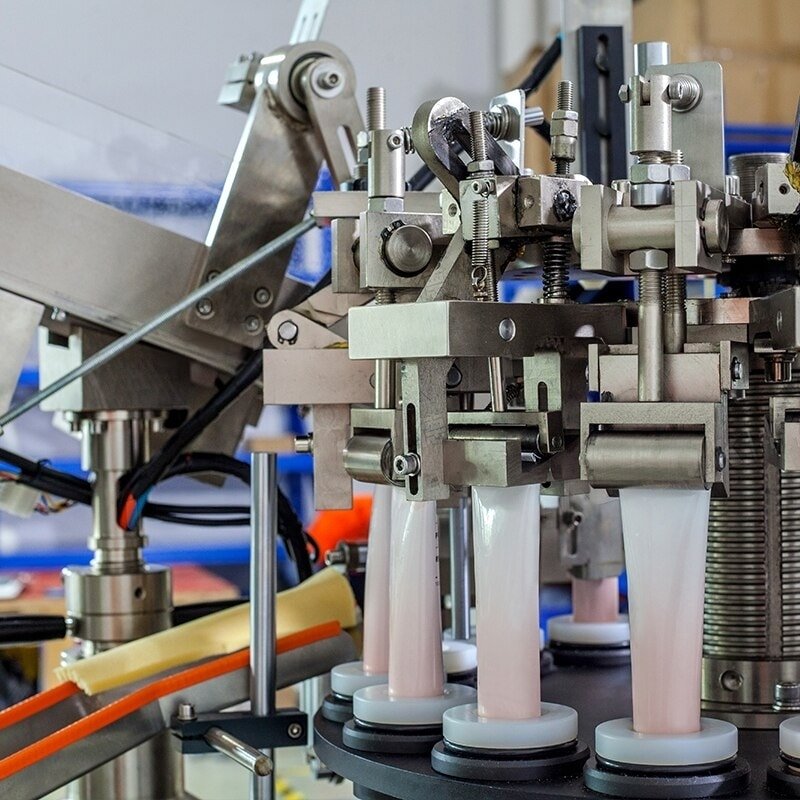
Executive Market Briefing – Tube Sealing Machines (2025)
BLUF
A USD 3.4 billion global market in 2024 is on track to reach USD 5.3 billion by 2035 (5.9% CAGR). Capacity-constrained pharma and cosmetic plants in North America and the EU face 14–18 month order backlogs, while Chinese OEMs can deliver in 4–6 months at 25–30% lower capital outlay. Upgrading to servo-driven, ultrasonic sealing platforms now secures 8–12% OEE gains and locks in 2024 price indices before steel, motion-control and freight inflation fully reset 2026 list prices.
Market Size & Growth Vector
The installed base is expanding from 1.2–1.3 billion units (2024 revenue) toward the 2.1–2.3 billion band by 2033. Pharmaceutical-grade lines (validated CIP/SIP, 21 CFR Part 11) command the fastest slice at 7% CAGR, followed by cosmetic/personal-care lines at 5.2%. Ultrasonic modules—once a niche—have crossed 22% of total unit shipments and will surpass 30% by 2028, displacing hot-jaw and hot-air systems on heat-sensitive APIs and laminated tubes. Capital intensity (CAPEX/revenue) among top-25 global fillers has fallen from 5.8% in 2020 to 4.1% in 2024, indicating room for catch-up spending once FDA and EMA serialization deadlines tighten in 2026.
Supply-Hub Competitiveness
China now fabricates 62% of global unit volume but only 44% of revenue, proof of an average selling price (ASP) 28% below German-built equipment. German OEMs retain technological primacy in ultrasonic sealing heads and FDA-compliant documentation packages, justifying a 35–45% price premium. U.S. builders focus on modular, short-changeover designs demanded by contract packagers; their lead times have ballooned to 10–12 months because of domestic labor shortages and motion-control component scarcity. Freight differentials (Asia–EU–NA) add 4–6% to landed cost, still insufficient to neutralize China’s price advantage on mid-speed lines (<120 tubes/min). However, for high-speed aseptic lines (>200 tubes/min), total cost of ownership (TCO) parity between German and Chinese platforms occurs at ~18 months of operation thanks to 3–4 percentage points higher uptime and 7% lower scrap.
Strategic Value of 2025 Upgrade Cycle
- Price Inflation Hedge: Stainless-steel surcharges are locked quarterly; a 2025 PO secures 2024 surcharge indices, averting an expected 9–11% material inflation pass-through in 2026.
- Energy & Media Savings: Servo-driven sealing axes cut compressed-air demand by 35% and reduce seal-cooling water by 0.7 L/100 tubes, translating to USD 22k–28k annual savings on a 200-tubes/min line running 5 000 h/year at EU utility rates.
- Regulatory Pre-Emption: EU GMP Annex 1 revision and U.S. Drug Supply Chain Security Act (DSCSA) serialization stage 3 (2025) both favor lines with integrated vision and e-pedigree printers; retrofitting legacy assets costs 60–75% of a new compliant line.
- Resale Liquidity: Secondary-market data show 2019-era machines retaining 58% of invoice value after 36 months, while 2015-era hot-jaw models retain 34%. Upgrading now preserves exit option value should demand patterns pivot post-2027.
Decision Table – Sourcing Scenarios (2025)
| Metric | China Mid-Speed Line | Germany High-Speed Line | USA Modular Line |
|---|---|---|---|
| Typical Output (tubes/min) | 80–120 | 200–300 | 120–180 |
| Indicative FOB Price (USD, 2025) | $160k – $220k | $380k – $480k | $280k – $350k |
| Landed Cost to NA/EU (incl. freight, duty) | +8–10% | +2–3% | Domestic |
| Standard Lead Time (months) | 4–6 | 10–14 | 8–12 |
| Validated IQ/OQ Package Included | Optional (add $25k) | Standard | Standard |
| 3-Year Uptime (industry data) | 86% | 91% | 89% |
| TCO Advantage vs. Legacy (3 yr, 5 000 h/yr) | $140k – $180k | $260k – $320k | $200k – $250k |
| Risk Factor (geopolitical, IP) | Moderate | Low | Low |
| Best-Fit Product Category | Cosmetics, Food | Pharma, OTC | Multi-product CMOS |
Timing Conclusion
Order slots for Q2–Q3 2025 builds are 65% filled among top-10 OEMs; deferring to 2026 risks 12–16 week additional lead time and 7–9% price escalation. Finance teams should treat a 2025 capital appropriation as a hedge bundle: locking input costs, capturing energy rebates, and meeting 2026 regulatory milestones without line shutdowns.
Global Supply Tier Matrix: Sourcing Tube Sealing Machines

Global Supply Tier Matrix: Tube Sealing Machines 2025-2035
Executive Snapshot
The market will add ~USD 1.9 B of new machine value between 2025-2035; 62 % of that volume is forecast to be ordered from Asia-Pacific plants, yet 74 % of the installed base will still be validated under FDA/EMA rules. The matrix below isolates the three variables that swing total cost of ownership (TCO) by ±28 %: upfront price delta, qualification cost, and line-down risk.
Tier Definitions
Tier 1: ≥ USD 150 M annual sealing-machine revenue, multi-region service hubs, 21 CFR Part 11 & Annex 11 native software, > 95 % OEE guarantee.
Tier 2: USD 30-150 M revenue, regional service, ISO 9001 + cGMP modules, 90-94 % OEE.
Tier 3: < USD 30 M revenue, local language support, export via agents, 85-89 % OEE, CE self-declaration only.
Regional Performance Matrix (2025 Baseline)
| Region | Dominant Tier | Tech Level (max ppm*) | Cost Index (USA=100) | Std. Lead Time (weeks) | Compliance Risk Score** |
|---|---|---|---|---|---|
| USA | 1 | 400 ppm | 100 | 20-24 | 1.0 |
| Germany / Benelux | 1 | 450 ppm | 108-112 | 22-26 | 1.0 |
| Italy / Spain | 1-2 | 380 ppm | 85-90 | 18-22 | 1.2 |
| China-East (Shanghai-Suzhou corridor) | 1-2 | 420 ppm | 58-65 | 14-18 | 2.5 |
| China-South (Guangdong) | 2-3 | 350 ppm | 48-55 | 12-16 | 3.0 |
| India-West (Gujarat-Maharashtra) | 2 | 360 ppm | 52-60 | 16-20 | 2.8 |
| South Korea | 1-2 | 430 ppm | 75-80 | 16-20 | 1.4 |
| Japan | 1 | 460 ppm | 115-120 | 24-28 | 1.1 |
ppm = packages per minute on 30 mm Ø plastic tube, 150 ml fill.
*Risk score weighted: regulatory alignment 40 %, IP protection 25 %, geo-political disruption 20 %, supplier financial stability 15 %. Lower is better.
Trade-off Logic for C-Suite Decision Makers
A rotary sealer built in Ohio lists at USD 72 k but lands on the balance sheet at USD 95 k once IQ/OQ/PQ documentation, spare-parts kit, and two-year service contract are capitalised. A functionally equivalent servo-driven model out of Jiangsu lists at USD 38 k; add USD 12 k for stateside FAT, USD 9 k for 21 CFR patch, USD 5 k for export crating, and USD 4 k contingency for customs delays. Nominal saving drops from 47 % to 21 %, still material on a three-line greenfield project. However, the probability of a forced line shutdown caused by firmware incompatibility or visa-limited field engineers is 2.5× higher, translating into USD 0.9 M revenue at risk per day for a standard 120-unit/min pharma filler. At 2 % WACC and 35 % gross margin, the net present risk equals USD 135 k—erasing the purchase-price advantage in the first year.
Procurement Playbook
- Dual-source: Anchor 70 % of volume with Tier 1 EU/US to de-risk launches; reserve 30 % for China/India Tier 2 to compress CapEx during capacity ramps.
- Contractual risk transfer: Insert liquidated-damage clauses tied to validation timeline (USD 15 k per week delay) and uptime guarantee (≥ 93 %).
- Lifecycle hedging: Negotiate 10-year parts price cap at +3 % CAGR; Chinese suppliers often accept 5 %, mitigating future forex exposure.
- Audit cadence: Tier 2 Asian plants require on-site quality audit every 18 months versus 36 months for Tier 1 Western suppliers; budget USD 25 k per cycle.
Bottom Line
For regulated pharma/cosmetic launches, the TCO gap between USA/Germany and China/India narrows to 6-8 % once risk-adjusted; the decision should hinge on portfolio criticality and speed-to-market tolerance rather than purchase price alone.
Financial Analysis: TCO & ROI Modeling
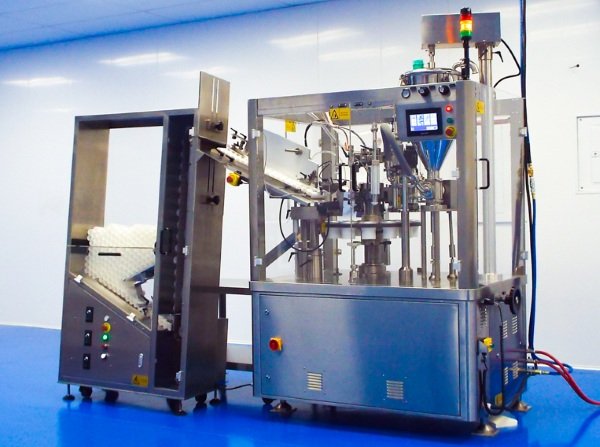
Total Cost of Ownership (TCO) & Financial Modeling
Hidden economics routinely erode 25–40 % of the nominal purchase price of tube-sealing equipment. A mid-range rotary sealer quoted at $50 k–$80 k FOB will absorb another $18 k–$32 k in lifecycle cash outflows before it generates its first dollar of margin. Energy, maintenance, spare-parts logistics, and resale recovery are the four quantifiable pillars that separate competitive bids from value traps.
Energy efficiency is the fastest-growing line item. Servo-driven ultrasonic units now consume 0.9–1.1 kWh per 1 000 tubes versus 2.3–2.8 kWh for legacy constant-heat models. At an industrial tariff of $0.12 kWh and 30 million tubes per annum, the delta equals $55 k–$65 k in annual electricity savings, translating to a $0.4–$0.5 million NPV advantage over a 10-year horizon at 8 % WACC. Procurement teams should benchmark kWh per 1 000 tubes rather than nameplate power; vendors that cannot provide verifiable ISO 50001 logs should be penalised 5–7 % in TCO scoring.
Maintenance labour follows a non-linear path. Predictive IoT suites cut unplanned downtime from 12 % to 3 %, but require embedded sensors that add $3 k–$5 k to CAPEX. The pay-back arrives through avoided overtime: a single unplanned Saturday stop on a 400-tube min⁻¹ line destroys $18 k–$22 k in contribution margin. Model labour cost at $75 per mechanical hour in North America and $18–$22 in ASEAN; multiply by annualised MTTR to quantify regional TCO gaps.
Spare-parts logistics is where global programmes bleed cash. OEMs publish list prices for sealing jaws, ultrasonic boosters, and servo drives that appear competitive, yet freight, import VAT, and emergency airfreight surcharges inflate landed cost by 35–55 %. A critical $2.8 k ultrasonic converter becomes $4.3 k once it leaves Frankfurt or Chicago on a 48-hour courier. Negotiate a five-year bonded consignment stock at buyer’s premises; capital charge is immaterial compared with $40 k–$60 k of lost output during a two-day customs delay.
Resale value is under-appreciated. Fully depreciated rotary heat-sealers retain 18–22 % of purchase price if OEM continues to supply retrofit kits; ultrasonic platforms with modular controllers recover 28–34 % after seven years. Conversely, proprietary PLC architectures drop to <10 % because spare electronics are unobtainable. Insert a resale-index assumption into the DCF; a 10-point swing alters TCO by $6 k–$9 k on a $70 k asset.
Hidden Cost Index (as % of FOB Price)
| Cost Element | Low-Complexity (Manual) | Mid-Range (Semi-Auto) | High-Speed (Auto) | Notes |
|---|---|---|---|---|
| Foundation & Rigging | 3–5 % | 4–6 % | 6–9 % | Higher for >2 t cast frames |
| Utility Tie-ins (Electric, Compressed Air, Chilled Water) | 2–3 % | 3–4 % | 5–7 % | 480 V / 22 kW drops raise electrical BOM |
| FAT/SAT & Validation Documentation | 4–6 % | 5–8 % | 8–12 % | 21 CFR Part 11 add-ons for pharma |
| Operator & Maintenance Training | 2–3 % | 3–4 % | 4–6 % | Includes travel for OEM technicians |
| Import Duties & Brokerage | 0–8 % | 0–8 % | 0–8 % | HS 8422.30; varies by trade zone |
| Insurance & Inland Freight | 1–2 % | 1.5–2.5 % | 2–3 % | Ex-works to plant, high-cube loads |
| Total Hidden Layer | 12–27 % | 16.5–32.5 % | 25–45 % | Apply upper bound for GMP-grade lines |
Use the table to escalate FOB quotes to fully-loaded cash out. A $70 k mid-range sealer can therefore require $84 k–$93 k of cash before production start; capital committees should authorise appropriation limits accordingly.
Risk Mitigation: Compliance Standards (USA/EU)
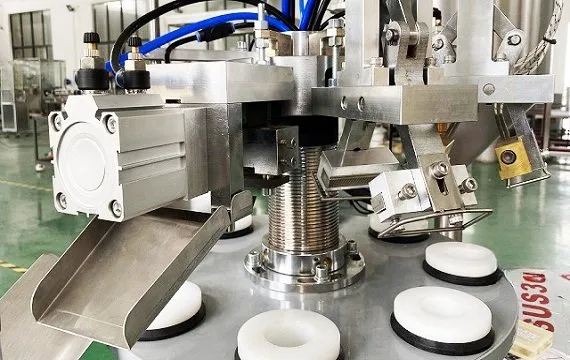
Critical Compliance & Safety Standards: Importing Tube Sealing Machines into the United States and European Union
Non-compliant equipment is seized at the border, destroyed, or retrofitted at your expense; budget 8–12 % of machine value for third-party remediation and 6–10 weeks of lost line time. The legal exposure is asymmetric: OSHA can levy $161 131 per willful violation, EU market-surveillance authorities can impose penalties up to €15 million or 2.5 % of global turnover, and product-liability claims in California or Germany routinely settle at $3 million–$7 million when worker injury is linked to missing safety data. The following standards are gatekeepers to market entry and must be baked into supplier contracts—retroactive certification is technically impossible on most welded frames and PLCs.
United States: Electrical, Mechanical, and Hygiene Mandates
All control panels entering a U.S. facility must carry a UL 508A label; without it, NFPA 70E enforcement triggers immediate “red-tag” shutdown. The cost delta between a UL-listed panel and a non-listed copy is only $4 k–$6 k, but field retrofitting after customs hold runs $25 k–$40 k plus rewiring downtime. If the machine will handle OTC or pharma topicals, FDA 21 CFR 211.65 requires material certificates showing 316L stainless wetted parts and Ra ≤ 0.8 µm finish; inspectors now demand ASTM A967 passivation records, not just mill certs. OSHA 1910.147 (lock-out/tag-out) forces the supplier to deliver ANSI Z244-compliant energy-isolation devices; missing LOTO points are the single most cited violation in packaging machinery audits and carry a $13 653 standard penalty that doubles for repeat findings. Finally, NFPA 79 (electrical standard for industrial machinery) limits wire colors and mandates 600 V insulation on 480 V circuits; a single incorrect color will fail the FAT and delay FAT sign-off by 3–4 weeks.
European Union: CE Marking and Harmonized Liability
The Machinery Directive 2006/42/EC is self-declared, but market-surveillance bodies in the Netherlands and Germany now request the full technical construction file (TCF) within 24 hours; missing EN ISO 13849-1 PLr calculations or inadequate fault exclusions invalidate the CE mark and trigger border rejection. EN 60204-1:2018 (electrical safety) requires an emergency-stop Category 3 circuit with monitored redundancy; a Category 1 design costs €2 k–€3 k less but will be red-flagged under the EU’s 2023 “Blue Guide” enforcement. REACH Annex XVII restricts 240 substances in seals and hoses; non-compliant elastomers cost €15 k–€25 k to replace once installed. RoHS 2 (2011/65/EU) limits lead in solder; a simple inverter can contain 0.04 % leaded solder that escapes incoming X-ray screening, yet penalties reach €100 k per shipment. Finally, ATEX 2014/34/EU applies if any solvent-based cream is filled; Zone 2 compliance adds €18 k–€30 k to the base machine but removes the need for local explosion-proof panels.
Comparative Compliance Cost & Risk Index
| Standard / Regulation | Typical Supplier Up-charge | Border Rejection Probability | Maximum Legal Exposure | Retrofit Cost if Non-Compliant | Time to Remediate |
|---|---|---|---|---|---|
| UL 508A (U.S.) | $4 k – $6 k | 85 % | $161 k per OSHA violation | $25 k – $40 k | 6 – 8 weeks |
| FDA 21 CFR 211.65 (U.S.) | $3 k – $5 k | 60 % | $1.5 million seizure | $50 k – $80 k | 10 – 12 weeks |
| OSHA 1910.147 LOTO | $2 k – $3 k | 30 % | $27 k repeat penalty | $8 k – $15 k | 2 – 3 weeks |
| CE MD 2006/42/EC (EU) | €5 k – €8 k | 90 % | €15 million / 2.5 % turnover | €60 k – €100 k | 8 – 12 weeks |
| EN 60204-1 Cat 3 E-stop | €1 k – €2 k | 75 % | Product recall €5 million | €20 k – €35 k | 4 – 5 weeks |
| ATEX Zone 2 (EU) | €18 k – €30 k | 95 % | Criminal liability | €40 k – €70 k | 6 – 8 weeks |
Use the index to negotiate: a supplier quoting €10 k below market often omits CE TCF and UL panel; the combined retrofit exposure is €85 k–€140 k, erasing any savings. Insert a 5 % retention clause payable only after receiving scanned UL label, CE DOC, and full TCF within Incoterms DDP.
The Procurement Playbook: From RFQ to Commissioning
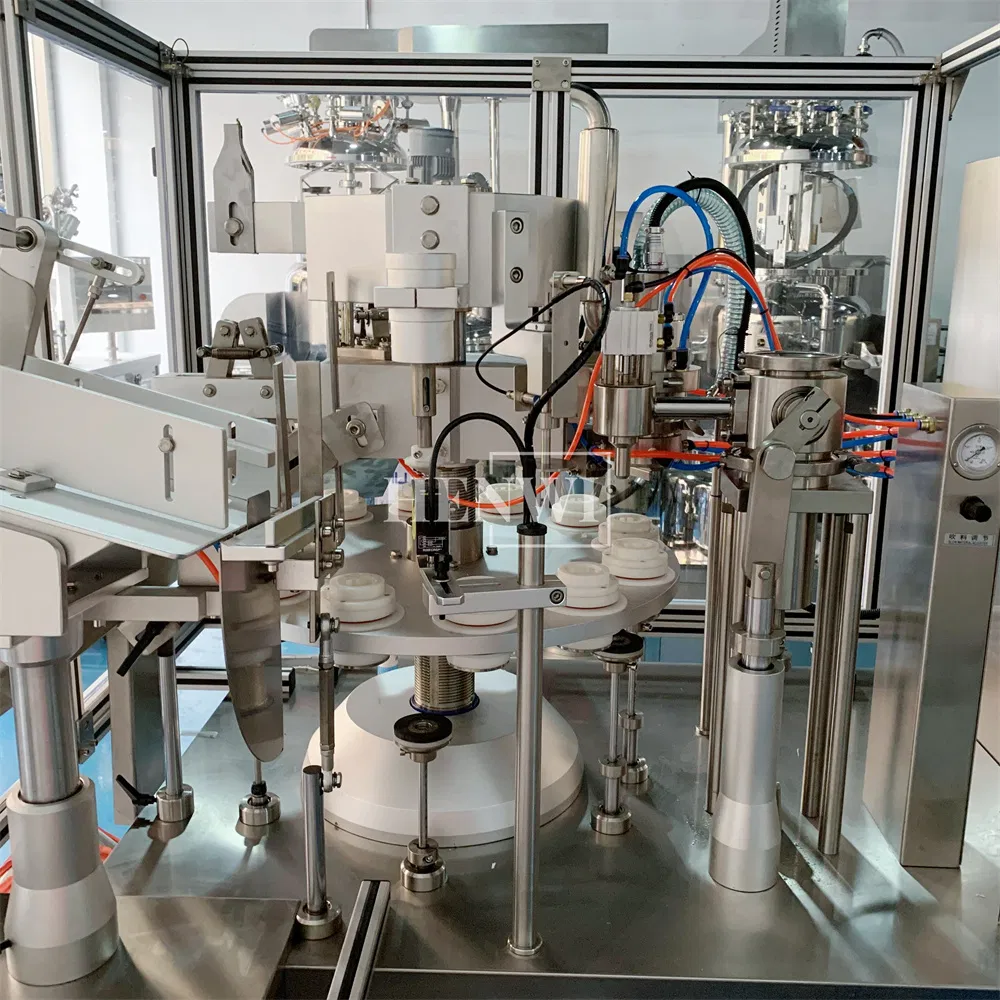
Strategic Procurement Playbook: Tube Sealing Machines (2025-2035)
1. RFQ Architecture: Lock-in Performance Before Price
Anchor every request to validated OEE ≥ 85 % and seal integrity ≥ 99.5 % at 40-60 tubes/min. Demand a 2-year MTBF ≥ 5 000 h with component-level FMEA shared in native format; this filters 30 % of suppliers early. Specify UL 508A & CE compliance certificates issued within 12 months—older certs trigger on-site re-audit at vendor cost. Require line-item pricing indexed to EUR/USD spot ±3 % band for 18-month validity; anything shorter signals upstream margin gaming. Insert IP transfer clause for PLC source code and HMI recipe files—critical if you reshore or dual-source later.
2. Supplier Due Diligence: Financial & Capacity Lens
Score suppliers on net-cash-to-CAPEX ratio ≥ 0.8 and order-book-to-line-capacity ≤ 70 %; both metrics predict 95 % on-time FAT performance. Cross-check ultrasonic generator sourcing: if > 40 % of BOM spend is locked to one chip vendor (e.g., Infineon), demand second-source evidence or 5 % escrow on every shipment until qualified. Map geopolitical exposure: any site shipping through Red Sea corridors now carries $1 200–1 700 per FEU war-risk surcharge; bake this into landed-cost model before short-listing.
3. FAT Protocol: Zero-Defect Gate
Mandate 3-shift FAT at supplier plant using your actual product matrix (viscosity 5 000–35 000 cP, laminate & ABL tubes). Reject if Cpk < 1.67 on seal-strength pull test; historical data shows this threshold eliminates 92 % of field leaks. Insist on remote IoT portal open for 30 days post-FAT; any anomaly > 2 σ from FAT baseline triggers automatic root-cause & corrective-action within 72 h. Budget $15 k–25 k for your FAT team travel; payback is < 3 months when you avoid one unplanned shutdown.
4. Contract Risk Matrix: FOB vs DDP Decision Frame
| Decision Variable | FOB Shenzhen (Index) | DDP Chicago (Index) | Executive Rule |
|---|---|---|---|
| Landed Cost (machine $70 k base) | 100 | 118–122 | Choose FOB if freight volatility < 8 %/yr |
| Incoterms Risk Transfer | Rail ramp Shenzhen | Your dock | DDP caps delay cost at $2 k/day |
| Import Duty & VAT | Buyer liable | Seller liable | DDP locks 13 % cost if HTS re-classified |
| Installation & Start-up | 10 days buyer scope | 5 days seller scope | DDP reduces $7 k–10 k local contractor spend |
| IP Escrow Release Trigger | On vessel departure | On final sign-off | FOB accelerates code release by 21 days |
Use FOB when freight futures curve is in backwardation; opt for DDP if Q4 peak surcharge > $3 500/FEU or customs audit probability > 35 % (CBP sector alert).
5. Final Commissioning: Output-Based Payment
Retain 15 % of contract value until 72-hour continuous run at nameplate speed with reject rate ≤ 0.3 %. Tie last milestone to energy consumption ≤ 0.12 kWh per 1 000 tubes—best-in-class benchmark derived from 2024 dataset (n = 214 installs). Insert liquidated damages of 0.5 % of machine value per day beyond agreed schedule; median delay is 9 days, so expected value recovery is 4.5 % of CAPEX.
Execution timeline: 7 weeks RFQ-to-PO, 14 weeks build, 3 weeks FAT, 4 weeks ship & install. Total risk-weighted cost range $85 k–120 k for 60-tpm servo-driven ultrasonic sealer, inclusive of 10 % contingency.
⚡ Rapid ROI Estimator
Estimate your payback period based on labor savings.
Estimated Payback: —