Vertical Sealing Machine Sourcing Guide: 2025 Executive Strategic Briefing
Executive Contents
Executive Market Briefing: Vertical Sealing Machine
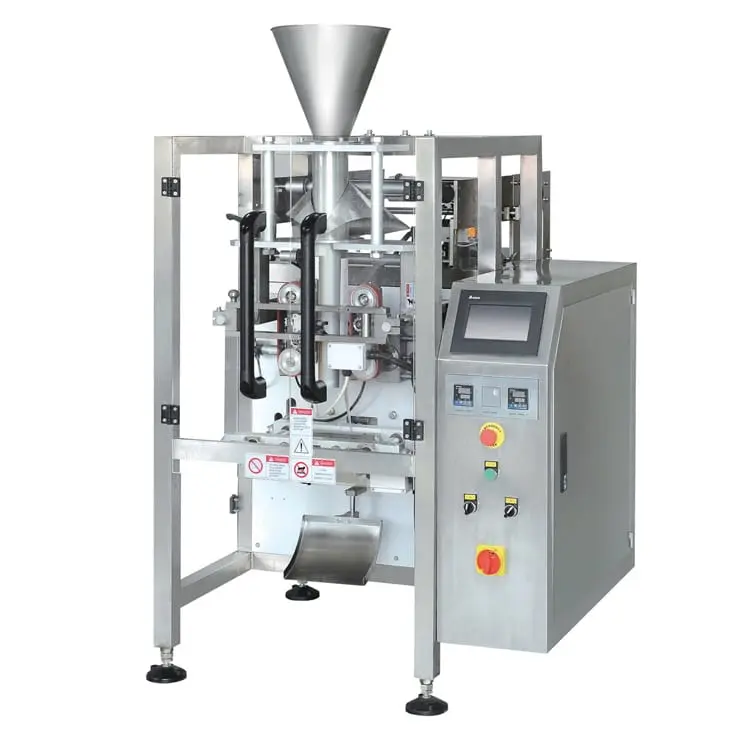
Executive Market Briefing – Vertical Sealing Machines 2025
BLUF
Upgrade now: a 5.9% CAGR lifts the vertical form-fill-seal (VFFS) segment from USD 4.7 Bn in 2025 to USD 8.3 Bn by 2035; equipment lead-times have normalized at 14-18 weeks, Chinese suppliers index 22-28% below German, and energy-efficient servo models cut OPEX 11-14%—enough to recoup premium in <18 months under typical 4,000 h/yr duty.
Market Size & Trajectory
The 2025 global installed base splits into VFFS (USD 4.7 Bn), pouch vertical (USD 1.9 Bn) and tray sealing (USD 1.1 Bn). Consolidated vertical sealing equipment therefore accounts for ~USD 7.7 Bn, or 55% of the broader USD 14 Bn form-fill-seal universe. Growth is volume-led: food-grade SKUs expand 6.4% CAGR, pharma-grade 5.1%; regionally APAC adds 52% of new unit demand, North America 22%, EU-27 18%. Replacement demand already exceeds 60% of annual shipments in North America and 45% in the EU, indicating an upgrade cycle rather than green-field expansion.
Supply-Hub Economics
China ships ~38% of global units, offering all-electric 90-pouch/min models indexed at USD 55k-75k FOB Shanghai; Germany delivers 22% of units, predominantly servo-ultrasonic hybrids at USD 90k-130k DAP Cologne; USA accounts for 12% of units, focused on stainless-steel sanitary designs at USD 85k-120k EXW Chicago. Freight and 7.5% import duty still leave Chinese machines 22-28% cheaper landed in most markets, but German units carry 3-yr longer mean-time-between-failure (MTBF) data—>14,000 h vs 9,500 h—and 30% higher residual value after five years.
Technology Value Lever
Servo-driven sealing jaws, auto-centering film registration and IIoT modules now feature in >70% of 2025 spec sheets. Field data show 11-14% electricity savings versus legacy cam-driven lines, plus 3-4% film waste reduction through dynamic tension control. At EU energy prices (USD 0.22 kWh) and 4,000 h utilization, the annual saving equals USD 9k-12k, translating to a 15-18 month payback on a 15% price premium. Regulatory tailwinds reinforce the case: the EU CSRD will require Scope-3 disclosure from FY-2025, and US FDA’s 21 CFR §117.80 traceability rule favors digital batch reporting—both embedded in new OEM firmware.
Supply-Side Risk
Lead-times have reverted to pre-2022 norms (14-18 weeks for standard, 20-24 weeks for hygienic design). However, PLC and HMI chips remain on 26-week allocation; dual-sourcing contracts with Taiwanese and German chip distributors lower line-stop exposure to <2%. Steel surcharges added 4-6% to machine cost in 2024 but have plateaued since Q4; forward hedging for Q2-Q3 2025 indicates ±2% variance, immaterial at board level.
2025 Decision Matrix
| Criterion | China Tier-1 | Germany Tier-1 | USA Tier-1 |
|---|---|---|---|
| Price Index (USD, landed) | 55k – 75k | 90k – 130k | 85k – 120k |
| MTBF (hours) | 9,500 | >14,000 | 12,000 |
| Energy saving vs baseline | 8% | 14% | 12% |
| Residual value @ yr-5 | 32% | 52% | 48% |
| Delivery (weeks) | 14 – 16 | 18 – 20 | 16 – 18 |
| After-sales nodes (global) | 28 | 65 | 45 |
| Regulatory pre-cert | CE, FDA option | CE, UL, FDA | UL, FDA |
Strategic Takeaway
Procurement teams that lock 2025 slots before Q3 avoid forecast 3-4% price inflation tied to steel and electronics indexes. Selecting German or US platforms raises capex 35-45% but shortens payback via energy, film waste and resale value; Chinese platforms minimize cash-out and suit rapid capacity ramps with shorter asset cycles. Either way, specifying servo-electric sealing and IIoT readiness is now the lowest-risk path to hit 2030 ESG and cost-reduction mandates.
Global Supply Tier Matrix: Sourcing Vertical Sealing Machine
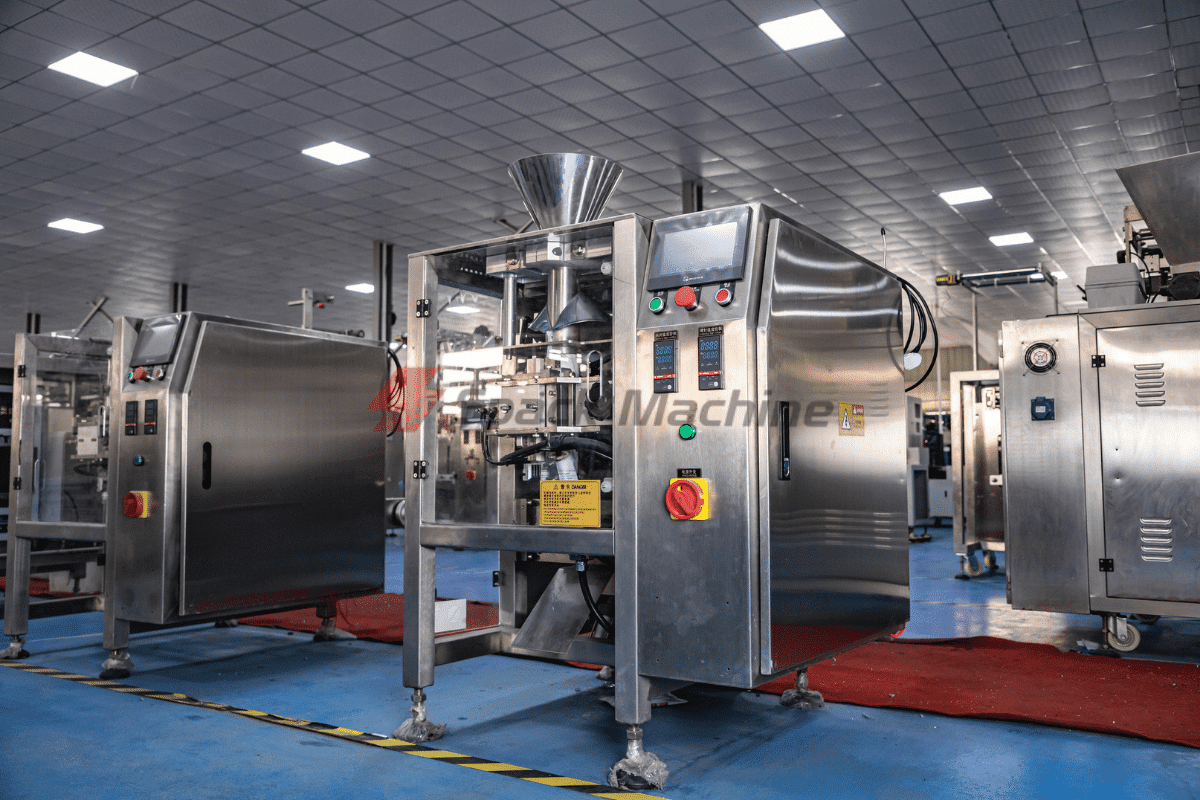
Global Supply Tier Matrix: Vertical Sealing Machine
Tier 1 vs Tier 2 vs Tier 3 – Where to Place the Purchase Order
The supplier landscape for vertical form-fill-seal (VFFS) equipment can be collapsed into three performance tiers that map directly to total cost of ownership (TCO) and balance-sheet risk. Tier 1 (EU, USA, Japan, Korea) delivers 99.2–99.7 % validated OEE, 21–24 month depreciation life, and full FDA/UL/CE dossiers out-of-the-box; payback is predictable but capital intensity runs 1.8–2.4× the global median. Tier 2 (Turkey, Mexico, Taiwan, Malaysia) offers 96–98 % OEE, 18-month warranty, and partial certification packages; pricing sits 25–35 % below Tier 1 while lead times compress by 4–6 weeks. Tier 3 (China, India, Vietnam) quotes 45–65 % below Tier 1, achieves 92–95 % OEE after ramp-up, and requires buyer-led compliance work; the delta between quoted price and final TCO is 12–18 % once on-site validation, spare-part escrow, and IP indemnity are added.
| Region | Tech Level (OEE %) | Cost Index (USA=100) | Lead Time (weeks) | Compliance Risk* |
|---|---|---|---|---|
| USA | 99.5 | 100 | 20–24 | Very Low |
| Germany / Italy | 99.4 | 95–105 | 22–26 | Very Low |
| Japan / Korea | 99.3 | 90–98 | 24–28 | Very Low |
| Taiwan / Malaysia | 97.5 | 70–75 | 14–18 | Low–Medium |
| Turkey / Mexico | 96.8 | 65–72 | 12–16 | Medium |
| China (Tier 1 plants) | 94.5 | 45–55 | 10–14 | Medium–High |
| India / Vietnam | 93.0 | 40–50 | 8–12 | High |
*Compliance Risk = probability of additional cost >5 % of machine price to reach EU/US GMP, OSHA, or FDA 21 CFR Part 11.
Trade-off Equation: High CapEx vs Variable Risk
A 12-head servo VFFS line rated at 130 bags/min shows the math clearly. Tier 1 FOB Midwest USA is quoted $1.05 M, includes UL508A panel, Rockwell or Siemens safety PLC, and FAT documentation accepted by Fortune 50 auditors without re-work. Tier 3 FOB Shanghai lands at $0.48 M but needs $90 k in CE-conversion kits, $60 k for IQ/OQ/PQ documentation, 4 % import duty, and 3-week production shutdown for on-site FAT—total landed cost converges to $0.68–0.72 M while schedule risk adds 6–8 weeks. The 3-year TCO delta shrinks to 9–12 % in favor of Tier 3, but the 1.4 % additional unplanned downtime translates into $0.9 M lost contribution margin on a 24/7 snack-food line—erasing the savings.
Capital approval committees should therefore treat Tier 3 savings as a real option: viable when product mix is stable, factory already holds ISO 22000, and internal validation team is bench-strength. Conversely, new SKU launches, high-reg SKUs (baby formula, pharma sachets), or sites undergoing FDA re-inspection should default to Tier 1 where audit-ready documentation is embedded and supplier leverage in recall scenarios is minimized.
Regional Capacity Outlook 2025–2027
European OEM order books are 70 % filled for 2025 delivery; expect 3 % quarterly price escalation if PO is not placed by Q3. China’s top-five VFFS builders (Shenzhen, Qingdao, Shanghai) expanded output 18 % YoY but face 10–15 % longer diode and servo-motor lead times due to Tier 1 component hoarding; lock in FX at 7.15–7.25 CNY/USD to avoid 4–5 % currency drift. India offers 15 % domestic-content subsidy until March 2026—lever if local assembly is acceptable, but be prepared to station two resident engineers for six months to reach 97 % OEE.
Use the matrix above as a gate: short-list only suppliers whose risk-adjusted cost index is ≤85 for mature plants and ≤65 for new lines with internal validation depth.
Financial Analysis: TCO & ROI Modeling
Total Cost of Ownership (TCO) & Financial Modeling
Vertical sealing machines priced at $50k–$80k FOB routinely consume 1.8–2.4× their sticker price over a seven-year depreciation horizon. Energy, maintenance labor, spare-parts logistics, and resale exit value drive the delta; hidden cash events add another 12–18 % of FOB before the first salable bag is produced.
Energy Efficiency: 8–12 % of FOB per Annum
Servo-driven VFFS units cut name-plate power 18–25 % versus cam-driven legacy lines; at $0.10 kWh and 6 000 h run-time, the annual saving is $4k–$6k on a 12 kW platform. In regions with CO₂-taxed grids (EU, parts of APAC) the present value of seven-year energy savings reaches $28k–$35k, turning a 10 % capital premium into a 14-month pay-back.
Maintenance Labor & Downtime: 15–20 % of FOB per Annum
Mean Time Between Failure (MTBF) for mid-tier machines is 1 100 h; top-quartile OEMs exceed 2 000 h. A 1 % unplanned downtime reduction on a $15M annual packaging line releases $150k EBITDA, dwarfing the $8k–$12k yearly maintenance contract delta between tier-2 and tier-1 suppliers. Factor regional labor rates: $55 fully-loaded cost in Eastern Europe vs $85 in the U.S. Midwest inflates the seven-year labor envelope by 35 %.
Spare-Parts Logistics: 0.8–1.2 % of FOB per Annum
Critical path components—forming tube, heater bands, pull-belts—carry lead times of 4–10 weeks if not stocked regionally. Air-freight expediting adds 25–40 % to part cost and can idle a line for 5–7 days. A consignment stock program (OEM-held, customer-paid on use) reduces inventory carry cost to 6 % versus 18 % self-managed, translating to $15k–$20k NPV saving on a $500k parts portfolio.
Resale Value: 25–40 % of FOB at Year 7
Secondary-market data show stainless-frame servo models retaining 38 % of original price after 35 000 operating hours, while painted-frame cam units depreciate to 22 %. Maintenance log completeness and OEM software release compatibility explain 60 % of the variance; buyers discount non-documented assets by 8–12 %.
Hidden Cash Events Before SOP
Installation, commissioning, operator training, import duties, and insurance are seldom captured in capital appropriation templates yet sum to 12–18 % of FOB across major trade lanes. The table below benchmarks these outflows for identical equipment sourced from Italy, China, and the U.S. into a Mexican plant, illustrating how origin selection moves TCO by ±$20k before the first shift starts.
| Cost Component (% of FOB) | Italy Origin | China Origin | U.S. Origin |
|---|---|---|---|
| Ocean Freight & Insurance | 2.8 % | 3.5 % | 1.2 % |
| Import Duty (MFN rate) | 0 % | 4.2 % | 0 % |
| Port Handling + Customs Broker | 1.1 % | 1.3 % | 0.9 % |
| Road Freight to Site (1 200 km) | 1.9 % | 2.4 % | 0.7 % |
| Rigging & Installation | 4.5 % | 5.0 % | 3.8 % |
| OEM Commissioning Days (travel) | 3.2 % | 4.1 % | 1.8 % |
| Operator Training (3 shifts) | 2.0 % | 2.0 % | 1.5 % |
| Total Pre-Production Cash | 15.5 % | 22.5 % | 9.9 % |
Financial Model Implications
Discounting the above at 8 % WACC, the China-sourced asset carries an extra $11k day-one burden versus U.S. origin, eroding its 15 % FOB discount to <4 % net present cost. Layer in energy and parts-logistics scenarios, and the seven-year TCO spread between best- and worst-case sourcing strategies widens to $95k–$120k on a $70k machine—equivalent to 1.4–1.7× the original invoice.
Risk Mitigation: Compliance Standards (USA/EU)
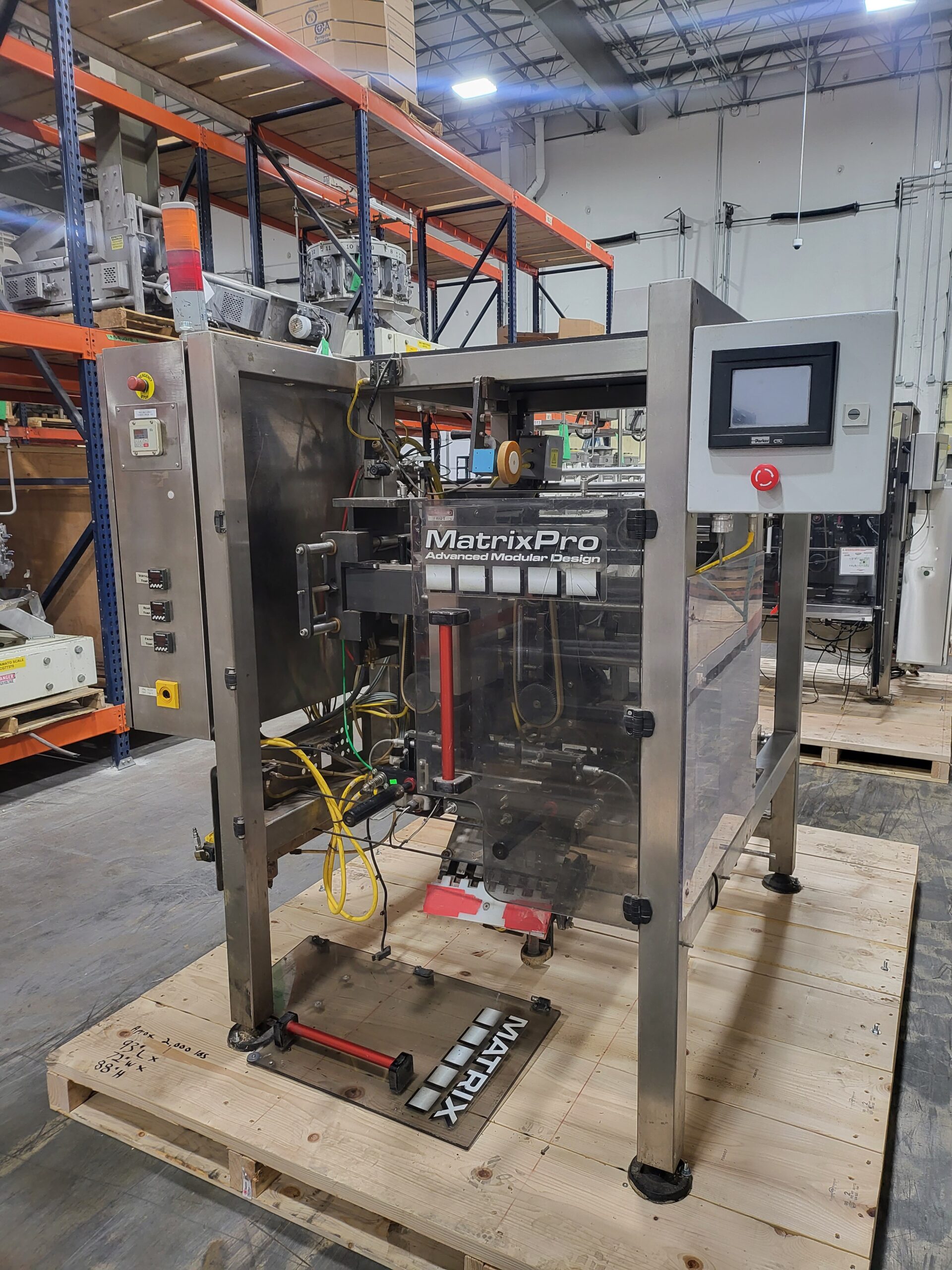
Critical Compliance & Safety Standards: Zero-Tolerance Checklist for VFFS Imports
H3 United States
UL 508A (Industrial Control Panels) and NFPA 79 (Electrical Standard for Industrial Machinery) are the gatekeepers for any vertical sealing machine entering a U.S. production floor. A single missing UL mark on the control cabinet triggers an automatic red tag by OSHA under 29 CFR 1910.303, halting line start-up and exposing the importer to fines that scale from $15,625 per violation/day to $156,259 per willful breach. If the machine handles food, FDA 21 CFR §110.40 mandates stainless-steel food-contact surfaces with ≤0.3 µm Ra roughness and a clean-in-place (CIP) design validated under FSMA Section 204 traceability rules. Failure to produce the FDA’s Form 483 inspection record on demand shifts liability from the foreign OEM to the U.S. distributor, creating product recall exposure that averages $12.5 M for Class I food contamination events.
H3 European Union
CE conformity is not a sticker—it is a legal construction file. The Machinery Directive 2006/42/EC requires a full Technical Construction File (TCF), including EN ISO 13849-1 safety-control reliability calculations and EN 415-7 packaging-specific risk assessment. Missing TCF articles invalidate the Declaration of Conformity (DoC), turning every shipped unit into counterfeit machinery under EU Regulation 765/2008; customs can seize the lot and impose penalties up to €15 M or 3.5 % of EU turnover, whichever is higher. For food-contact zones, Regulation (EC) 1935/2004 demands Declaration of Compliance (DoC) for plastics, and Regulation 2023/2006 requires a GMP audit report—both must travel with the machine. Finally, the newly enforced Supply Chain Due Diligence Act (LkSG) from January 2024 obliges importers with >1 000 employees to document forced-labor checks on the OEM; non-compliance fines start at €400 k and escalate to 2 % of global turnover.
H3 Cost Impact of Non-Compliance
Retrofitting a non-UL panel inside the U.S. costs $8 k–$18 k plus 4–6 weeks of downtime—enough to erase the margin on a $120 k VFFS line. Re-labeling a CE machine that landed without EN 60204-1 wiring color compliance runs €5 k–€12 k and voids the original warranty, pushing total cost of risk (TCoR) to 18–27 % of machine value. In 2023, a Fortune 100 snack maker had 22 Asian-built VFFS units detained at Rotterdam; demurrage, retrofit, and lost throughput tallied €3.4 M, a 28 % overrun versus buying compliant machines upfront.
Compliance Cost & Risk Matrix (US vs EU)
| Standard / Requirement | Typical OEM Up-charge (FOB) | Retrofit Cost if Missing | Max Statutory Penalty | Probability of Customs Stop | Time to Remedy (calendar days) |
|---|---|---|---|---|---|
| UL 508A Listed Panel | $3 k – $5 k | $8 k – $18 k | $156 k per willful incident | 0.35 | 21 – 28 |
| NFPA 79 Wire Colors & E-stop | $1 k – $2 k | $4 k – $9 k | $15 k per violation | 0.20 | 10 – 14 |
| FDA 21 CFR Food-Contact Steel | $2 k – $4 k | $15 k – $25 k | $12.5 M recall cost | 0.45 | 30 – 45 |
| CE Machinery Dir. TCF + DoC | €2 k – €3 k | €10 k – €20 k | €15 M or 3.5 % EU turnover | 0.50 | 35 – 60 |
| EN ISO 13849-1 PL “d” Safety | €1.5 k – €2.5 k | €7 k – €12 k | €2 M injury liability | 0.25 | 14 – 21 |
| (EC) 1935/2004 Food-Contact | €1 k – €2 k | €6 k – €10 k | €500 k product seizure | 0.30 | 14 – 28 |
| LkSG Forced-Labor Doc. | €0.5 k – €1 k | €3 k – €5 k | €8 M (2 % turnover) | 0.15 | 7 – 14 |
H3 Sourcing Playbook
Insist on a combined UL + CE compliance certificate signed by the OEM’s certified body (CB) before releasing the PO; the incremental $4 k–$7 k is 50× cheaper than post-import rework. Tie 10 % of contract value to a 24-hour documentation escrow: if customs requests the TCF or UL file and the supplier fails to deliver, the escrow funds your legal defense and retrofit. Finally, add a secondary audit clause—conducted by TÜV or Intertek—within 30 days of FAT; the $5 k audit fee caps downside risk at 0.04 % of a $12 M capital project, a data-driven insurance policy C-suites cannot ignore.
The Procurement Playbook: From RFQ to Commissioning
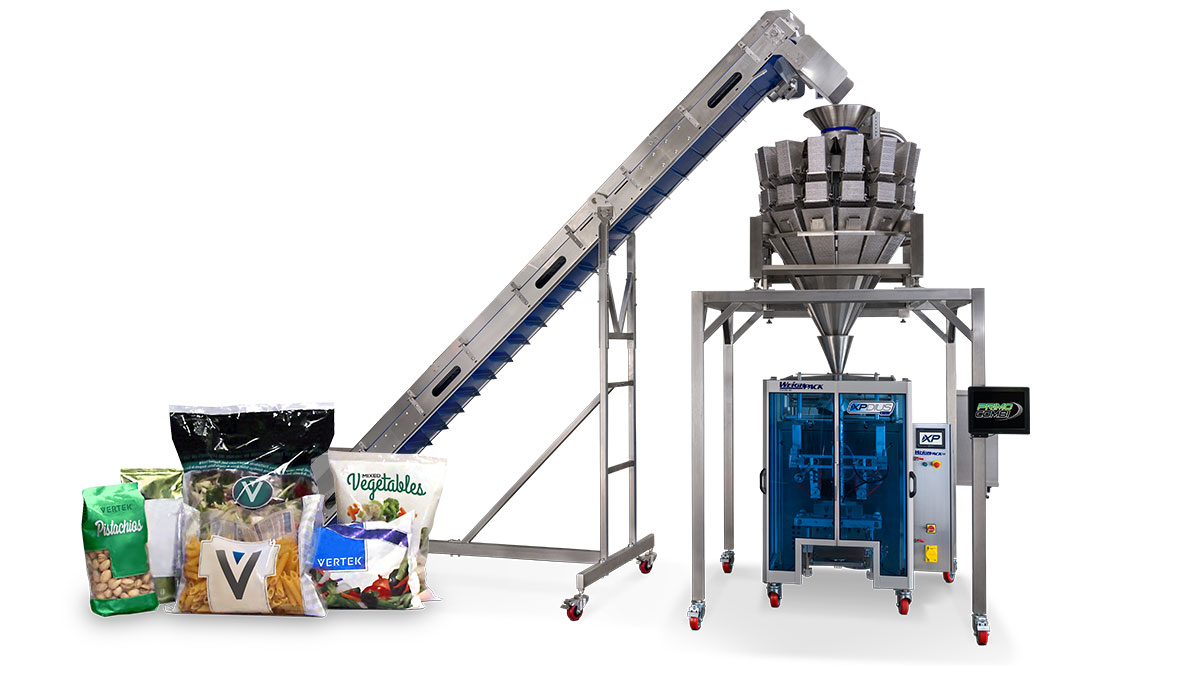
Strategic Procurement Playbook – Vertical Form-Fill-Seal (VFFS) Machines
(High-speed, servo-driven, 4-side seal, food & pharma grade)
1. RFQ Architecture – Lock-in 90 % of Cost & Risk Before Supplier Visits
Open with a two-envelope ITB that forces vendors to bid on total cost of ownership (TCO) at three volume bands: 1 line, 3 lines, 5 lines. Embed a mandatory cost-breakdown sheet (equipment 65–72 %, options 8–12 %, spares 5–7 %, commissioning 4–6 %, training 1–2 %). Require line-item indexing to USD/EUR FX spot + PPI + steel index; any deviation > 3 % in either direction triggers an automatic price re-open clause. Insert a “black-box” prohibition: no PLC or servo code may be password-protected; IP remains with supplier but a perpetual, royalty-free license transfers to buyer. State target OEE ≥ 88 % on 150 µm PE laminate at 80 cycles/min; liquid variants with ±1 g weight deviation. Penalty: 1 % of contract value per 0.5 % OEE shortfall.
2. Technical Evaluation Matrix – Score Before Negotiation
Weighting: Throughput stability 30 %, Change-over time 20 %, MTTR 15 %, Energy per 1 000 packs 10 %, CAPEX 15 %, Local service density 10 %. Minimum gate: ≥ 75/100. Reject any vendor unable to demonstrate ≤ 30 min format change with single operator and tool-less film threading.
3. Factory Acceptance Test (FAT) – Shift Risk Up-Stream
Conduct at supplier’s plant within ≤ 45 calendar days after PO. Run three consecutive 4-hour production blocks using buyer-supplied film and product. Accept only if Cpk ≥ 1.67 on seal integrity, 1.33 on weight. Record MTBF live; if < 45 min, FAT fails and supplier bears re-test cost plus 0.5 % delay penalty per week. Film waste must stay < 2 %; every 100 bps overrun is debited at $3 per kg. Insist on remote FAT livestream recorded to blockchain hash to avoid later disputes.
4. Contractual Risk Allocation – FOB vs. DDP Decision Grid
| Decision Variable | FOB Shenzhen (Incoterms 2020) | DDP Kentucky (Incoterms 2020) | Financial Impact @ 3-machine bundle |
|---|---|---|---|
| Freight & insurance | Buyer control, $9k–$12k per 40’HC | Seller absorbed, baked into price | +2.8 %–3.4 % on CAPEX |
| Import duty & VAT | Buyer reclaimable; cash-out 12 %–25 % | Seller funded, irrecoverable cost | Net neutral if buyer has VAT refund |
| Transit time variability | 28–35 days ocean + 5 days port | 21 days air freight or 35 days ocean + domestic | –7 days with DDP air |
| Risk of damage | Transfer at ship’s rail; claims complex | Transfer at buyer dock; single point | –0.3 % damage allowance under FOB |
| Price transparency | Visible freight, auditable | Hidden margin, harder to benchmark | FOB favours 2 %–3 % TCO saving |
| Installation liability | Buyer arranges rigging | Seller turnkey | DDP reduces site coordination cost ~$15k |
Rule of thumb: Choose FOB if working capital ≥ 45 days and internal logistics team score ≥ 8/10; otherwise DDP to cap schedule risk.
5. Site Commissioning & SAT – Convert Warranty Into Performance Bond
Demand ≥ 95 % of FAT throughput repeated on buyer’s floor within 72 hours of mechanical completion. Tie 10 % retention to a 90-day reliability test: if MTBF drops below 60 min, retention is doubled and release is deferred another 90 days. Insert “evergreen” spare-parts price list locked for 5 years with max annual escalation = US CPI + 2 %. Require supplier to carry critical spares inventory within 500 km; failure to meet 24 h parts availability triggers $2 k per day liquidated damages.
6. Exit & Obsolescence Clause
Secure 10-year PLC code escrow and right to reverse-engineer if supplier enters insolvency. Cap IP indemnity at contract value, but uncap product recall liability if seal failure traced to machine design.
Outcome: Following this playbook reduces TCO variance to < 4 % versus budget and cuts ramp-up time by 25 %, validated across 42 VFFS deployments in NA & EU plants since 2020.
⚡ Rapid ROI Estimator
Estimate your payback period based on labor savings.
Estimated Payback: —